Heavy Work Activities (Proprioceptive Input)

Yesterday I talked about how Brushing Therapy can be used as a calming effect. ‘J’s’ Occupational Therapist and I have also discussed implementing some heavy work activities. She gave me a print out with some background information on how this may help:

Propriocepive input is the performance of tasks that involves heavy resistance and input to the muscles and joints. It is essential in helping our bodies integrate and process both movement (vestibular) and touch (tactile) information. Proprioception is a form of sensory input to the muscles and joints which makes us aware of our “position in space” (where we are in relation to other objects or people). Children to have difficulty grading and planning their movements and regulating their level of arousal.” 

Heavy work activities include:

  • Whole body actions involving pushing, pulling, lifting ,playing and moving
  • Oral actions such as chewing sucking and blowing
  • Use of hands for squeezing, pinching or “fidgeting”

The resistive input obtained through heavy work activities is generally organizing and can improve attention, arousal level, body awareness and muscle tone, as well as descrease defensiveness. 

The activities are broken up into the categories of: carrying objects, pushing or pulling objects, jumping and bouncing, climbing/hanging, sandwich/squishing, working on a vertical surface, resistive tools or toys, chewy foods, resistive sucking and blowing activities.

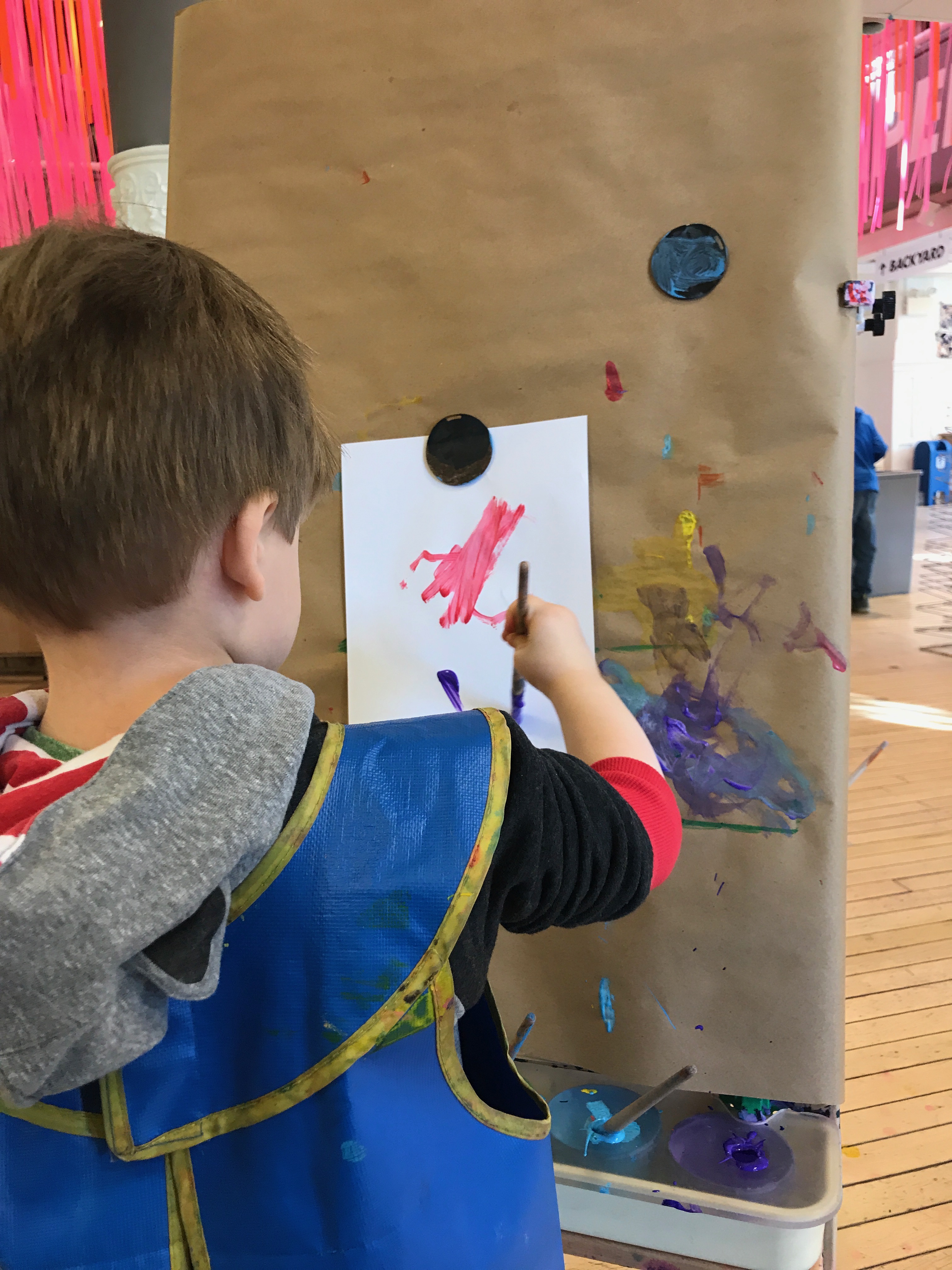
We’re not on any sort of schedule with these activities and most of them are already in his daily routine while he’s playing. We got a trampoline last year and he’s been obsessed with it ever since. If he can’t go jump on that, he is just fine jumping on the floor. He loves playing on his easel and writing with chalk. And lucky for us, he offers to help bring in groceries! Of course he can’t hold the bags that are too heavy.

I’ll definitely try some others on the list that we haven’t already to see how he responds. Like I’ve said before, a lot of this is trial and error and I’m willing to go through it all if it means helping him get through his daily activities.

Brushing…And I don’t Mean Your Teeth

‘J’ will not be receiving Speech or Occupational Therapy (OT) over the summer. Both will start back up again in September.

We did have speech last summer and he just started OT in February. Therefore, I’m a little skiddish about not having either for a couple of months, while at the same time welcoming the break. In the meantime, we’re finally in a good groove with OT after a rough and late winter of snow storms in the midst of school breaks and I want to make sure we maximize the resource while we have it.

The Wilbarger Protocol

One of the newest activities of our days has been incorporating “The Wilbarger Protocol” or in simpler terms “Brushing Therapy.” The following was taken from nationalautismresources.com:

The Wilbarger Protocol (also referred to as brushing therapy) is often a part of a sensorysensory+clear integration or sensory therapy program. It involves brushing the body with a small surgical brush throughout the day. People who exhibit symptoms of tactile defensiveness are extremely sensitive to touch.

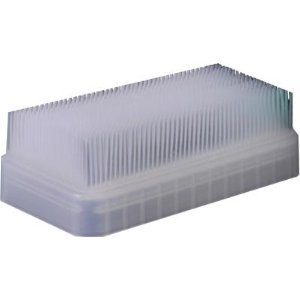
The complete protocol usually takes 2-3 minutes to administer. The first step involves using a soft, plastic, sensory brush or Therapressure Brush which is run over the child’s skin, using very firm pressure; it is like a deep pressure massage. 

After Brushing, we also do joint compressions in his arms and legs. Since it is similar to a deep pressure massage, serotonin and dopamine are released throughout the body resulting in a calming effect. For the first two weeks (we’re on Day 4) it is done on a schedule of every 2 hours unless the child is sleeping. In ‘J’s’ case, we’re also not doing it while he is in school. After the two weeks, we can reassess how much it has helped, if at all, and create a less vigorous schedule. So far he likes it. There is not a ton of research behind this technique but it has helped many.

Worst case scenario-it definitely can’t hurt. Stay tuned for updates!


*Image taken from Google Images


Feelings

The first movie ‘J’ ever sat through in its entirety was Pixar’s Inside Out. If you’re unfamiliar with the movie, it takes viewers through the inner workings of an 11 year old’s mind. We get to see how her feelings, dreams and thoughts affect her daily life. The main characters consist of 5 feelings: Joy, Sadness, Anger, Disgust and Fear. I’d say those are 5 feelings everyone finds relatable.

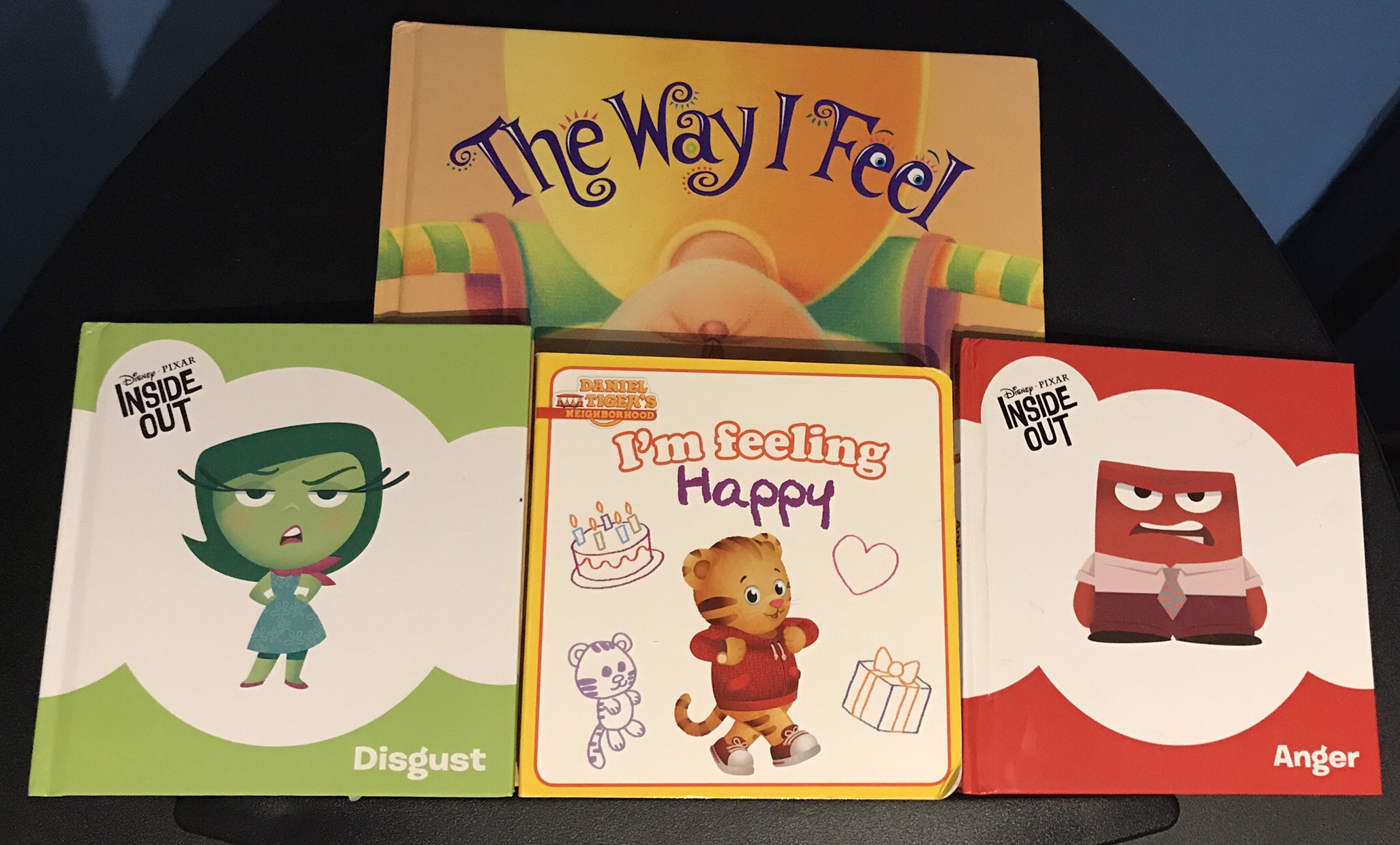
I’m not sure I know many adults that understand their feelings so it makes complete sense that navigating feelings for a child is not an easy task. When ‘J’ started being affected by my niece crying or his sister crying, he also became extra sensitive to talking about any negative feeling. If you made a sad face as you were playing, it would result in crying from ‘J.’ If an adult said “oh, that makes me sad” or “oh I’m going to cry,” he would immediately react. We have Inside Out Box of Mixed Emotions books, one for each feeling. He got to the point of not wanting to read Sadness’ book. It broke my heart to see how affected he became by just the mention of a feeling.

Although I was starting to suspect that there may be some sensory processing issues going on, I also wasn’t sure if he was going through a phase. I started looking into other books that talked about feelings, singing Daniel Tiger songs about feelings and was even trying to get him to talk through his tantrums. For a 3 year old, whose words are still catching up to his mind, this was a lot of work. And again, for an adult, this is a lot of work. I didn’t want to push him too much and risk him keeping everything inside.

One of the books I got was “The Way I Feel” by Janan Cain. It goes through all the feelings one could have: silliness, frustration, happiness, boredom and many more. There are pictures associated with each feeling’s description to help the child understand it even more. I mentioned Daniel Tiger songs, but I also picked up Daniel Tiger Happy and Sad books. The show, the songs and his books tackle so many things that kids go through and I find it really helpful. Once we were getting through our Mickey Mouse Clubhouse addiction, ‘J’ had moved into Daniel Tiger and I’m glad he did. We countdown to calm down just like Daniel and associate different situations to how Daniel has handled them. What does Daniel do when he gets mad? How did Daniel feel when his sister wanted to play? What happens when Daniel’s friends didn’t want to play with him? What did Daniel do that was kind? The list goes on!
img_8988

Feelings are so tough to navigate and if you’re someone that has sensory processing difficulties and becomes overwhelmed in a lot of situations, it becomes even tougher. Whatever tools you can use to help are worth trying. Books, shows and songs are great for kids since they are drawn to those things already. They’re learning without realizing they’re doing any work. It’s kind of like sneaking vegetables into their cupcakes ;-).

I will always try to get my kids to talk through their feelings. Even when they’re teenagers and they find me extra annoying. Communication is one of the most important tools in life and the sooner they’re able to have that in their tool box, the better!

Below are links to the various books on Feelings as referenced above:

The Way I Feel

I’m Feeling Happy (Daniel Tiger’s Neighborhood)

I’m Feeling Sad (Daniel Tiger’s Neighborhood)

Inside Out Box of Mixed Emotions

Bag ‘O Fun

As I mentioned in my last blog, “It’s a Beautiful Day in the Neighborhood,” we took a trip to Pittsburgh two weeks ago for Spring Break. We’re lucky and thankful that our kids are great on car trips, as long as plenty of snacks and activities are packed. They normally make it to the final hour or two before they need the iPhones.

Although having activities and snacks comes with dropping activities and snack which results in me turning around to get them most of the trip. But it’s a small price to pay for having them locked in seats for 7 hours.

The times the car rides become less fun is when ‘J’s’ sister (‘Baby J’) becomes unhappy because that is an automatic trigger for him. This was one of my earliest red flags of thinking this was all more than just empathy. The result is screaming and crying long after ‘Baby J’ is done whining or crying.

IMG_7499

Along with checking out the Mister Rogers exhibit at the Heinz History Center, we also stopped by the Children’s Museum of Pittsburgh. If you haven’t been there, I recommend it. It’s huge and there’s so much to see and do!

Since it’s so big and it was a Saturday, there was a big crowd. ‘J’ was definitely overwhelmed. He wasn’t unhappy just unsettled. He didn’t stay in one place too long, didn’t go over to exhibits if there were too many people around it and was extra clingy. Luckily they have a great art area with painting and clay. This was a much quieter space and we spent most of our time in this spot.

I was talking to ‘J’s’ Occupational Therapist after our trip about his triggers and she suggested having a backpack with some items they may help calm him in these situations. At home, he’s good about going to his room to reset himself if he’s feeling overwhelmed. When we’re out in public or he’s locked into a car seat, it’s not as easy. Luckily we have quite a few backpacks on hand and I’ve since put one together with his headphones, sensory bottle, his squishy fidget dinosaur, small toys and his water bottle. We brought the headphones on our last plane ride and for some reason I didn’t think to bring them on the car trip. They definitely would’ve been helpful for when ‘Baby J’ was upset.

She also mentioned carrying the backpack may help him since weighted items can provide comfort. We’ve already tried this on shorter car rides (30+ minutes) and so far it has come in handy.

I’m willing to try any and everything that will provide him any comfort or organization for his mind and body. Not all will work, but through trial and error, I know we’ll find the best combination of sensory items and activities.

Wiggling Our Way Through Meals

For the last few weeks, ‘J’ has been getting up mid-meal to jump, spin or run. He’s not upset when he’s doing it, not having a tantrum, it’s almost as if he just needs to do it.

‘J’ loves jumping on the floor, trampoline or his bed. He loves climbing anywhere he can. The fact that he’s a fan of this in general, it’s not surprising that once he’s sitting and eating for awhile, he needs to change things up.

He’s always been good about sitting at the table to eat. I’m torn in the sense that if he feels like that’s what he needs at that time because of how he’s feeling, I don’t want to stop him. At the same time, it’s not the best habit to teach, especially if he carries it over to a restaurant (knock on wood-that hasn’t happened yet).

I mentioned it to our OT and she suggested a wiggle seat. When I was talking with our speech therapist about it, she mentioned she had one we could try out. The last few days have gone well and he seems to like it. I don’t see him jumping or spinning as much. Who knew that a tiny little seat can do so much?

img_8282

But what is it actually doing? The following was taken from sensorysolutions.co

The inflated chair has a slight texture on the surface, which already works to provide a certain amount of sensory stimulation. The angle and shape of the chair causes the child to engage their core section and balance themselves on top while sitting.

This stimulation actually sends signals to the brain to allow their minds to focus easier. What this means is that your child’s subconscious focusing on their posture and balance while sitting on the wiggle chair directly influences how their mind focuses. This makes the chair perfect for classroom settings.

The seat can help calm and organize the body. Since it’s working so far, I’ll keep it going. Stay tuned for updates!

Listen to Becky, from Sensory Spectacle talk about why someone with Sensory Processing difficulties may bounce on their bed:

A Hairy Situation

‘J’ had his first haircut on the day he turned 1. We were in Disney World and went to the Barber Shop on Main Street. It was so much fun and he did great! He may have been ok with a haircut or two after that one but since that timeframe, it has been a struggle.

As time has gone on, it’s not just a struggle to cut his hair. Washing his hair is usually being done as he is screaming or crying. Brushing his hair is a big battle in the morning. Sometimes I try wetting the brush a bit since he definitely has a big case of bed head every morning. I’m trying to give up wetting the brush since he hates feeling the water and only makes him hate the experience more.

It’s tough when we’re getting ready for school and he’s running away screaming not wanting his hair brushed. Or if I was able to brush it, he then has to rub his head in the couch, bed or on his hand while screaming which puts us back to square one.

This is an ongoing process to see what may help him get through these activities. It’s another example of something most people take for granted, but for him, it’s an extra sensitive situation. Like most things in parenthood, it’s trial and error until we find the key to what works.

Below are two videos from Sensory Spectacle. The first talks about why someone with SPD may not like brushing their hair, the second discusses why they may not like washing their hair and the last is all about haircuts.


Transitioning Back to a Routine

Last week was spring break here in NY which meant no school, no speech therapy and no occupational therapy. The week started pretty gloomy weather wise and we had 3 indoor days. On Thursday we decided to take a trip to Pittsburgh to check out the Mr. Rogers exhibit. If you haven’t been, I definitely recommend it! The Heinz History Center, where the exhibit is located, is great for kids in addition to seeing all the cool Mr. Rogers memorabilia.  More on the trip in another blog.

When I was working and would take time off for a trip, I would always make sure there was a buffer day when I returned. A day to come home, chill out, do some laundry, etc. before jumping back into work. Probably seems silly considering I was just on a vacation, but I never wanted to go right back into the normal daily routine.

‘J’ loves routine. If he doesn’t know the agenda for the day or if curveballs are thrown in, he’s not a happy camper. Of course after a week away from school and services, while doing a small trip away, there would be a readjustment period. It’s Wednesday and I think we’re still in it.

He’s had periods of acting out, two meltdowns during school yesterday and hesitation with OT and Speech today. I’m pretty sure he’s had a small cold the last few days as well, which I’m sure isn’t helping. But it all makes sense and coming from someone who needed a buffer day after a cruise, how could I not understand?

I’m hoping over the next few days the ups and downs return to more ups and less downs. I hate seeing him upset and affected by his surroundings. I know he does too.


Sensory Friendly Spaces

I have recently seen an increase in public venues offering Sensory Friendly days or a specific space at that venue. For example, in January 2017, it was announced that the Pro Bowl at Camping World Stadium in Orlando would offer noise cancelling headphones, squeeze toys and a safe room as an option for those with sensory difficulties.

On April 15th, the Dallas Zoo will hold a Sensory Friendly Day and on the first Sunday of every month Chuck E. Cheese will be open from 9AM-11AM for Sensory Sensitive Sundays which will include reduced lighting and noise.

The St. Louis Aquarium will be the first to be built with Sensory Inclusion in mind. They will offer quiet spaces and they understand that aquariums tend to be very overwhelming for those with sensory issues. The aquarium opens during the Summer of 2019. Click here for more information.

Certain AMC Theater locations offer Sensory Friendly times for moviegoers. Taken from the AMC website:

AMC is proud to partner with the Autism Society to offer unique movie showings where we turn the lights up, and turn the sound down, so you can get up, dance, walk, shout or sing! Our Sensory Friendly Film program is available on the second and fourth Saturday (family-friendly) and Tuesday evenings (mature audiences) of every month. Please check your local theatre listings for specific showtimes, and don’t forget to share your family fun with #AMCSensoryFriendly.

These are just a few examples of sensory friendly spaces popping up. The more education companies and venues have, the more inclusive they can become.

Click here for information on Sensory Friendly Day at the Dallas Zoo

Click here for information on Sensory Sensitive Sundays at Chuck E. Cheese

Click here for information on The St. Louis Aquarium

Click here for the AMC Sensory Friendly Film Program

It’s Too Loud!

A big trigger for ‘J’ are sounds. He absolutely hates when our dog (or my parents’ dog) does her alert bark. If someone rings the doorbell, of course our dog is going to respond and let us know. Although she feels like she is protecting us, ‘J’ sees it as something that is being done to him.

One of my first red flags was seeing ‘J’ react to his sister or cousin crying. At first I thought he was just being empathetic (and I’m sure there is an aspect of that) but over time I felt like there was more behind it. It’s so hard to watch him react to their crying, especially if we’re in a car or somewhere else where he can’t remove himself from the situation. It completely overwhelms him and he cries and screams to express the hurt it’s causing him.

I think because he has started to realize that things that are too loud are overwhelming, he describes certain situations as “too loud” or “too big.” At this point we are try to work with him to understand what can soothe him in these situations. Sometimes it’s playing a Super Why game on our phones and other times it’s having a snack. Unfortunately sometimes we just have to wait it out, which is the hardest one of all.

In The Out-Of-Sync Child, Carol Stock Kranowitz discusses determining if a child has an issue with each sense. For the auditory sense, she details overrresponsitivity, underresponsitivty and sensory craving. Although I can relate ‘J’ to a few different aspects, one line stuck out for me: “If he can’t get away from the hubbub, he may raise his own voice, hollering, La-La-La-La! to counteract noise, rather like fighting fire with fire.” If ‘J’ doesn’t respond by crying to a sound that is bothering him, he starts screaming or talking louder to try to deal with the overwhelming sound.

Although these are my experiences, Sensory Spectacle has a video on their YouTube page that explains why some people may cry at sudden noises:


Mood Swings

Everyone has mood swings. Personally, if I don’t get enough sleep at night, I’m dragging during the day. I may not have as much patience, not get as much done or may just be out of it. If I haven’t eaten in awhile, I may be cranky or lightheaded. Some days things seem off and you’re just having a day.

Kids are affected in the same ways!

Now add in sensory difficulties. It’s the end of a day, you’re tired and hungry as you sit at a restaurant for dinner. Anyone may feel a bit edgy. But for someone with sensory issues, this restaurant may feel so overwhelming. If someone already feels like sounds are too loud, this may be even worse in this setting.

Although specific instances like being tired or hungry do not cause sensory issues, they definitely aid in triggering them. I know I see it for ‘J.’ I’ve seen changes in weather affect him. I’m sure that sounds weird, but it’s true. Other times its tougher to pinpoint if there is an external factor like hunger or the weather amplifying his triggers.

This post is just me thinking out loud. I am going to check out The Out-of-Sync Child and other resources to read more about external factors. If any readers can relate or would like to share their experiences-please do!