Indoor Activities

As a kid, I was not a fan of arts and crafts! Becoming a stay at home mom, I’ve definitely gone outside my comfort zone and tried new crafts and activities here and there. I’m thankful for Instagram and Pinterest! If I’m not doing exactly what I see in posts, then it will get me to think of a similar idea tailored to both ‘J’s.’

Last week was our Spring break and we kicked it off with six inches of snow on the first day and a rainy day the next! To say I’m over winter and ready to be outside with some nice weather would be an understatement. The kids love going for walks, playing at the playground or just hanging in the backyard. I’m itching to do more of that! Needless to say I’ve been trying out new activities with help from social media.

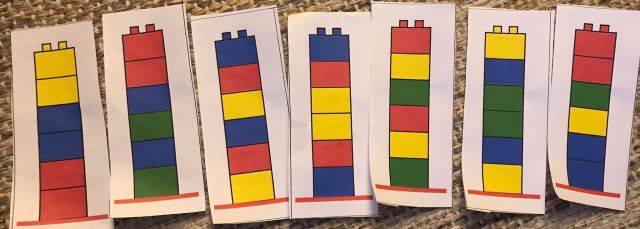
LEGO Matching30180423_10101810813372645_1473891118_n

Like most kids (and adults), ‘J’ loves LEGOs! When I saw this all over Pinterest, I knew we had to try! I printed up some LEGO tower patterns and got out the Duplos.

*Side note: one day I gave ‘J’ an online IQ test just for fun and he had to match patterns. He was so into it, he asked to “play” it again the next day, so I knew he would be into this version with LEGOs!

This activity is great for gross motor skills, learning patterns, practicing colors and following direction.

30223552_10101810813322745_1736186587_o

Moon Sand

IMG_6495

An indoor sandbox? What kid would say no to that?!

I was a little hesitant to try this one since I wasn’t sure if the ‘Js’ could keep it contained. But I got out a big sheet and took a chance. I’m so happy I did!

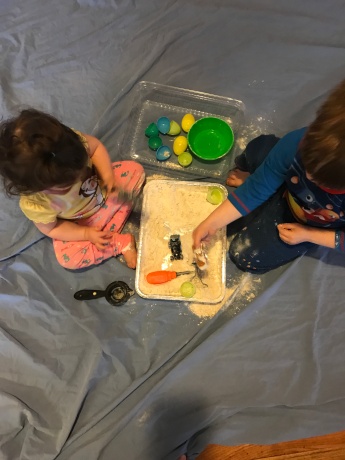
There are different recipes out there for making moon sand. Due to the supplies I had around my house, I went with 5 cups of flour and 1 cup of vegetable oil. Once I started mixing, I probably added a little bit more of both. I would definitely recommend the 5:1 ratio as a good starting point. The sand shouldn’t be too powdery but not too thick either.

I mixed it in a disposable cooking pan, threw in some toys and sent them on their way! The pictures are from the beginning with only a few items. By the end there were plenty of figures, cars, cups, spoons, etc. all enjoying the indoor beach day. This activity kept my 3 year old occupied for about an hour straight. Less for my 1 year old, but that’s to be expected.

Cheerio Tower

This was something I saw and threw together based on the few materials I had.

Even though I’ve seen it bigger while using raw spaghetti, why not try smaller play-doh shapes and some toothpicks? It’s all about improvising! Another great activity for gross motor skills, as well as counting (and of course a built in snack).

IMG_6474

Play-Doh 

Not a DIY activity, but a gift from the Easter Bunny instead. Great timing for a snowy/rainy spring break!

I’ve mentioned before that ‘J’ is obsessed with letters, but play-doh is high on his list of favorite things to do. When I saw…um I mean the Easter Bunny couldn’t resist leaving it for him!

An all in one box where you can practice letters, make faces while discussing emotions, match up letters to the right animal or write with a special play-doh pen. A bonus: this activity is great for practicing speech too!


The bottom line is, if I can board the DIY activity train, so can you!


Sensory Friendly Spaces

I have recently seen an increase in public venues offering Sensory Friendly days or a specific space at that venue. For example, in January 2017, it was announced that the Pro Bowl at Camping World Stadium in Orlando would offer noise cancelling headphones, squeeze toys and a safe room as an option for those with sensory difficulties.

On April 15th, the Dallas Zoo will hold a Sensory Friendly Day and on the first Sunday of every month Chuck E. Cheese will be open from 9AM-11AM for Sensory Sensitive Sundays which will include reduced lighting and noise.

The St. Louis Aquarium will be the first to be built with Sensory Inclusion in mind. They will offer quiet spaces and they understand that aquariums tend to be very overwhelming for those with sensory issues. The aquarium opens during the Summer of 2019. Click here for more information.

Certain AMC Theater locations offer Sensory Friendly times for moviegoers. Taken from the AMC website:

AMC is proud to partner with the Autism Society to offer unique movie showings where we turn the lights up, and turn the sound down, so you can get up, dance, walk, shout or sing! Our Sensory Friendly Film program is available on the second and fourth Saturday (family-friendly) and Tuesday evenings (mature audiences) of every month. Please check your local theatre listings for specific showtimes, and don’t forget to share your family fun with #AMCSensoryFriendly.

These are just a few examples of sensory friendly spaces popping up. The more education companies and venues have, the more inclusive they can become.

Click here for information on Sensory Friendly Day at the Dallas Zoo

Click here for information on Sensory Sensitive Sundays at Chuck E. Cheese

Click here for information on The St. Louis Aquarium

Click here for the AMC Sensory Friendly Film Program

Sensory Processing Disorder and Autism

April is Autism Awareness Month and yesterday, April 2, was Autism Awareness Day. Although ‘J’ is not autistic and Sensory Processing Disorder is not Autism, many with autism also have sensory processing difficulties.

The following was taken from the Star Institute for Sensory Processing Disorder:

Children whose Sensory Processing Disorder conforms to the under-responsivity subtype typically require a great deal of stimulation in order to become alert and active, a behavior often seen in children with autistic spectrum disorders. Meanwhile, other children with ASD have symptoms more similar to the over-responsive subtype of SPD. Because Autism and SPD both have over-responding and under-responding categories, Autims and SPD are sometimes mistaken for one another.

The relationship between SPD and Autism is an area of great interest to scientists and families living with the condition. Studies by the STAR Institute suggest that at least three-quarters of children with autistic spectrum disorders have significant symptoms of Sensory Processing Disorder, and probably more depending on how significant symptoms are defined.

However, the reverse is not true. Most children with SPD do not have an autistic spectrum disorder! Our research suggests that the two conditions are distinct disorders just as SPD and ADHD are different disorders.

Appropriate intervention relies upon accurate diagnosis. Pursuing an evaluation for SPD by a qualified occupational therapist with sensory integration training facilitates diagnosis that distinguishes autistic spectrum issues from sensory issues. This distinction increases the likelihood that your child will receive the appropriate treatment for his or her neurological conditions.

With further research into the relationship of SPD and autistic spectrum disorders, the STAR Institute hopes to facilitate better more appropriate intervention for all children who have either – or both – SPD and Autism.

In The Out-of-Sync Child, Carol Stock Kranowitz writes “One of the major deficits of the child is difficulty processing sensory information. SPD underlies the child’s problems with coordination and balance, visual discrimination, and the ability to comprehend gestures, facial expressions, and social cues. For children with NLD, sensory integration therapy very beneficial.”

There are so many great resources available to those affected by autism. Click here to learn more from Autism Speaks.


It’s Too Loud!

A big trigger for ‘J’ are sounds. He absolutely hates when our dog (or my parents’ dog) does her alert bark. If someone rings the doorbell, of course our dog is going to respond and let us know. Although she feels like she is protecting us, ‘J’ sees it as something that is being done to him.

One of my first red flags was seeing ‘J’ react to his sister or cousin crying. At first I thought he was just being empathetic (and I’m sure there is an aspect of that) but over time I felt like there was more behind it. It’s so hard to watch him react to their crying, especially if we’re in a car or somewhere else where he can’t remove himself from the situation. It completely overwhelms him and he cries and screams to express the hurt it’s causing him.

I think because he has started to realize that things that are too loud are overwhelming, he describes certain situations as “too loud” or “too big.” At this point we are try to work with him to understand what can soothe him in these situations. Sometimes it’s playing a Super Why game on our phones and other times it’s having a snack. Unfortunately sometimes we just have to wait it out, which is the hardest one of all.

In The Out-Of-Sync Child, Carol Stock Kranowitz discusses determining if a child has an issue with each sense. For the auditory sense, she details overrresponsitivity, underresponsitivty and sensory craving. Although I can relate ‘J’ to a few different aspects, one line stuck out for me: “If he can’t get away from the hubbub, he may raise his own voice, hollering, La-La-La-La! to counteract noise, rather like fighting fire with fire.” If ‘J’ doesn’t respond by crying to a sound that is bothering him, he starts screaming or talking louder to try to deal with the overwhelming sound.

Although these are my experiences, Sensory Spectacle has a video on their YouTube page that explains why some people may cry at sudden noises:


Mood Swings

Everyone has mood swings. Personally, if I don’t get enough sleep at night, I’m dragging during the day. I may not have as much patience, not get as much done or may just be out of it. If I haven’t eaten in awhile, I may be cranky or lightheaded. Some days things seem off and you’re just having a day.

Kids are affected in the same ways!

Now add in sensory difficulties. It’s the end of a day, you’re tired and hungry as you sit at a restaurant for dinner. Anyone may feel a bit edgy. But for someone with sensory issues, this restaurant may feel so overwhelming. If someone already feels like sounds are too loud, this may be even worse in this setting.

Although specific instances like being tired or hungry do not cause sensory issues, they definitely aid in triggering them. I know I see it for ‘J.’ I’ve seen changes in weather affect him. I’m sure that sounds weird, but it’s true. Other times its tougher to pinpoint if there is an external factor like hunger or the weather amplifying his triggers.

This post is just me thinking out loud. I am going to check out The Out-of-Sync Child and other resources to read more about external factors. If any readers can relate or would like to share their experiences-please do!


Sensory Spectacle Resources

I am so thankful for Becky Lyddon, of Sensory Spectacle, for taking the time out of her busy schedule to be a guest blogger this weekend.

Sensory Spectacle is working to bring awareness to the Sensory Processing Difficulties community. Although based in the UK, they are providing information that spreads throughout the world.

If you missed this weekend’s 3 Part series from Becky, please click below for links:

Supporting a Sensory Lifestyle for People with SPD Part 1

Supporting a Sensory Lifestyle for People with SPD Part 2

Supporting a Sensory Lifestyle for People with SPD Part 3

Make sure to check out the Sensory Spectacle website and shop for more resources. Their presence on YouTube is so valuable for educating the public about sensory processing. I am thankful for having found the videos and being able to share them with family and friends. Click on the links below to follow Sensory Spectacle!

Sensory Spectacle Website

Sensory Spectacle Shop

Access and subscribe to the Sensory Spectacle YouTube channel

Follow Sensory Spectacle on Twitter

Follow Sensory Spectacle on Instagram

I’ll wrap up the series with this one video answering the question:

Why Do We Need to Provide Sensory Support?

Supporting a Sensory Lifestyle for People with SPD | Part 3 of 3

Tips for Supporting Someone with SPD

It is important you understand what someone’s over-riding sensory needs is. This will be the sensory system which they are mainly ‘seeking’ or ‘avoiding’ in their day-to- day lives. Once you can recognize this you can be prepared to support them in all settings.

I suggest that parents and professionals are prepared with a ‘sensory sack’. This bag will contain a selection of items that will support a range of sensory needs (don’t forget needs may fluctuate and vary):

  • noise cancelling headphones, either in the ear or over the ear
  • sunglasses
  • cap with a peak
  • something which smells of that person (old tshirt)
  • a soft fidget like a small cushion
  • a rough fidget like a brush
  • a fidget which you fiddle with
  • a weighted beanbag
  • electric toothbrush
  • a massaging cushion

Most children and adults with SPD are already regulating themselves so try and notice how they are doing that and offer other strategies too. You can learn more about understanding these characteristics with our ‘Homelife’ video series on YouTube. Subscribe and share the videos for FREE!

SPD is currently not able to be diagnosed in the UK in it’s own right, it is only recognized with an Autism diagnosis. SPD affects many other people with additional needs too though, so please bear this in mind. 

An Occupational Therapist who is Sensory Integration trained will be able to offer support and advice for anyone who has SPD. If you would like to help your setting become more aware of sensory needs then why not download our ‘What is SPD’ sheet from our website.

Supporting a Sensory Lifestyle for People with SPD | Part 2 of 3

Thank you again to Becky Lyddon, founder of Sensory Spectacle. Here’s is Part 2 of our 3 Part Weekend Series:

Sensory Spectacle creates immersive learning environments to help parents, professionals and students gain a unique insight into how SPD may feel for them and learn through empathy how best to personalize support for someone with SPD. Our Being Ben experience is based on a common difficulty of filtering out unnecessary sounds, Lola’s World is based on a visual processing difficulty of fragmentation and Mehdiosmia is based on a boy who found the smell of washing detergent too overwhelming to change his clothes.

There are 3 ways someone’s sensory processing may be affected. They could have difficulties with the amount of information they are processing – familiar terms for this are know as seeking and avoiding characteristics. Other people may have difficulties with working out the location or intensity of a sensation. And the third way is through motor-based difficulties. Often covering ears, squinting eyes, licking things, throwing objects, bumping into things, constant movement and eating a small selection of foods are characteristics we may commonly recognize and these are all relating to modulation – the amount of information someone is processing.

Our bodies need a certain amount of sensation to feel ‘OK’. We are constantly regulating ourselves and telling ourselves we are ‘OK’ we might need to help support people with SPD to do this but these characteristics mentioned above are some ways they are already supporting themselves.

Learn loads of fun and practical ways to support children and adults with SPD with our SPECTACULAR Play and Support guides which you can find on our website shop

Stay tuned tomorrow for our final part of the series from Becky’s piece on Sensory Processing and don’t forget to check out Sensory Spectacle at http://www.sensoryspectacle.co.uk/! 

If you missed Part 1 of our 3 part series, click here.

Supporting a Sensory Lifestyle for People with SPD | Part 1 of 3

I started this blog because of the information and solace I found in other blogs, articles and social media groups. I thought that maybe if by sharing my experience, it might be helpful for another parent going through similar situations. 

Thanks to social media, I came across other fantastic resources. One of those resources was Sensory Spectacle. I started following them on Twitter and watching their YouTube videos. I had reached out to Sensory Spectacle, which is based in the UK, to let them know how much I appreciate their videos and that I would love to link to some of them in my blog. To my surprise, Becky, the founder, offered to write a piece for my blog. I am turning her piece into a 3 part weekend series that begins today!

Thank you to Becky and all those at Sensory Spectacle for sharing this information and all that you do for the SPD community. 

And now, here’s Becky Lyddon, founder of Sensory Spectacle. 

I never quite realized how much I relied on my senses until I started a role as a playworker in London in 2009. After graduating from a degree in Graphic Design I realized an office based job just wasn’t’ for me. So I started a job supporting children and young people in a shortbreaks setting (afterschool, holidays and weekends). I got to do loads of fun activities and go on many holidays taking the children to places they had never been before offering new experiences for them and respite for families.

Being in a management role, as well as supporting the children I also had a responsibility to ensure my staff were confident and competent in caring for the young people in all settings we went to.

Very quickly after being in this role I realized that we didn’t offer any training to help them understand why some children may respond in a particular way to their surroundings. I wanted to make sure we could understand and care for the children as best we could. Often it was hard for staff to recognize triggers or understand why a child may love constantly flickering water, for example. Alongside this we also had many experiences where the public would ask us why a child played in a certain way or even if we could stop a child from doing something in particular.

I wanted to create a better understanding and awareness of Sensory Processing Difficulties (SPD) so I went and studied a Masters in Art & Science, it was here that Sensory Spectacle began making immersive learning environments for everyone to gain a unique insight from and to spread a better understanding and awareness of SPD. Our work is created based on descriptions from people with SPD.

Have you ever wondered how it might feel to hear all of the sounds in your environment right now while you are trying to read this post? The lights buzzing, technology whirring, radiators creaking, wind blowing, leaves rustling, airplanes flying, cars driving, footsteps moving, clocks ticking, conversations next door.

We all process and respond to our surroundings in a personalized way. Sensory processing is something which we all have in common as human beings. From before we are born we are sensing, processing and responding to information received from our senses. Because sensory processing is a personalized system unique to ourselves it is likely that you will have similarities in sensory preferences with your friends and family members as well as differences. Food choices, music preferences, sports activities etc. All of these activities revolve back to sensory processing and we build up these preferences throughout our life.

However for some people, organizing and responding to the sensory messages can be extremely confusing. Some children may cover their ears as they can be overwhelmed with the sounds around them. Or maybe you know someone who only has a diet of dry crunchy foods to help block out the sounds around them.

Sensory Processing Disorder (SPD) is when the brain finds it difficult to organize the messages it’s receiving and respond to them. Some people may respond to these sensations actively or passively. SPD impacts 1 in 20 and we must remember that this is throughout someone’s life so children and adults will experience difficulties processing sensory information. As children with SPD get older they are likely to find ways in which they support their own sensory needs in order to help regulate
their bodies.

We must try to understand what these sensory responses and characteristics mean so that then we can support personal needs. You can learn loads more about this in our workshops.

Stay tuned tomorrow for Part 2 of Becky’s piece on Sensory Processing and don’t forget to check out Sensory Spectacle at http://www.sensoryspectacle.co.uk/!
.

Breaks from School, Snow Storms, the Flu, Oh My!

‘J’ started Occupational Therapy (OT) in the beginning of February. However, due to winter break, our late season snow storms and his parents having the flu, there hasn’t been a great routine when it comes to OT.

We’re only a couple of weeks away from Spring Break. Hopefully after that we can get into a good groove. I’m happy he likes going. He’s comfortable with his therapist and has fun while he’s there. It makes it so much easier!

Last Monday we had our meeting with the School Board. He’s been approved for Speech and OT for the September-June ’18/’19 school year. I’m happy he’ll be continuing. The more help he can get at a young age, for his day to day experiences, the better!

Since the decision is made by the school district and is based on the school calendar, he will not have services over the summer. I go back and forth with how I feel about that decision. On one hand, I think it might be good for him to have a break and practice all the skills he’s learned. On the other hand, I don’t want him to regress from the progress he’s made. Starting OT later in the year, there may be a chance we could continue over the summer and luckily we’re close with our speech therapist so I’m sure we will see her in an unofficial capacity. I’m sure he would miss her too much if we didn’t!

Winter seems to be never ending this year. I can’t wait to get outside and play for the summer!