Let’s talk about sensory seekers. While some people are more sensitive and may avoid sensory input, sensory seekers are the opposite. Their nervous systems crave more input in order to feel calm and regulated. Understanding the different types of sensory seekers and the sensory systems involved can help us better support kids and adults who are wired this way.
Vestibular Seekers
The vestibular system is all about balance and movement. Vestibular seekers crave activities like spinning, swinging, jumping, or running. They’re often described as “on the go” and may have trouble sitting still. Safe outlets include trampolines, swings, or dance breaks throughout the day.
Proprioceptive Seekers
The proprioceptive system helps us sense our body position through muscles and joints. Proprioceptive seekers love heavy work and deep pressure. You might see them crashing into furniture, giving tight hugs, or lifting and carrying heavy objects. Support them with weighted blankets, obstacle courses, or tasks like pushing a laundry basket or carrying groceries.
Tactile Seekers
The tactile system processes touch through the skin. Tactile seekers are drawn to textures and physical contact. They might touch everything around them, love messy play, or constantly seek hugs. Activities like sensory bins, playdough, water play, and textured fabrics can help meet their needs.
Oral Seekers
The oral sensory system processes input through the mouth. Oral seekers may chew on pencils, bite clothing, or prefer crunchy and chewy snacks. Chewable jewelry, straws, gum, and snack options like pretzels or apples are safe ways to provide oral input.
Auditory Seekers
The auditory system interprets sound. Auditory seekers often hum, tap, or make noises. They may love music, loud environments, or playing with instruments. Consider drumming, rhythm games, or music breaks to meet their sensory needs.
Visual Seekers
The visual system processes light and movement. Visual seekers are drawn to bright lights, colors, and moving objects. They may love light-up toys, spinning fans, or repeated video clips. Glow sticks, bubble tubes, and lava lamps are great tools for visual input.
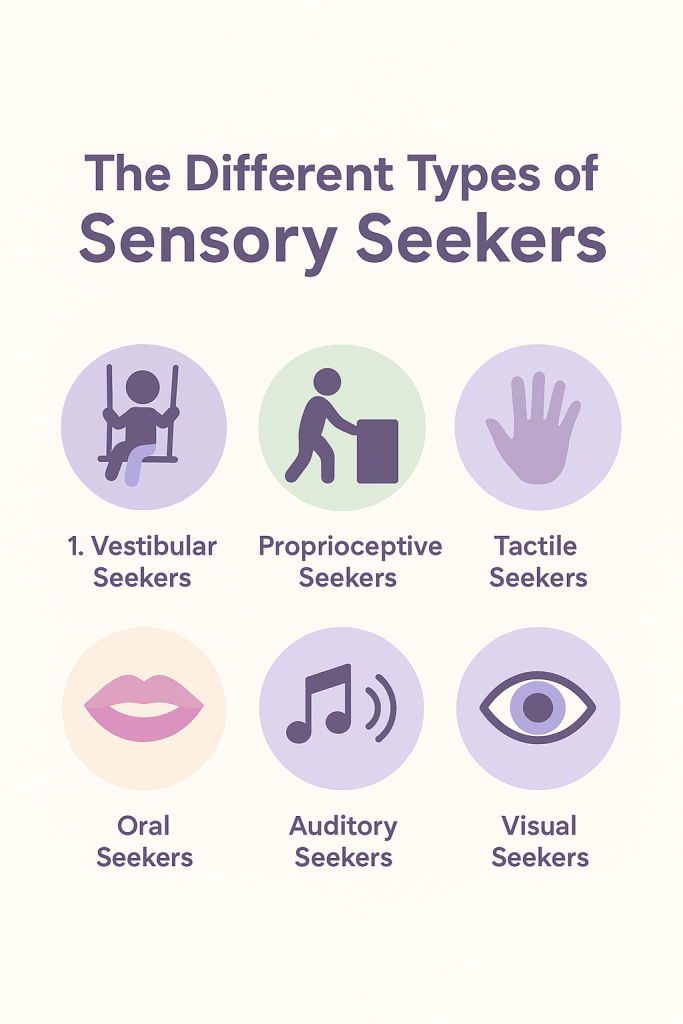
Recognizing which sensory systems a child or adult seeks can help redirect behaviors into safe and supportive outlets. Instead of labeling them as restless or disruptive, we can see their actions as communication.
Supporting sensory seekers isn’t about stopping the need for input, it’s about understanding and meeting it in a way that helps them thrive.
Reminder: Sensory Processing Difficulties aren’t kid-specific. It’s not something that goes away with age. There are ways to learn how to manage and support the day-to-day challenges and there are many adults that need support as well.
 Just My MomSense