
Understanding Different Types of Therapy for Kids and Families

This household is very pro therapy! However, it’s so hard to know where to start, what the different types of therapies mean and what may be best for you or your child. With it being Sensory Processing Awareness Month, I thought I would explore the many types of therapy available for children and families; from occupational and speech therapy to CBT and talk therapy.

Occupational Therapy (OT)

Occupational Therapy helps kids build the skills they need for everyday life, from tying shoes and brushing teeth to regulating their emotions.

Common goals:

  • Improving fine and gross motor skills
  • Building independence with self-care
  • Supporting emotional and sensory regulation

Speech Therapy

Speech therapy goes beyond pronunciation. It can also help children who struggle with communication, social interaction, and feeding.
Speech therapists work on everything from articulation and expressive language to understanding nonverbal cues.

Common goals:

  • Improving clarity and confidence in speech
  • Strengthening language comprehension
  • Supporting social communication and pragmatic skills

Physical Therapy (PT)

Physical therapists help children build strength, balance, and coordination. This therapy is especially beneficial for kids with developmental delays, low muscle tone, or motor planning challenges.

Common goals:

  • Increasing strength and endurance
  • Improving posture and balance
  • Building coordination for daily tasks and play

Play Therapy

Play therapy uses play, a child’s natural form of expression, to help them process big feelings and experiences. It can be especially effective for children who have anxiety, trauma, or difficulty expressing emotions verbally.

Common goals:

  • Building emotional awareness
  • Developing coping and problem-solving skills
  • Strengthening trust and communication with caregivers

Cognitive Behavioral Therapy (CBT)

CBT is a type of talk therapy that helps children (and adults) recognize negative thought patterns and replace them with more positive, realistic ones.
It’s a powerful tool for anxiety, depression, and emotional regulation. Therapists often use visual aids, role-play, and journaling to make CBT age-appropriate and engaging.

Common goals:

  • Managing anxious or negative thoughts
  • Building resilience and confidence
  • Developing coping strategies for real-life challenges

Talk Therapy

Talk therapy provides a safe, judgment-free space for both kids and parents to explore feelings, relationships, and stressors. For parents, it can also be an invaluable form of support when navigating a child’s diagnosis or behavioral challenges.

Common goals:

  • Reducing stress and overwhelm
  • Improving communication within families
  • Processing emotions in a healthy, supported way

Feeding Therapy

Feeding therapy helps children who struggle with eating, whether due to sensory sensitivities, oral motor challenges, or anxiety around food.
A therapist might use gradual exposure, play, and desensitization to help make mealtime more positive and successful.

Common goals:

  • Increasing comfort with new foods
  • Building safe swallowing and chewing skills
  • Reducing mealtime anxiety and power struggles

Parent and Family Therapy

Therapy isn’t just for kids, it’s for families, too. Parent coaching or family therapy can help improve communication, set boundaries, and strengthen relationships.

Common goals:

  • Building teamwork between caregivers
  • Creating consistent routines
  • Understanding and supporting each child’s needs

Therapy isn’t a one-size-fits-all solution. Every child and every family is unique. What matters most is finding the right combination of support that meets your child where they are.

Whether it’s OT for sensory needs, CBT for anxiety, or play therapy to help your child open up, each form of therapy is a step toward greater understanding, connection, and confidence.
Let’s Talk About It: May is Mental Health Awareness Month

Today on the Just My MomSense podcast, we’re talking about something that impacts all of us: mental health.

May is Mental Health Awareness Month, and it’s a powerful reminder that we deserve to check in with ourselves just as much as we check in on our kids. As parents and caregivers we often put our own well-being on the back burner. But mental health is health and it matters more than we sometimes admit.

🎧 Listen to the episode here

Therapy & Finding Support

  • Psychology Today Therapist Finder
    psychologytoday.com/us/therapists
    Find a licensed therapist in your area and filter by insurance, specialty, and more.
  • Therapy for Black Girls
    therapyforblackgirls.com
    A space to support the mental health needs of Black women and girls.
  • Therapy for Black Men
    therapyforblackmen.org
    Reducing stigma and increasing access to therapy for Black men.
  • Open Path Collective
    openpathcollective.org
    Affordable counseling options for individuals and families—often between $40–$70 per session.

Support for Parents & Caregivers

  • NAMI – National Alliance on Mental Illness
    nami.org | HelpLine: 1-800-950-NAMI (6264)
    Offers free education, advocacy, and support for individuals and families.
  • Parent to Parent USA
    p2pusa.org
    Connects families of children with special needs, including mental and behavioral challenges, for peer-to-peer support.
  • The Mighty
    themighty.com
    A compassionate community where people share stories and experiences related to mental health, chronic illness, disability, and caregiving.

For Kids & Teens

  • Child Mind Institute
    childmind.org
    Tools and tips for supporting children’s mental wellness, from anxiety to ADHD and everything in between.
  • Crisis Text Line
     Text HOME to 741741
     crisistextline.org
     Free, anonymous support from trained crisis counselors—available 24/7 via text.

In Case of Emergency

  • 988 Suicide & Crisis Lifeline
    Call or text 988
    988lifeline.org
    Free, 24/7 support for people in distress or those supporting someone else.

You’re Not Alone

Whether you’re dealing with burnout, anxiety, or just feeling “off,” please know that your mental health is worth prioritizing. Even five minutes of stillness, asking for help, or talking with a trusted friend can make a difference.

You are not failing. You are human. And you are doing an incredible job.

Let’s break the silence, reduce the stigma, and remind each other: it’s okay to not be okay. 

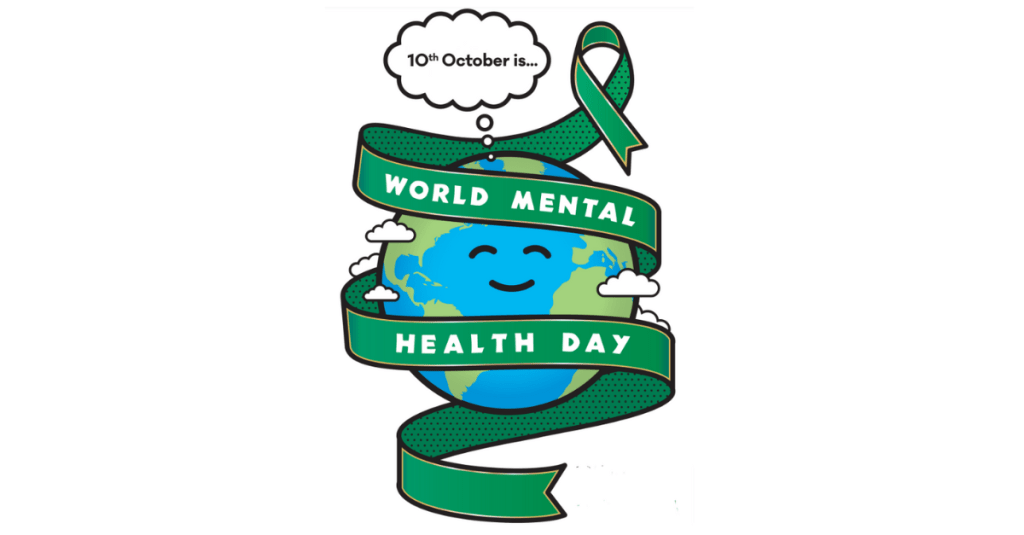
World Mental Health Day

The overall objective of World Mental Health Day is to raise awareness of mental health issues around the world and to mobilize efforts in support of mental health. The Day provides an opportunity for all stakeholders working on mental health issues to talk about their work, and what more needs to be done to make mental health care a reality for people worldwide. – World Health Organization

There is no shame in taking care of your mental health. There is no shame in admitting you need help to take care of your mental health. There is no shame in talking to others about your mental health.

I recognize that in 2023 there is still a stigma when in comes to discussing mental health. I realize there is still a stigma when people talk about going to therapy. However, I am thankful that the stigma seems to be diminishing as each year passes. As it should, right?

It’s hard to talk about sensory difficulties without talking about anxiety. They go hand in hand and can feed off each other easily. Providing your children with the right tools to help them overcome any of their challenges as early as possible can make such a difference. Whether that is speech therapy, occupational therapy, talk therapy, play therapy, while also working with them at home, it can all change how you and your child communicate and get through the day to day.

As a mom, talking to another parent that may be reading this, please know that taking care of your mental health is so important. It’s great to have a support system around you and some are lucky to have that. Whether you do or you don’t, it’s ok to also ask for additional help. Talking to a therapist, meditation, and working on yourself can do wonders for your kids. If you are not regulated, they won’t be either. Being a parent is tough, add having a child with anxiety, sensory difficulties, health issues or any other challenges and being a parent just got tougher. Please take care of yourselves as well.

During World Mental Health Day, I wish for kindness and compassion for all of us. I wish for everyone to feel peace and happiness. For those that aren’t feeling that way, please know it’s ok to ask for help.

Helpful Links:

MentalHealth.org

MentalHealth.org.uk

Star Institute

Psychology Today

Artist Spotlight: Nicole Porter

I’m so excited to be adding a new section to the Just My MomSense Blog!

On the Magical Mommy Monday Podcast, my amazing co-host Angela Dahlgren and I had the opportunity to chat with some awesome family entertainers. I want to continue to showcase those that are taking their passions and turning them into art for families, here on this blog!

The Artist Spotlight page will highlight one new entertainer a week. We’re going to start things off with Nicole Porter and her new album “For Children of All Ages.” As a parent and child therapist, she helps children heal through her art.

If you’ve read this blog before then you know I am a big believer of kids having tools in their toolbox to help them with speech, to regulate themselves or to express themselves. Art is such an amazing tool for anyone, but especially children. I love how this album takes listeners on a journey of healing.

For Children of All Ages provides a rare opportunity to enjoy tunes geared toward uplifting children and families who are experiencing difficult times,” says Nicole Porter. “It focuses on fostering wellness and a sense of security, and it introduces therapeutic techniques that can be used in a playful way with all children. It’s also a gentle dip into the vast stream of possibility that art therapy holds for healing humans.”

As co-producers, co-writers, and members of the band You and Us, Nicole Porter and musical colleague Wyndham Garnett (Lola Kirke, Clap Your Hands Say Yeah, Elvis Perkins) bring a vibrant dynamic to For Children of All Ages. Recorded at the Chicken Shack with Nick Kinsey (Kevin Morby, Waxahatchee, Elvis Perkins), the album draws upon Porter’s and Garnett’s mutual love of vintage British rock and classic American puppetry. The songs abound with thoughtfully crafted messages of courage, love, and support, delivered from the heart with artistry, enthusiasm, grace, and more than a few giggles.

About Nicole Porter:

Specializing in early childhood, acute assessment, trauma treatment, family advocacy, and community education, Nicole Porter works as a clinical director, art therapist, and artist. Porter directed child therapy in the days following the Sandy Hook School tragedy in Newtown, Connecticut in 2012. The processes and tools developed with the Newtown families inspired her to establish a mental health organization and art therapy trauma response team, the Emerald Sketch, which mobilizes clinicians to set up sustainable creative arts therapy services following disasters or traumatic events throughout the United States and globally. Porter has led trauma response projects at sites ranging from the Emanuel AME Church in Charleston, South Carolina to the March for Our Lives in DC and beyond.

Her creative projects include An American Nightmare, a 2019 solo performance at Hudson Guild Theater, NYC, and The JillRabbits, a Philadelphia-based electro-pop band, of which she was a member from 2005 to 2014. The band You and Us is Nicole Porter’s first foray into recording and producing family rock and pop music.

For Children of All Ages is available now: https://www.nicoleporterdavis.com/music

World Mental Health Day

As parents, we all do so much to keep the household running. We’re responsible for tiny humans, jobs, bills, house, extended family, the list goes on. There’s not too much time for us and it’s easy to put ourselves on the back burner.

I spend a lot of time trying to talk through feelings with my kids. We work on identifying a feeling and how to navigate through it. Not an easy concept. Not even for adults. There are books, and great kids programming to help educate on feelings as well. I even wrote about the “Breathe, Think, Do” app in a recent post. All excellent items for a kids’ toolbox.

But it’s hard for us to remember to stop and breathe.

Like so many others, I’ve dealt with my own ups and downs when it comes to mental health. Even though for me, it’s been awhile since I went through it, I remember being there.

If you’re struggling in any way, there’s no shame in getting help and it’s not too late. Talk to a friend, a family member or a therapist. Like our kids, we need tools in our toolbox. The only way we get them is to keep learning and working on ourselves. It’s not easy and might be one of the hardest things you have to do. But if there was ever a time to take a big leap, it should be on yourself.