Parenting doesn’t come with a manual, but I’ve found tools and resources that make the tough days a little smoother. Whether you’re navigating sensory processing challenges, school struggles, or just need a moment to breathe, these resources have been a lifesaver for our family.
Below, you’ll find links to other sites I’ve found helpful, as well as my Favorite Things page, podcast episodes, and items from my Etsy shop, all curated to bring practical support, calm, and comfort to your parenting journey.
Explore these resources to help you manage parenting stress, neurodivergent needs, and everyday challenges with confidence.
What does sensory overload look like for you? The truth is, sensory overload can look different for everyone.
According to Queensland Health:
Sensory overload is when your five senses—light, sound, taste, touch, and smell—take in more information that your brain can process.Overwhelmed by all the input, the brain responds as it would to a life-threatening situation and enters fight, flight, or freeze mode.
You can read more from Queensland Health by clicking here.
Understanding the why behind someone’s reaction to their environment is the key to helping them get through it. A child may seem like they’re acting out in a busy store, but in reality, the lights and sounds are just too much for them. An adult at a party may need to leave the room for a bit and get some fresh air. The music, smells of different food and all the people may feel incredibly overwhelming.
Recognizing your own or someone else’s symptoms when experiencing sensory overload can be so beneficial. You’re able to come up with a game plan, code words, bringing items like fidget toys or ear plugs; all the tools one may need in order to properly process the environment around them.
Once again I’m going to shout out Sensory Spectacle. Over on their site, they have downloadable resources under ‘Shop’ and some of which are free! Click here for a printable resource from Sensory Spectacle all about sensory overload. It contains helpful information and characteristics of sensory overload.
We’re less than 10 days away until Fall! It’s definitely a favorite time of year for me, but it’s not for everyone. For those with Sensory Processing difficulties, a change in seasons may affect them more than you think.
There are many factors that may play into why someone with SPD may not like this time of year:
Going from hotter temperatures to cooler temps and how that makes our bodies feel
Having to wear different type of clothing: going from shorts to pants may make someone feel uncomfortable and too covered up.
The sounds in the environment: leaves, wind, etc.
The smells of the environment
My son was so excited going from cooler temps to warm last year. He was so happy to be able to wear shorts and felt so “free,” as he put it. His entire mood changed, for the better, that first day he wore them to school.
Becky Lyddon and Sensory Spectacle are always so great about providing information regarding SPD. Becky has been kind enough to write guest blogs here in the past (check out the archives) and I was able to talk to her on an episode of the Magical Mommy Monday podcast. Below is a video she put together to explain further why someone with SPD may be affected by changes in weather:
The vestibular system contributes to balance and orientation in space. It is the leading system informing us about movement and position of head relative to gravity.– SensoryHealth.org
There are times ‘J’ will jump on his bed at the end of the day. My immediate go-to is to stop him and explain how it’s time to get ready to sleep, not to play. But what he’s doing is bigger than playing. He’s giving his body what he needs in order to get to a more restful state. Yes, I know this seems like a contradiction, but trust me, it’s true.
I’ve been lucky enough to chat with Becky Lyddon from Sensory Spectacle on a few occasions and she is so awesome at explaining sensory life. I have mentioned her in previous blogs and I’ll be sure to link those below. For now, let’s listen to Becky explain the benefits of bouncing on a bed.
We have a trampoline in our backyard and ‘J’ could jump on it for hours. Over the years we have offered time on the trampoline when we can tell that it may be helpful in certain moments. Of course this is aside from just random playtimes when he’s bouncing as well.
I often have to remind myself that jumping on the bed is often exactly what ‘J’ needs and not something he’s doing strictly for the fun of it.
If you’ve checked out my previous blogs, then you saw a series written by Becky Lyddon, founder of Sensory Spectacle.
Fun fact: I host two podcasts! One is Theme Park Thursday with Dillo’s Diz, with my brother, where we focus on Disney nostalgia. The other is Magical Mommy Monday with my friend, Angela Dahlgren.
Ok, now that the cheap plugs are done, we can move on.
Becky was kind enough to take time out of quarantine to chat with us on the Magical Mommy Monday Podcast. Along with her amazing YouTube videos and her website containing trainings, she also has a podcast as well.
Click here to check out episode with Becky to learn more about her background, sensory processing and Sensory Spectacle!
Back in April I wrote about how much J did not enjoy getting his hair wet or having it cut. Here we are in October and not too much has changed.Bath time has gotten easier, although he still has his moments. We still can’t wet a brush or comb when styling his hair.
Before school started, I took him to get a haircut. We made multiple attempts in multiple locations and none of them ended well. He was crying, screaming and trying to run away. It got to the point of his hair being in his eyes that we knew we had to try a different route before school started. My husband took on the duty of adding stylist to his resume. It was a struggle and took over an hour, but ultimately J had his hair in a much better state than he started with.
Hair grows fast. This weekend we found ourselves once again in the position of needing to take J to get his hair cut. We figured we’d skip the struggle of getting it done somewhere and just have my husband do it again. Needless to say, it didn’t go well (not horrible but could be better) and we will definitely be going back to the professionals for next time.
Click here to read “A Hair Situation,” which I posted back in April. I also included 3 videos from Sensory Spectacle in the post discussing why those with SPD find washing, brushing and cutting hair difficult.
Since we’re discussing hair cuts again, I have included that video below. What may not be fun for some kids is heightened for those with sensory difficulties.
This past weekend, we went to a Mets game. ‘J’ has been quite a few times in his 4 years and ‘Baby J’ went once last year. However, this was our first game of the season.
We went with my family which meant three kids 4 and under (my niece is right in between the ‘J’s’). Knowing the kids probably wouldn’t sit through much of the game, we got seats in the highest section…also known as the boonies. Some more background for you: it was also one of the hottest days of the summer and the game started when nap time is normally happening for all three.
If you’ve been to a game, you know there are lots of announcements, plenty of loud music and crowd chanting. Being so high up, we were pretty close to the speakers. Within a few minutes, the first announcement was made and ‘J’ was freaked out. He wanted to leave and said it was too loud. Him and I went back down, found a shady spot out of the way on the next level down and had a little hot dog and french fry picnic. We talked through it, walked around a bit and he wanted to try again. I’m happy he tried two more times but it was still too much for him.
He definitely has a sensitivity to sound and certain things are very overwhelming for him. What we have learned is that if we keep talking to him and maybe get him to cover his ears, it can sometimes help. The thing that has helped the most has been letting him know there’s a way out and a safe space. We know the signs/cues from him and we don’t want to see him go into ultimate freak out mode especially if the sound is affecting him that much. Once we found a calmer/cooler spot, he was ok.
Eventually the sun started invading our seats and we all hung out on the next level down before heading home. Back in the day, we used to stay the whole game…or at least until the 7th or 8th inning. Now we never make it past two hours. We did manage to get some adorable pictures which was great!
Oh and by the way, ‘J’ was asleep as soon as we got out of the parking lot.
Below are two videos from Sensory Spectacle regarding auditory difficulties.
‘J’ had his first haircut on the day he turned 1. We were in Disney World and went to the Barber Shop on Main Street. It was so much fun and he did great! He may have been ok with a haircut or two after that one but since that timeframe, it has been a struggle.
As time has gone on, it’s not just a struggle to cut his hair. Washing his hair is usually being done as he is screaming or crying. Brushing his hair is a big battle in the morning. Sometimes I try wetting the brush a bit since he definitely has a big case of bed head every morning. I’m trying to give up wetting the brush since he hates feeling the water and only makes him hate the experience more.
It’s tough when we’re getting ready for school and he’s running away screaming not wanting his hair brushed. Or if I was able to brush it, he then has to rub his head in the couch, bed or on his hand while screaming which puts us back to square one.
This is an ongoing process to see what may help him get through these activities. It’s another example of something most people take for granted, but for him, it’s an extra sensitive situation. Like most things in parenthood, it’s trial and error until we find the key to what works.
Below are two videos from Sensory Spectacle. The first talks about why someone with SPD may not like brushing their hair, the second discusses why they may not like washing their hair and the last is all about haircuts.
A big trigger for ‘J’ are sounds. He absolutely hates when our dog (or my parents’ dog) does her alert bark. If someone rings the doorbell, of course our dog is going to respond and let us know. Although she feels like she is protecting us, ‘J’ sees it as something that is being done to him.
One of my first red flags was seeing ‘J’ react to his sister or cousin crying. At first I thought he was just being empathetic (and I’m sure there is an aspect of that) but over time I felt like there was more behind it. It’s so hard to watch him react to their crying, especially if we’re in a car or somewhere else where he can’t remove himself from the situation. It completely overwhelms him and he cries and screams to express the hurt it’s causing him.
I think because he has started to realize that things that are too loud are overwhelming, he describes certain situations as “too loud” or “too big.” At this point we are try to work with him to understand what can soothe him in these situations. Sometimes it’s playing a Super Why game on our phones and other times it’s having a snack. Unfortunately sometimes we just have to wait it out, which is the hardest one of all.
In The Out-Of-Sync Child, Carol Stock Kranowitz discusses determining if a child has an issue with each sense. For the auditory sense, she details overrresponsitivity, underresponsitivty and sensory craving. Although I can relate ‘J’ to a few different aspects, one line stuck out for me: “If he can’t get away from the hubbub, he may raise his own voice, hollering, La-La-La-La! to counteract noise, rather like fighting fire with fire.” If ‘J’ doesn’t respond by crying to a sound that is bothering him, he starts screaming or talking louder to try to deal with the overwhelming sound.
Although these are my experiences, Sensory Spectacle has a video on their YouTube page that explains why some people may cry at sudden noises:
Thank you again to Becky Lyddon, founder of Sensory Spectacle. Here’s is Part 2 of our 3 Part Weekend Series:
Sensory Spectacle creates immersive learning environments to help parents, professionals and students gain a unique insight into how SPD may feel for them and learn through empathy how best to personalize support for someone with SPD. Our Being Ben experience is based on a common difficulty of filtering out unnecessary sounds, Lola’s World is based on a visual processing difficulty of fragmentation and Mehdiosmia is based on a boy who found the smell of washing detergent too overwhelming to change his clothes.
There are 3 ways someone’s sensory processing may be affected. They could have difficulties with the amount of information they are processing – familiar terms for this are know as seeking and avoiding characteristics. Other people may have difficulties with working out the location or intensity of a sensation. And the third way is through motor-based difficulties. Often covering ears, squinting eyes, licking things, throwing objects, bumping into things, constant movement and eating a small selection of foods are characteristics we may commonly recognize and these are all relating to modulation – the amount of information someone is processing.
Our bodies need a certain amount of sensation to feel ‘OK’. We are constantly regulating ourselves and telling ourselves we are ‘OK’ we might need to help support people with SPD to do this but these characteristics mentioned above are some ways they are already supporting themselves.
Learn loads of fun and practical ways to support children and adults with SPD with our SPECTACULAR Play and Support guides which you can find on our website shop.
Stay tuned tomorrow for our final part of the series from Becky’s piece on Sensory Processing and don’t forget to check out Sensory Spectacle at http://www.sensoryspectacle.co.uk/!
If you missed Part 1 of our 3 part series, click here.




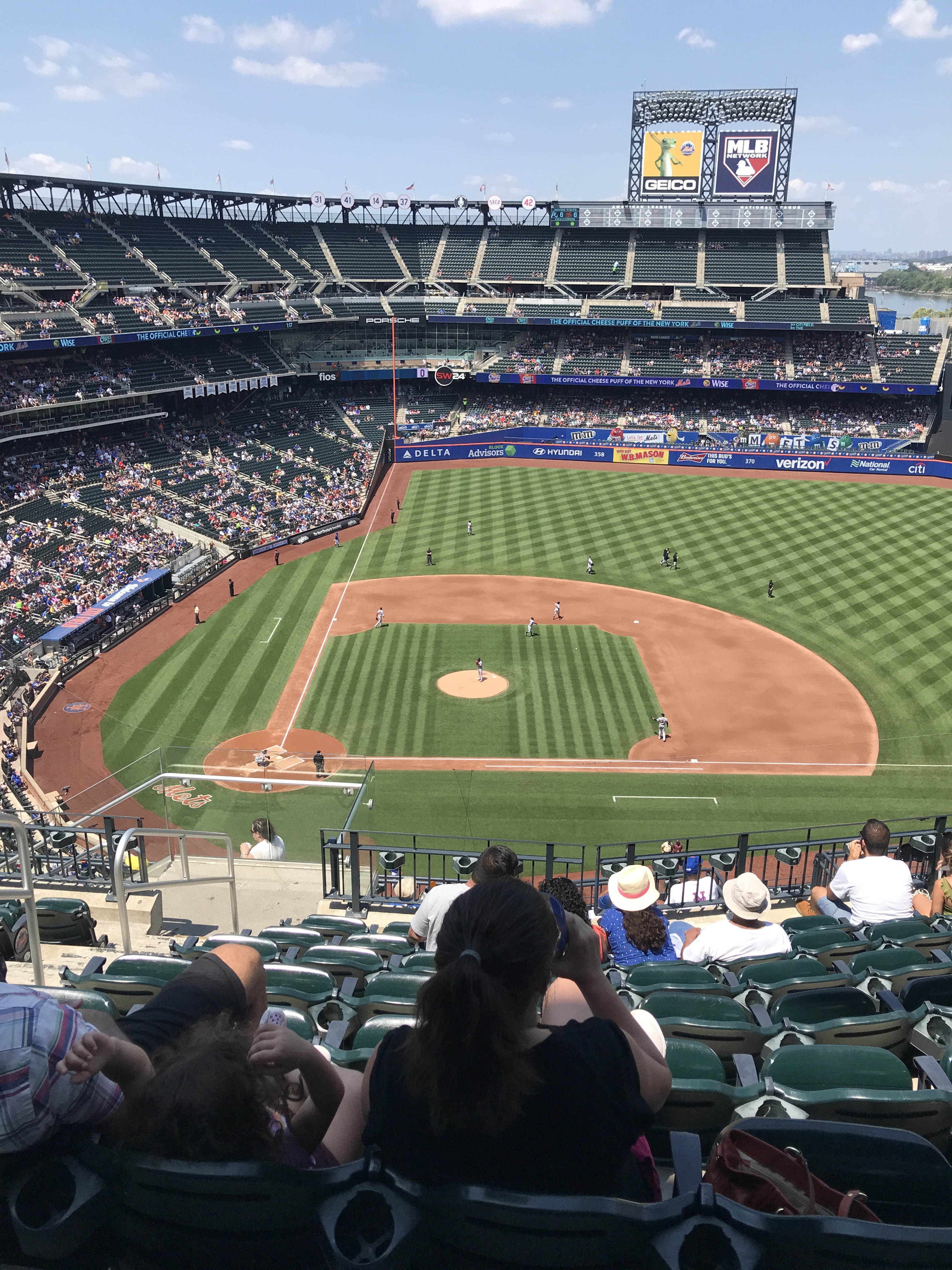 between the ‘J’s’). Knowing the kids probably wouldn’t sit through much of the game, we got seats in the highest section…also known as the boonies. Some more background for you: it was also one of the hottest days of the summer and the game started when nap time is normally happening for all three.
 Just My MomSense