Magical Mommy Monday Meets Sensory Spectacle

If you’ve checked out my previous blogs, then you saw a series written by Becky Lyddon, founder of Sensory Spectacle.

Fun fact: I host two podcasts! One is Theme Park Thursday with Dillo’s Diz, with my brother, where we focus on Disney nostalgia. The other is Magical Mommy Monday with my friend, Angela Dahlgren.

Ok, now that the cheap plugs are done, we can move on.

Becky was kind enough to take time out of quarantine to chat with us on the Magical Mommy Monday Podcast. Along with her amazing YouTube videos and her website containing trainings, she also has a podcast as well.

Click here to check out episode with Becky to learn more about her background, sensory processing and Sensory Spectacle!

You can visit Becky’s one stop shop for Sensory Spectacle here: https://www.sensoryspectacle.co.uk/

A Sensory Evaluation: Take 2

During his Kindergarten year, ‘J’ received Occupational Therapy at school. His Occupational Therapist (OT) was awesome and we stayed in contact to keep each other in the loop. However, occupational therapy in school typically focuses more on fine motor skills (ie: handwriting) and whether or not the student cannot focus in class. ‘J’ was doing great in both of these areas. Unfortunately, the school could not provide more assistance when it came to sensory difficulties. They did not have the space or types of therapies to assist students in this way. It was recommended that ‘J’ would not receive OT for 1st grade.

Knowing that ‘J’ struggled with lighting, sounds and still had separation anxiety during morning drop off, we had him evaluated by an outside OT. He was evaluated at the end of February, 2020 in the areas of Touch Processing, Visual, Oral, Movement and Motor. Without going into specific details, he received scores under the categories of “More Than Others” or “Much More Than Others.”

It was recommended that ‘J’ receive occupational therapy for help reduce sensory sensitivity in the area of auditory, touch processing, visual, oral and sensory seeking behaviors. There would be focus on strategies to help reduce anxiety in social settings, to make him become more comfortable with challenges and to adapt to given situations within his life.

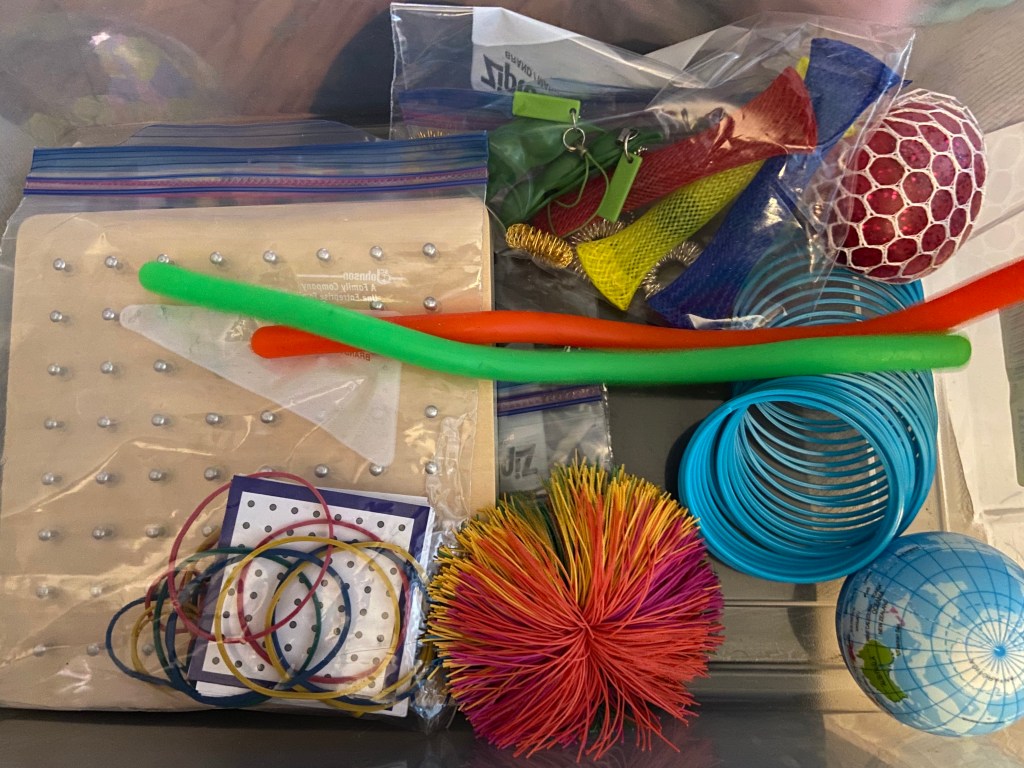
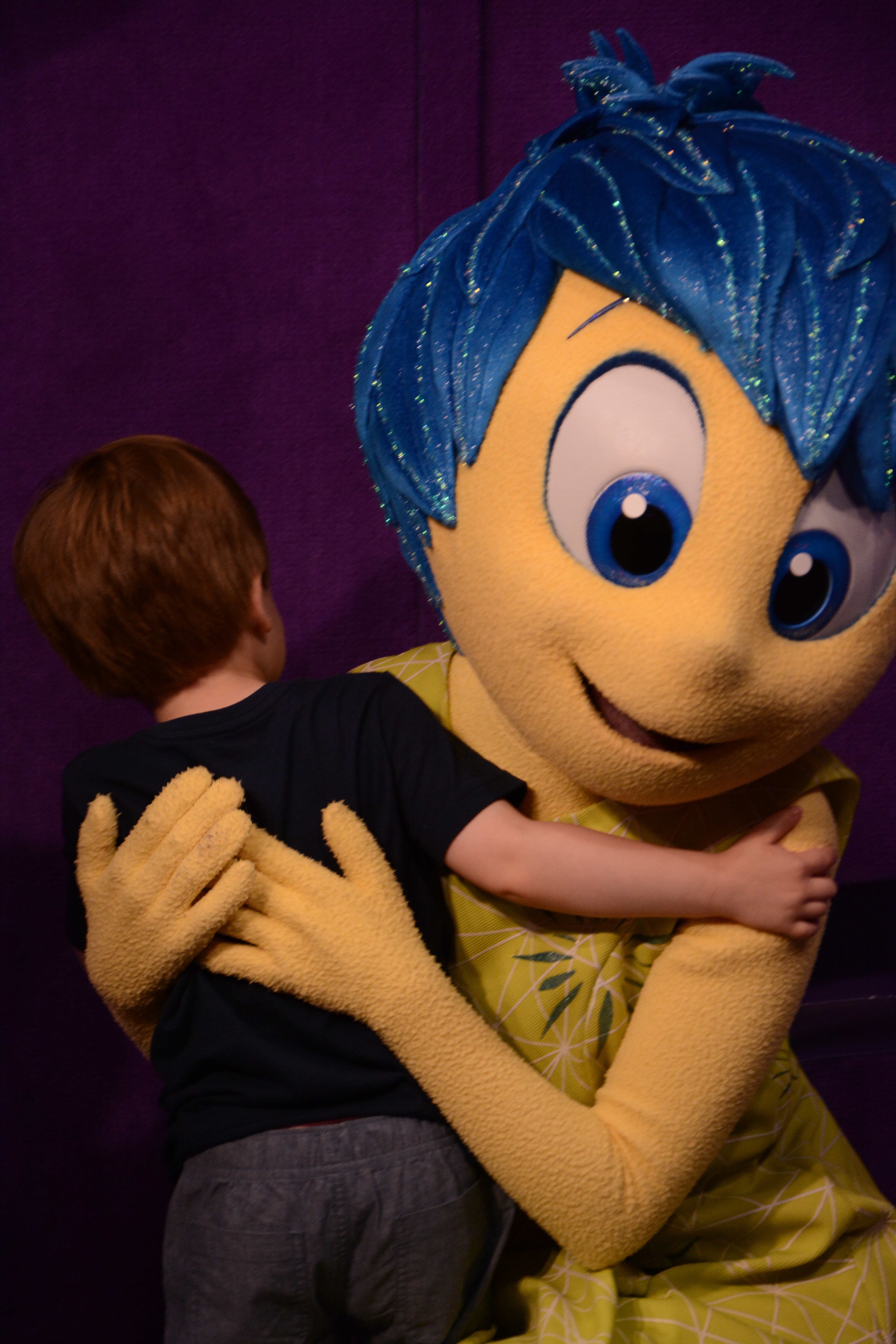
We were able to have two sessions with his new occupational therapist before everything shut down due to Covid. In the meantime, I came up with a Sensory Diet (pictured below), bought some fidget toys to assist with the sensory bin and luckily it was spring which meant lots of opportunity for outside play.

Like everyone else, we had to adjust our daily life. Although we were looking forward to have ‘J’ get started with occupational therapy to focus on his challenges, we did the best we could without it.

Overloads and Reactions

Every child with SPD is going to handle a sensory overload differently. This makes sense since the causes can vary, why wouldn’t the outcome?

For ‘J,’ there are so many things that can affect how he reacts to a situation where he’s uncomfortable. Sometimes it’s making a loud noise, other times it’s an actual scream. He could break down crying, get fidgety, act out or sometimes just give me a look where I can see he just needs some reassurance.

Most of the time we can be proactive in situations and deter whatever may affect him. At the very least, we always try to prep him from what he may see, hear or experience in any situation. If you’ve read this blog before, you know he’s huge on routine, so having a heads up to something new is always helpful.

Of course with a scream, people around us (family, friends, strangers) will notice. Being fidgety, acting out or giving us a look can be trickier. We know that he’s uncomfortable and we’re trying to get a handle on it or make it ok while those around us are clueless.

As I’ve talked about before, because SPD isn’t something you can see, people don’t always think through their actions because to them, ‘J’ often appears carefree. Someone we know might invite us to a big party, which is great and usually ends up being fine but we also know that ‘J’ will never be 100% comfortable. Others may play loud music, change up a routine, or try to play around by surprising him. His reaction can definitely run the gamut in these instances from giving a look to an all out meltdown.

When this isn’t a part of someone’s ever day life, it’s not a natural instinct to think through the moves you make. But taking an extra minute to think through actions can make all the difference to someone with sensory sensitivities.

Not Understanding Doesn’t Equal Not Existing

Sometimes when people don’t understand things, their automatic go-to is that it doesn’t exist.

When a person breaks their arm, you can see it. You know how it gets fixed and before long, the arm is back to new. With other conditions such as anxiety, depression or in my world, sensory processing difficulties, you can’t see it. There’s no cast to put on, and if someone hasn’t experienced it on some level, they’re not going to understand it. But, it doesn’t mean that it doesn’t exist.

I’ve talked about this a little in a past post, “Is This a Real Thing?” I’m sure I’ll talk about it again in the future because it’s an ongoing conversation. Being a part of various social media groups, I read so many stories of families not being supportive of a child with sensory processing difficulties. Often the parents will hear that they don’t discipline enough or that their child needs to learn respect. Sometimes a spouse doesn’t understand what’s going on, is scared of what others will think and therefore rejects the idea of an evaluation. When really, the sooner you get your child the proper therapy he/she needs, the quicker they will begin to thrive.

I don’t think everyone in our world fully understands what ‘J’ is going through or even what it all means. But they are supportive and only want the best for him. We’re still learning everyday. I’m lucky to have a spouse that is on the same page as I am and we work through it all as a team. I feel for those who don’t have the support since it’s stressful enough on it’s own.

There is plenty to catch up on from the couple of months I’ve been away from blogging and we will definitely get to it all!  A person won’t be cured sensory difficulties, but they can be given tools to help them through everyday instances that most of us take for granted. I hope those that are starting off without the support they need, eventually find it.


Auditory Sensitivities

Imagine sitting in your living room, watching TV and your 4 year old pops up and says “hey, what’s that?” But you don’t hear anything. He knows there is something and starts looking around until he gets to the window, lifts up the blinds and reveals a fly.

‘J’ has always been able to hear sounds from far away. As a baby playing on the floor, far in the distance there would be a horn honking and he would lift his head up. When we realized he had a speech delay, I was asked if I had concerns about his hearing. I said no.44034957_172598086940946_1868850213062443008_n.jpg

Fast forward to a few months after his sister is born, the three of us driving in a car and she is hysterical in the back. ‘J’ loses it and I think he’s being empathetic for his sister. He was and still is, but he’s also negatively affected by her crying. It’s a trigger for him. As you know from a previous post, “When is it Empathy and When is it Sensory,” this was one of my first red flags and what lead me to learning more about Sensory Processing Disorder.

Another great book I came across, since I follow them on Twitter (@sensorysmarts) is “Raising a Sensory Smart Child.” In the book, authors Lindsey Biel and Nancy Peske takes the reader through the various reactions to sound, how it connects to learning and the vestibular connection. I would definitely add this book to your library for anyone navigating through sensory difficulties.

I notice a change in ‘J’ when sounds are affecting him. They’re not always loud, they’re not always sudden but it can affect the way he feels or acts in a snap. Sensory Processing Difficulties are different for everyone. This is just one of the ways it affects ‘J.’

Change of Weather

I have horrible allergies and sinus issues. These get worse when the seasons are changing or if there’s rain. I’m also not myself if it’s a rainy day. I think many others are like that too, right? How many times do you hear ‘it’s a perfect day to stay in and watch movies.’ Knowing all of this, I shouldn’t be surprised that I notice a change in ‘J’ on non-sunny days.

IMG_3938.jpg

When trying to pinpoint when I noticed the shift, I think it was last year during a windy day. He was having more meltdowns, seemed tired and overall was not himself. I couldn’t quite figure out what was going on until the next windy day when it happened again. Over time, I picked on cues from him on cloudy days, rainy days, a major shift in temperature, etc.

For those with sensory processing difficulties, a change in weather also means a change of clothing. Many people don’t enjoy socks on their feet or sweaters. They may feel overwhelmed in a jacket or get overheated easily with too many layers. We have these experiences on a smaller level, as ‘J’ is not a fan of tags in his clothing.

Sometimes what may not be a big deal for us or something we’ve gotten used to, will be a much bigger deal for someone with sensory processing difficulties. I hope all those that experience more difficulties during weather changes, have a smooth transition as we go from Fall to Winter!

One more thing: I should also mention that almost everyday, when we open the front door to leave the house ‘J’ will say “wow! it’s a beautiful day outside!” even if it’s not. Sometimes he can be a glass half full kind of kid.


October is Sensory Processing Awareness Month

1 year ago, I didn’t know that October was Sensory Processing Awareness Month. We were just starting the process of researching which eventually lead to approval for Occupational Therapy.

This blog was inspired by the fact that ‘J’ has sensory processing difficulties. I will be working hard this month to help spread awareness by sharing our stories.

‘J’ works so hard in Speech Therapy, Occupational Therapy and school. I’m so proud at how far he’s come and love watching him grow.

Click here to read where our Sensory journey began.

Thank You Regal!

The following blog is not an advertisement, just an honest review of our experience.

Back in October, my husband took ‘J’ to a Disney Jr event at the movie theater. We thought it would be a great way to test out the movie going experience with our then 3.5 year old. The event was showing Halloween episodes of some of his favorite shows and he’d be able to dress in his Woody costume. Sounds like a win right?

Nope.

Once he turned down the dark hallway to the theater, he ran the other way. After attempting to get him back, including FaceTiming with me, we decided he wasn’t ready. We eventually added this to the list of red flags we had when figuring out his Sensory Processing Difficulties.

Regal Cinemas has a fantastic summer event; Summer Movie Express: $1 Movies all summer long! Every Tuesday and Wednesday, Regal will show previously run/older movies. Both days will offer the same two movies but they change weekly.

SMX

We decided to give the movie theater experience another try. I was talking with a friend and we met up on Wednesday to check it out. Between us we have four kids: two are age 4, one is 2 and one is 1.5. So we definitely didn’t know how this would go!

‘J’ was doing great until we entered the theater. The lights were dim, it was a room he had never been in and he froze. Our friends sat down and we were hanging out in the entryway to the theater as he told me that he wanted to go home. After some time, some reminders of the snack stash I had in my bag and emoji games showing up on the big screen, we slowly made our way to our seats. We were there to see Sing, a current favorite. I did not expect to make it through the movie expecting he might get too overwhelmed or his sister would get way too fussy (after missing her morning nap).

I was amazed that we made it to the credits! All four of them did great. There was some fussiness here and there, some switching seats, but overall, it was a success! I still can’t believe it and it’s two days later.

Thank you Regal for creating an experience where parents feel comfortable in the theater (since its a morning movie filled with other kids) and a price point that eases the pain of possibly needing a quick exit at any moment.

I don’t think ‘J’ is all in on movies just yet, but perhaps a few more summer days at Regal and we may be ready for new releases soon!

Doing Disney with Sensory Processing Difficulties

If you are someone with Sensory Processing Difficulties, the idea of Disney World can seem very overwhelming. I mean, it’s overwhelming for people that don’t have these difficulties.

‘J’ was born with Disney DNA. I worked there for two years and prior to that had already visited Disney World about 50 times. In my final three months of working there, my husband started working there as well, which is how we met. Years have passed and we’ve taken many trips on our own. However, at this point, ‘J’ has already been 7 times and ‘Baby J’ has been 3 times.

We tend to do Disney a little differently. We don’t try to see everything we possibly can for everyday we’re there. Growing up, it was my family vacation spot and it was treated like a vacation. We would go to the parks in the morning and at night, with a stop at the pool and usually a nap in the afternoon. This made the trip way more relaxing.

Since we’ve been so often, we’re happy with the idea of just being there. Anything we do there, any ride we go on or restaurant we eat in is great. But if things don’t go as planned, that’s ok too. This makes being the parents of a child with SPD a lot easier. Before becoming parents we already knew future trips would probably be on their terms and schedule. That’s even more true now.
IMG_8412

The last two trips have been very eye opening. Things we thought would trigger him, didn’t and things we didn’t see coming, did. On our last trip, he was all about the Magic Kingdom and on the trip we took last week, it was completely overwhelming and he preferred the other parks. We try to get Fast Passes to help with lines and stick to a go with the flow mentality. If he’s not feeling it, we don’t do it and it doesn’t affect our trip because we know we’ll be back.

However, I am well aware that this is not the case for most. People take a trip once or twice while their kids are young and want to make the most out of the experience. I’ve been doing some research since we got back and Disney, being the amazing Guest orientated company they are, are fully prepared to make anyone with SPD (or any type of cognitive or physical disability) as comfortable as possible.

Once you arrive in Disney,  visit Guest Relations. They will be able to assist you with any questions you have and ensure your stay is magical! When traveling with someone with SPD (even if it’s just to a restaurant), there are certain item that may help them, should they feel overwhelmed in a situation. Remember to include that on your Disney trip. You can also visit the Guest Services portion of the Walt Disney World website for helpful tips and information. Click here to view the Services for Guests with Cognitive Disabilities page. If you’re visiting a different Disney Park, you’ll be able to find a similar page on their respective sites.

Meltdowns will happen and those with (and without) SPD will feel overwhelmed by some of Walt Disney World. My advice would be: don’t be too afraid to try. That pixie dust has been known to work wonders. Perhaps you and your child will feel a connection to Disney you didn’t think was possible. Disney Cast Members are there to help, be sure to take it!

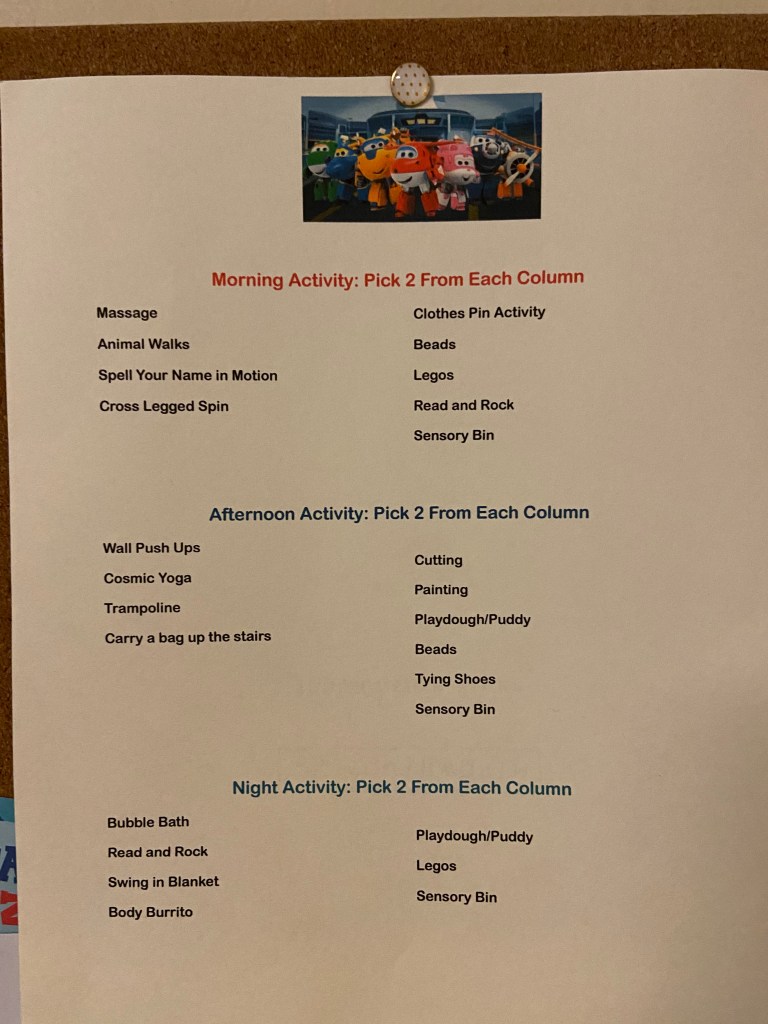
P.S. If you read my previous blog titled “Feelings,” than you know this picture with Joy was a big deal!

SPD in Teens and Adults

I often get asked if ‘J’ will grow out of his sensory processing difficulties. This is not something kids grow out of since it is a part of them. However, the work he is doing now and will continue to do will hopefully give him the tools to help him better handle his daily routine in the future.

The STAR Institute for Sensory Processing Disorder (SPD) posted a great article: “How SPD Affects the Out-Of-Sync Adolescent’s Emotions” by Carol Kranowitz, author of The Out-of-Sync Child. Click here to read the article.

Are you wondering what Sensory Processing Disorder may look like in adults? Click here to read all about it on additudemag.com. Thanks to social media, I noticed this article by the STAR Institute’s tweet!

Although kids and adults are affected by SPD differently, gaining insight is always helpful. Knowledge is power.

Be sure to check out the STAR Institute’s website  for more information about Sensory Processing Disorder.

STAR-Institute-logo