Supporting Sensory Needs with Everyday Tools

With October being Sensory Processing Awareness Month, it’s a great time to talk about how our nervous systems process the world around us. Some children (and adults) seek more sensory input, while others avoid it and often, kids can show a mix of both depending on the situation.

Understanding the difference can make daily life feel smoother, and having the right tools on hand can transform overwhelm into comfort.

Sensory Seekers and Avoiders: Two Sides of the Same Coin

  • Sensory Seekers crave input. They might spin, jump, chew, or touch everything around them because their nervous system wants more.
  • Sensory Avoiders are easily overwhelmed by input. Tags in clothes, sudden noises, or bright lights can feel like “too much,” leading them to pull away, cover ears, or resist.

It’s important to remember that these aren’t opposites that cancel each other out. A child can be a seeker in one area (loving spinning and swinging) and an avoider in another (hating sticky or itchy textures).

Having the right resources at home, in the classroom, or even in the car can help kids feel grounded and safe. Some examples:

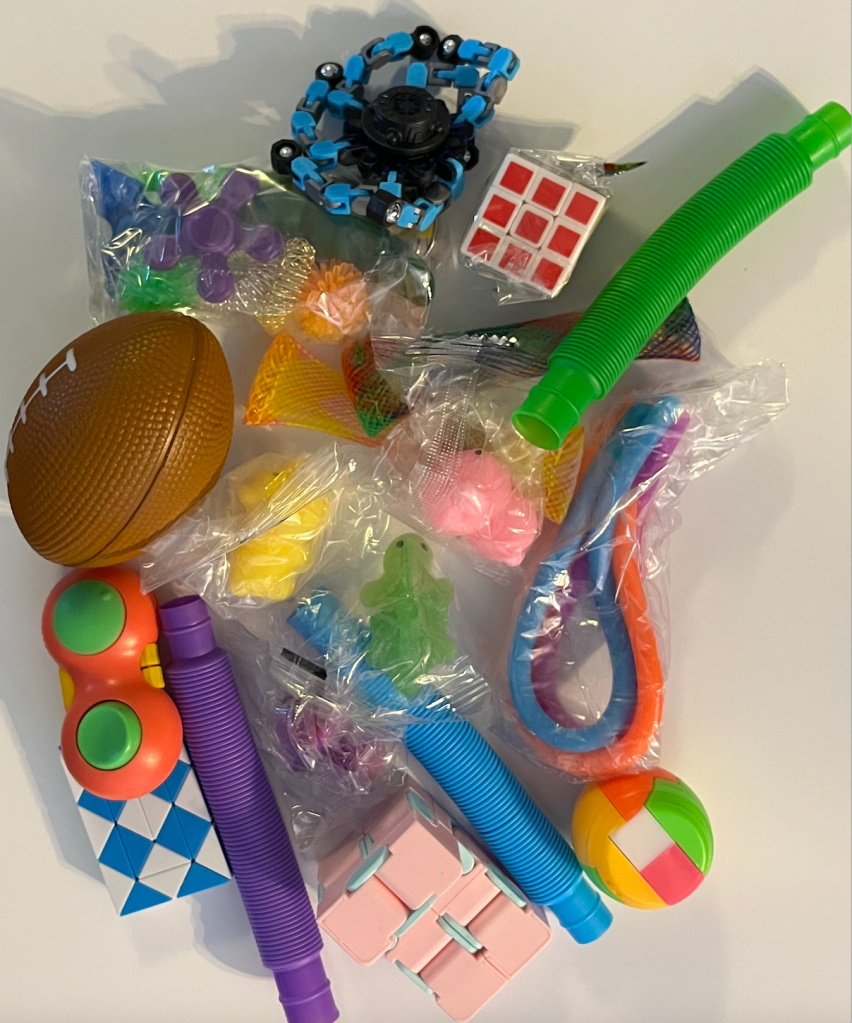
  • For sensory seekers: weighted balls, chewable jewelry, swings, trampolines, or fidget tools.
  • For sensory avoiders: soft tag-free clothing, noise-reducing headphones, blackout curtains, or cozy calming corners.
  • For both: books that explain sensory differences, flexible seating options, or tools that can be adapted depending on your child’s comfort level.

I’ve been keeping a list of items we have used (or similar). You can explore them all on my Favorite Things page. Whether you’re parenting a seeker, an avoider, or a little bit of both, this list is designed to help you find what works best for your family.

Sensory needs don’t disappear with age, they evolve. The more we learn, the better we can support our kids (and even ourselves) with patience, empathy, and the right resources. If you’re just beginning this journey, know you don’t have to figure it all out alone and simple tools can make a big difference.

Sensory Avoiders

Yesterday was all about Sensory Seekers but today will be all about Sensory Avoiders. While seekers crave more input, avoiders experience the opposite. Their nervous systems process input as overwhelming, and they often react by withdrawing, resisting, or shutting down.

Recognizing the different types of sensory avoiders can help parents, caregivers, and teachers provide the right environment and support.

Vestibular Avoiders

The vestibular system controls balance and movement. Vestibular avoiders often dislike swings, slides, or activities that make them feel off balance. They may resist climbing, running, or spinning. Supporting them means allowing slow, predictable movement at their own pace and never forcing participation.

Proprioceptive Avoiders

The proprioceptive system gives feedback from muscles and joints. While many children love deep pressure, proprioceptive avoiders may resist hugs, dislike tight clothing, or avoid heavy lifting. Respecting their boundaries and offering gentler forms of input can help them feel safe.

Tactile Avoiders

The tactile system processes touch. Tactile avoiders may dislike certain fabrics, resist messy play, or pull away from unexpected touch. Tags in shirts, scratchy clothing, or sticky textures can feel unbearable. Support strategies include soft clothing, gradual exposure, and allowing choice in textures.

Oral Avoiders

The oral sensory system processes input through the mouth. Oral avoiders may be picky eaters, avoiding foods with certain textures or strong flavors. They may gag easily or resist toothbrushing. Providing a variety of safe, preferred foods and slowly introducing new ones can reduce stress.

Auditory Avoiders

The auditory system interprets sound. Auditory avoiders may cover their ears at loud noises, dislike crowded environments, or struggle with sudden sounds like vacuums or alarms. Noise-canceling headphones, quiet spaces, and preparing them for upcoming sounds can make environments more manageable.

Visual Avoiders

The visual system processes light and movement. Visual avoiders may dislike bright lights, avoid crowded or cluttered spaces, or find fast-moving visuals overwhelming. Soft lighting, sunglasses, and calm visual environments are helpful supports.

Sensory avoiders aren’t being difficult or picky. Their nervous systems are sending danger signals in response to overwhelming input. By understanding their unique sensory needs, we can help them feel more comfortable and secure.

Awareness of sensory avoiders allows us to shift from frustration to compassion. Supporting them isn’t about pushing them into uncomfortable situations, it’s about respecting their boundaries and creating safe, supportive spaces where they can thrive.

Reminder: Sensory Processing Difficulties aren’t kid-specific. It’s not something that goes away with age. There are ways to learn how to manage and support the day-to-day challenges and there are many adults that need support as well.

How to Explain Sensory Processing to Friends, Family and Teachers

One of the biggest challenges of parenting a child with sensory difficulties isn’t just managing the day-to-day, it’s helping the people around us understand what’s really going on.

Since October is Sensory Processing Awareness Month, it feels like the perfect time to talk about how we can explain sensory processing to the friends, family members, and teachers who love and support our kids.

Most people want to understand, but they don’t know how. Sensory processing can feel invisible from the outside. A meltdown over scratchy tags or a refusal to eat certain textures can be mistaken as “bad behavior” or “picky eating.” That’s where our voice matters.

Here are a few ways to explain it simply:

Use relatable examples.
“Have you ever been stuck in a room with a flickering light or heard nails on a chalkboard? Imagine if your brain felt like that several times a day. That’s what it can be like for my child.”

Keep it short and clear.
“Sensory processing is how the brain interprets information from the five senses. For some kids, it’s turned up too high, for others, it’s turned down too low.”

Share what helps.
“It’s not about fixing my child; it’s about supporting them. Things like headphones, weighted blankets, or breaks can make a huge difference.”

Lead with compassion.
Sensory needs aren’t “bad” or “wrong,” they’re just different.

The more we talk openly, the more the people around us begin to understand. And that understanding builds patience, inclusion, and empathy.

This Sensory Processing Awareness Month, I encourage you to share a piece of your child’s sensory story with someone new: a teacher, a grandparent, a friend. Every conversation plants a seed of awareness, and together, we can grow a more compassionate community for our kids.

One more note: Sensory Processing Difficulties aren’t kid-specific. It’s not something that goes away with age. There are ways to learn how to manage and support the day-to-day challenges and there are many adults that need support as well.

Do you have a way you’ve been able to explain sensory processing? Share it in the comments below or connect with me on Instagram!

    Sensory Processing Awareness Month | October 2025

    October is Sensory Processing Awareness Month, and I couldn’t let the first day pass without taking a moment to share why this month is so close to my heart.

    If you’ve been following along with Just My MomSense, you already know that sensory processing plays a huge role in our family’s daily life. For us, it’s not just about quirky preferences or “picky” behaviors, it’s about how our children experience the world. A sound, a texture, or a room full of people can feel too much or not enough. What looks small on the outside can feel enormous on the inside.

    That’s why Sensory Processing Awareness Month is so important. It’s a time to pause, educate, and bring understanding to families, teachers, friends, and communities who might not fully see what’s happening behind the scenes. For those of us living this everyday, it’s a reminder that our kids are processing the world differently, and that deserves respect, patience, and support.

    This month, I’ll be sharing practical tools, calming strategies, and real-life stories from our sensory journey. My hope is that you feel less alone and more equipped, whether you’re a parent, caregiver, or someone who simply wants to better understand sensory needs.

    Let’s use this month to celebrate the uniqueness of our kids, raise awareness in our circles, and gently remind the world: sensory processing differences are real, valid, and worth honoring.

    Here’s to a month of awareness, compassion, and connection!

    It’s Podcast Launch Day! Welcome to the Just My MomSense Podcast

    Today’s the day.

    After months (ok, maybe years) of thinking about it, planning it, second-guessing it, and finally recording it, the Just My MomSense Podcast is officially live!

    Writing has always been my comfort zone, but after doing the Dillo’s Diz podcast for the past 7 years and spending a year and a half co-hosting the Magical Mommy Monday podcast, I felt like this was a good next step. I’m excited to share more stories, highlight helpful resources, and talk to experts or other parents!

    The Pilot and first official episode are now live! You can listen here by clicking on the Podcast tab on the menu or wherever you listen to podcasts! A new episode will drop on Wednesday and continue weekly.

    This isn’t about having all the answers. It’s about sharing what I’ve learned (and am still learning).

    Thank you for being here at the start. I’m so excited for what’s to come.

    Something New Is Coming: The Just My MomSense Podcast!

    For years, Just My MomSense has been a place where I’ve shared stories and helpful resources; but now, I’m so excited to tell you that something new is coming…

    Introducing: The Just My MomSense Podcast: launching this Mother’s Day!

    This podcast has been something I’ve been thinking about for awhile. Shameless plug: as some of you know, I host the Dillo’s Diz podcast with my brother, which centers around our love for Disney and Pop Culture. Taking what I’ve learned doing that podcast, turning Just My MomSense into a podcast started to feel like a natural progression. But this time, it would be just me and that part made me nervous.

    After writing blog posts, connecting with other parents, and learning (and unlearning) so much over the last 7 years, I felt it was time to bring these conversations to life in a whole new way. Podcasting allows me to expand on sharing resources as I continue to learn and connect with others along the way.

    Each week, I’ll be sharing:

    • Reflections from my own parenting experience
    • Resources that have helped our family thrive (or just survive a tough week)
    • Interviews with educators, therapists, and fellow parents

    The first episode drops on Sunday, May 11th (Mother’s Day)! With the title and all (and a nudge from a friend with the idea) it seemed appropriate. After that, we’ll settle into a weekly rhythm with new episodes every Wednesday. Episodes will also be posted on your favorite podcasting platform and right here on the blog.

    Follow along on Instagram and Facebook for more! You can also use or follow the hashtag #JustMyMomSensePodcast to join the conversation. Feel free to DM me or comment with questions or topics you’d love for me to cover.

    Thank you for being here, whether you’ve read one post or followed since the beginning. I can’t wait to share this next chapter with you.

    Let’s Talk About Sensory Processing Awareness Month

    Although I’m a bit late with this year’s post, we are still in October which means it’s Sensory Processing Awareness Month!

    If you’ve spent any time on my blog, you know sensory processing disorder (SPD) is a topic close to my heart. It’s something that shapes our daily lives, from the way we plan our days to how we navigate public spaces, and even how we handle the unexpected.

    What is Sensory Processing Disorder?

    For those who may not be familiar, Sensory Processing Disorder is a condition where the brain has trouble receiving and responding to information that comes in through the senses. Imagine living in a world where bright lights feel like they’re burning your skin, loud noises pierce your ears like sirens, or even a hug feels overwhelming. That’s what it’s like for many individuals with SPD.

    But here’s the thing—everyone experiences sensory input differently, so SPD manifests in many different ways. Some may be hypersensitive, others may seek out sensory input, and some fluctuate between both extremes.

    Our Journey with SPD

    Our family’s journey with SPD hasn’t been based on one specific thing. It was many pieces of a puzzle that when put together meant that being bothered by a tag on a shirt wasn’t about the specific tag. We’ve learned that sensory overload isn’t just about loud noises or bright lights—it can be the little things, too. Things that might seem inconsequential to someone without SPD. For example, socks with seams or a jacket that feels “wrong” can make or break a day. These are the types of things that many people don’t even think about, but for those with SPD, they can feel monumental. It was all part of a bigger picture. Learning more about sensory input, how the brain works and how everyday things that we take for granted can be so challenging for those with sensory processing difficulties, has shaped the way we look at our everyday life.

    Tips for Navigating SPD

    Resources like The Star Institute, Sensory Spectacle, reading books or following social media accounts like Sensory Processing Disorder Parent Support has helped in expanding our understanding.

    I have a page on this blog with a few of my favorite things including book recommendations, toys and more!

    I wanted to take a moment to share a few things that have helped us manage day-to-day life with SPD. Of course, every child is different, but these strategies have been game-changers for us:

    1. Create a Sensory-Friendly Space: This doesn’t have to be fancy, but having a designated area where your child can retreat to when feeling overwhelmed can be so helpful.
    2. Incorporate Sensory Activities: Sensory play has become a regular part of our routine. Whether it’s a bin of rice for tactile exploration, deep pressure activities like jumping on a trampoline, or using noise-cancelling headphones, finding what works for your child is key.
    3. Plan Ahead: We try to be proactive instead of reactive. When heading out for potentially overwhelming activities, we prepare by bringing sensory tools (like fidget toys or a favorite texture) and discussing ahead of time what to expect.
    4. Communicate Openly with Others: I’ve learned the importance of advocating for my child. Explaining SPD to teachers and family members, has helped them understand why certain accommodations or reactions are necessary. We’ve had to embrace being the voice for our child until they can speak for themselves.

    Every person with SPD experiences the world uniquely, and that deserves recognition.

    I hope that by sharing our experiences, I can help shed some light on what it’s like to navigate life with sensory processing disorder and offer a bit of encouragement to other parents who may be feeling overwhelmed or alone on this journey. We may not have all the answers, but we’re learning everyday.

    Happy Sensory Processing Awareness Month!

    World Mental Health Day

    The overall objective of World Mental Health Day is to raise awareness of mental health issues around the world and to mobilize efforts in support of mental health. The Day provides an opportunity for all stakeholders working on mental health issues to talk about their work, and what more needs to be done to make mental health care a reality for people worldwide. – World Health Organization

    There is no shame in taking care of your mental health. There is no shame in admitting you need help to take care of your mental health. There is no shame in talking to others about your mental health.

    I recognize that in 2023 there is still a stigma when in comes to discussing mental health. I realize there is still a stigma when people talk about going to therapy. However, I am thankful that the stigma seems to be diminishing as each year passes. As it should, right?

    It’s hard to talk about sensory difficulties without talking about anxiety. They go hand in hand and can feed off each other easily. Providing your children with the right tools to help them overcome any of their challenges as early as possible can make such a difference. Whether that is speech therapy, occupational therapy, talk therapy, play therapy, while also working with them at home, it can all change how you and your child communicate and get through the day to day.

    As a mom, talking to another parent that may be reading this, please know that taking care of your mental health is so important. It’s great to have a support system around you and some are lucky to have that. Whether you do or you don’t, it’s ok to also ask for additional help. Talking to a therapist, meditation, and working on yourself can do wonders for your kids. If you are not regulated, they won’t be either. Being a parent is tough, add having a child with anxiety, sensory difficulties, health issues or any other challenges and being a parent just got tougher. Please take care of yourselves as well.

    During World Mental Health Day, I wish for kindness and compassion for all of us. I wish for everyone to feel peace and happiness. For those that aren’t feeling that way, please know it’s ok to ask for help.

    Helpful Links:

    MentalHealth.org

    MentalHealth.org.uk

    Star Institute

    Psychology Today

    The Importance of Play

    If you’re a parent than you know that playing is one of the most important things children can do. There are so many benefits and it’s so beneficial to your child’s developement.

    Once the school year begins and extracurricular activities ramp up, sometimes it’s hard to make time to just play. It’s easy to get caught up in the routine, the chores, going from one activity to the next, working and everything else parents have going on throughout their day.

    It’s important to stop and play. Maybe not everyday, but as often as possible. We’re still at an age range where we can do playdates. We have friends we’ve made over the past couple of years that we can call to meet up with at a park, playground, library, bowling, or just hang at one of our houses. The kids are able to be in a comfortable place with some freedom and the ability to interact with each other. They’re able to learn from each other and work on communicating more effectively. The most important thing they’re able to do is have fun in a non-structured environment.

    As parents, my husband and I also work to make sure we’re playing as a family. Sometimes we walk up to a nearby school and play Basketball, Box Ball, Wiffle Ball, help them across monkey bars, or just race each other across the field. I won’t tell you who normally wins those races…

    Again, I know how much the daily grind can suck you in and you start to rely a little more on school for playing and socialization. However, doing those things outside of school is just as important. I try to be aware of it so that when I feel like it’s been a long week or a busy weekend where we were gogogo, I try to make sure we have that time to stop and play.

    Added bonus: it’s just as beneficial to parents!

    Want to learn more about the benefits of play? Check out some of these articles:

    Why Playing Is So Effecting In Your Kids’ Developement

    10 Things Every Parent Should Know About Play

    Want Resilient and Well-Adjusted Kids? Let Them Play