
Understanding Sensory Processing Symptoms

If you’ve ever wondered why your child covers their ears at the sound of a vacuum, avoids certain clothes, or seems to crave movement all the time, you’re not alone. For me, I felt like I had pieces of a puzzle and on their own, they didn’t mean much but when I started putting them together, a bigger picture was being formed.

Sensory processing is how the brain receives and responds to input from our senses (touch, sound, taste, smell, sight, movement, and body awareness). For most people, the brain organizes these signals automatically. But for those with Sensory Processing Disorder (SPD) or sensory differences, the system can get a little tangled.

Some pieces of the puzzle we were collecting back when my 11 year old was 3:

  • Back in 2017, he wanted to be Woody for Halloween. The back of his costume closed with velcro. This was the first time we really noticed a piece of clothing bothering him. The sound, the feel of it, everything bothered him. To this day, he cuts all tags out of his clothing.
  • 2017 was also when his sister was born. If we were in the car and she started to cry, he would start to cry and beg us to help her and take him home. He had similar reactions to others crying, including friends.
  • He was visibly overwhelmed in crowds and even during a drive-thru Christmas light display.

I talked in an earlier blog on how I started collecting these pieces and googling, while also consulting with his speech therapist. The experience opened our eyes to what sensory processing really means and how it affects everyday life in ways most people don’t even notice.

At 11, he’s able to recognize when things are too much or too overwhelming for him. His sister has had her own sensory experiences. It’s been interesting to see the overlaps and the differences in what can affect them in their individual sensory processing.

Sensory processing symptoms can vary wildly, but they often fall into two main categories: sensory avoiding and sensory seeking.

Sensory Avoiding

Kids who are sensory avoiders might:

  • Cover their ears or run from loud noises (like hand dryers or fire alarms)
  • Refuse certain fabrics, tags, or seams in clothing
  • Dislike being touched or hugged unexpectedly
  • Avoid crowded or visually “busy” spaces
  • Prefer dim lights and quiet settings

They’re not being “difficult,” their brains are simply trying to protect them from sensory overload.

Sensory Seeking

On the flip side, sensory seekers might:

  • Constantly move, jump, spin, or crash into things
  • Touch everything within reach (including people!)
  • Make loud noises or seek vibration
  • Love messy play or crave strong tastes and textures
  • Find calm through deep pressure, like a weighted blanket or tight hug

Kids (and adults) can also be sensory seeking with certain things, but sensory avoiders with others.

Recognizing sensory processing symptoms isn’t about labeling a child, it’s about understanding them. When we start to see the “why” behind behaviors, everything changes. Instead of frustration, there’s compassion. Instead of punishment, there’s support.

Here are a few small ways to make a big difference:

  • Create a sensory-safe space or bucket at home. For example: a cozy corner with fidgets, soft lighting, and weighted items.
  • Build sensory breaks into the day: a swing in the yard, a walk after school, or quiet time with a favorite texture.
  • Work with an occupational therapist (OT) who specializes in sensory integration.
  • Follow your child’s lead. They’ll show you what they need, sometimes with words, sometimes with behavior.

Sensory processing isn’t about “fixing” our kids. It’s about understanding their world and helping them feel comfortable in it. Every sensory system is unique and that’s what makes our kids who they are.

If this topic speaks to you, you might also enjoy my post on my favorite sensory tools and items that have helped in our home.

You know yourself and your child best. Trust your gut, trust your “MomSense” because having the knowledge and the right tools can make all the difference.

The Importance of Play

If you’re a parent than you know that playing is one of the most important things children can do. There are so many benefits and it’s so beneficial to your child’s developement.

Once the school year begins and extracurricular activities ramp up, sometimes it’s hard to make time to just play. It’s easy to get caught up in the routine, the chores, going from one activity to the next, working and everything else parents have going on throughout their day.

It’s important to stop and play. Maybe not everyday, but as often as possible. We’re still at an age range where we can do playdates. We have friends we’ve made over the past couple of years that we can call to meet up with at a park, playground, library, bowling, or just hang at one of our houses. The kids are able to be in a comfortable place with some freedom and the ability to interact with each other. They’re able to learn from each other and work on communicating more effectively. The most important thing they’re able to do is have fun in a non-structured environment.

As parents, my husband and I also work to make sure we’re playing as a family. Sometimes we walk up to a nearby school and play Basketball, Box Ball, Wiffle Ball, help them across monkey bars, or just race each other across the field. I won’t tell you who normally wins those races…

Again, I know how much the daily grind can suck you in and you start to rely a little more on school for playing and socialization. However, doing those things outside of school is just as important. I try to be aware of it so that when I feel like it’s been a long week or a busy weekend where we were gogogo, I try to make sure we have that time to stop and play.

Added bonus: it’s just as beneficial to parents!

Want to learn more about the benefits of play? Check out some of these articles:

Why Playing Is So Effecting In Your Kids’ Developement

10 Things Every Parent Should Know About Play

Want Resilient and Well-Adjusted Kids? Let Them Play

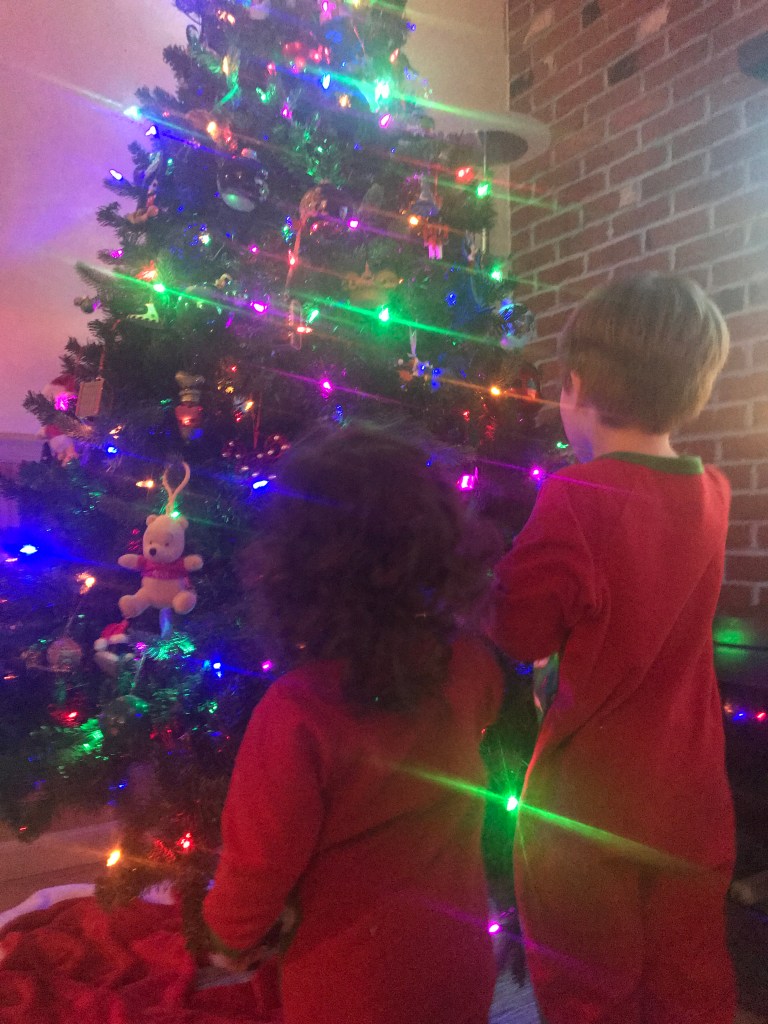
Why Is Christmas So Overwhelming?

For the past few (or more) years, we have always known the Holidays are pretty overwhelming for ‘J.’ Typically the month leading up to Christmas (and his Birthday) prove to be a challenge. In years past, that has been expressed through tears, extreme frustration, attitude, being on edge, acting out of character, etc.

In November, we attended a lunch for my dad’s work. We were at our family’s favorite restaurant, which was a familiar place for ‘J.’ We sat at a table with my parents, my brother, sister-in-law and niece. Immediately, ‘J’ wanted out of the situation. There were moments he seemed settled and then once he was done eating, he just kept asking if we could leave.

Through some tears on the way home, we focused more on having a calm drive. When we got home, I sat with him 1:1 to talk through what he was feeling at the restaurant. The first thing he said was “Why is Christmas so overwhelming?”

It may sound weird, but I felt a bit of relief in that. And not that I want him to feel bad or be sad, but the fact that he was able to communicate that was HUGE to me. We talked through what felt like a lot to him, how it was different than other times we were in the restaurant and everything that happens in the month of December. I told him how great it was that he was able to communicate how he felt and that it’s important that he feels comfortable. I asked what we could do to make the holidays easier and what changes we could make. In the end, he was feeling better and ended the day on a high note.

Holidays are typically stressful for everyone. There are highs and lows, parties, gifts, seeing more family, etc. I think as adults, sometimes you feel like-eh, kids can get through it, they get gifts, what could be bad?

However for them, as they’re still figuring out the world, there’s a lot happening. Add in sensory difficulties and anxiety and the normal day to day struggle that ‘J’ goes through is now heightened. As adults, if we’re uncomfortable, we can remove ourselves from a situation, ask for help or change plans. That’s way tougher when you’re a kid.

This Holiday season, remember to listen to your child (or those around you). If they’re acting different, crying more, getting frustrated more easily, remember that there is always an underlying reason. They’re not trying to be bad or ruin the holidays. I’ve said it before and I’ll say it again, they are people with feelings and opinions that should be respected just like anyone else.

If you’re the parent of a child with anxiety and sensory processing difficulties, take things one day, one hour, one minute, at a time. Remember to remain calm and keep yourself regulated (easier said than done, especially in this season) in order to be a safe place for your child. The Holidays may not look like you imagined, but that’s ok. Make the magic however you can in a way your child would appreciate.

Wishing you all a magical Holiday Season!

It’s the Final Countdown

What a week it’s been!

Baby J’s sickness developed into a virus with a new symptom everyday! A few trips to the doctor and a week later, she’s finally feeling better!

Big J had a snow day from school on Tuesday and was back in the grind on Thursday. I’m so happy he loves going to school…I’m sure one day he won’t!

It’s the Final Countdown to OT! We start on Monday! With everything going on lately, Itenor haven’t even had time to think about it too much. I definitely want to write down some questions and get him ready for the addition to his routine. Due to the timing availability of OT, we have to rearrange our Speech Therapy schedule. With J so comfortable with his awesome speech therapist, it’s easy to make adjustments without it affecting him.

I need to catch up on my reading of The Out-of-Sync Child and gear up for Monday! I’ll be sure to keep you all in the loop with our new journey!

From Grunts To Words: Our 1st Year With Speech Therapy

I wrote this back in September. Although a little outdated, it explains how this journey began.

September 2017

10 months ago our 2 year and 3 month old son grunted instead of talked. His birthday is in June and we knew at that point since he wasn’t talking, he either needed a little more time or we may need to have him evaluated. We decided to go through the summer, give him some time and see what September brought. 

Where It Started

At about 4 months old, he started sleeping with a Mickey stuffed animal and at 14 months he was saying “Mickey.” This was also the time he started walking so we thought he was right on track with developmental milestones. After a few months, we noticed new words were not being introduced. Sometimes he babbled mama and dada but never in context. Every once in awhile we thought we would hear a “hi” but it was a stretch. About a month before his 2nd birthday, we realized we hadn’t heard “Mickey” in awhile. We kept an ear out for awhile and realized he wasn’t saying it, whether prompted or not. This was our first red flag. Not only had no new words been introduced, but now the 1 word he did have was gone. He spoke in grunts, pointed to things he needed and wanted and we understood it all. He turned 2, we gave him the summer and by September nothing had changed. We were afraid of pushing him if he wasn’t ready but more afraid of holding him back from being the best he can be if he needed help. 

We started looking on our county’s website for the details regarding Early Intervention Services and getting him evaluated. We kept going back and forth as to whether or not we should move forward. Were we too worried? Maybe he just needs more time. Maybe we need to be doing more. Ultimately, we decided to move forward in the process, which we heard could take some time.

He was evaluated on his gross motor skills and his speech. The evaluator for his motor skills knew quickly he was right where he needed to be in that area. The evaluator for speech could tell he understood everything she said, but wouldn’t use words to communicate back. She had a toy that popped. She played with it over and over saying “pop” until he did.  After a few tries, he said it and we were amazed! A few weeks and many signed forms later, we began speech therapy twice a week for 45 minutes each. Luckily, the therapists we were working with also conducted a mommy and me class twice a week and we took the opportunity to attend those as well. All of this was covered by the county and we paid nothing for our son to begin his journey towards speech. 

Once he was approaching his 3rd birthday, about 7 months in, he had to be re-evaluated since the services would fall under the school district once he turned 3. There was a debate as to whether or not we would be able to continue because of how much he knew and understood. Luckily, they could see that he still needed work on sentence structure and pronunciation. We were approved to continue services twice a week for 30 minutes each until his 4th birthday. 

Where We Are

One year later from starting the process, we’re about 10 months into services and have a chatterbox that just started Nursery School. I’m not crying, you are…

Looking back at these 10 months, we think about all the little milestones. Saying “boo” for blue-amazing! Using words in context-wow! Putting 2 and 3 words together and now using sentences, asking questions and singing the Frozen and Moana soundtrack – verbally he’s a completely different child. 

To say I’m grateful for the service coordinators and speech therapists we’ve worked with, would be an understatement. They offered support and care for our son and our family that we could never begin to repay. The work they do, the patience they have and the guidance they offer is above and beyond any expectations I had. I’m happy we will continue to work with our same speech therapist. Our son is so excited when she’s coming over and to us she will always be family. 

My advice to other parents would be to trust your gut. If you feel there may be a physical or speech delay, have them evaluated. The evaluators will let you know if your child needs more time or if they could use some help. It’s worth it for them to have the best opportunity to grow!

Now that we’re in January I can say that he absolutely loves school! His teachers and friends are great and he’s learning so much. His speech continues to improve and I’m so excited by all the progress he’s made!