I have been taking some time today to search out prime deals on sensory toys and wanted to share them with you!
First up is this 70 pack of Sensory Toys! Amazon lists it as potential party favors as well, which is something I haven’t thought about before. I love to have an assortment of toys to put some in a bin at home, some in the car and some to carry around with me as well. You never know when or why one of them will come in handy! Click here to check them out!
Next we have a Busy Book for toddlers! This is great to practice colors, shapes and to learn how to buckle, tie and zip! Although this is intended for toddlers, it’s great to reintroduce each year, especially when school aged children are learning to tie shoes. Click here to check out the busy book!
Amazon Prime Big Day Deals are going on from October 10-October 11. However, I’m sure that Amazon will continue running great deals from now through the holidays!
Falling asleep, staying asleep and waking up may be problematic The child with SPD may need an unusually long afternoon nap, or she may never nap even if exhausted. Because a sleep disorder is often caused be a separation problem, she may want to sleep with her parents She may have trouble comforting herself to sleep, or may constantly awaken during the night.
Sleep problems may be associated with high need for movement. If the child has not had her quota of movement during the day, her arousal levels may fluctuate erratically, and she may become overaroused at night. Over- or underresponsitivity also may cause the child to feel uncomfortable in bed. The pajamas or sheets may feel scratchy. The pillowcase may not smell right, especially after its familiar, ripe scent has been washed out. The blankets may be too heavy or not heavy enough.
My son is 9 and we still struggle with locking in a good bedtime routine. We have a routine, sometimes it works and sometimes it doesn’t. Both of my kids used to go to sleep at 5:00….yup 5! And some nights, I’ll still do that. When I put them to bed at 5, they fall right to sleep and will wake up at 6AM or after. Of course as they’ve gotten older, incorporating school and after school activities, 5:00 it a lot tougher. More often their bedtime is closer to 7. However, at this time, my 6 year old is typically overtired and my 9 year old will come out of the room a dozen times before settling. They’ll still wake up at 6AM or after.
They both wake up during the night, but my 9 year old tends to do it more. We try our best to make sure he’s had enough movement during the day and enough stimulation, without getting overstimulated. It’s an ongoing balancing act.
There are plenty of things you can try if you’re in a similar boat as us.
Warm baths
Plenty of Movement during the day
Limiting screen time closer to bedtime
Making sure they’re full from all their meals
However, as much as you try, you may also just be in it right along with us. If you are, know that you’re not alone!
I recommend reading The Out-Of-Sync Child as a resource for all things sensory processing. The book has been updated since I originally purchased it and I am linking the most recent version.
The child may have difficulty modulating (adjusting) his mood. He may be unable to “rev up,” or to calm down once aroused. He may become fussy easily. He may have difficulty with self-comforting after being hurt or upset Delaying gratification and tolerating transitions from one activity to another may be hard. The child may perform unevenly: “with it” one day, “out of it” the next.
Self regulation can be extremely difficult for someone with sensory processing difficulties. As a parent, I have also learned how important it is for us to stay regulated when a child is feeling dysregulated. There are a variety of things you can do to help your child during this time:
Demonstrate deep breathing
Offer a safe environment if they are unable to control their bodies
Strong hugs/being covered in a weighted blanket
Try different parts of your sensory diet: swinging, jumping on a trampoline, playing with playdoh, etc.
You know your child best and what gets them back to a place of feeling comfortable. I recommend reading The Out-Of-Sync Child as a resource for all things sensory processing. The book has been updated since I originally purchased it and I am linking the most recent version.
I would also recommend listening to the Living a Sensory Life Podcast, where Becky Lyddon discusses self regulation and sensory characteristics.
<I have no affiliation with LEGOLAND, I am just sharing information>
Back in June, we did an overnight at LEGOLAND, NY. This was our second annual trip, but last year was just for the day.
If you’ve read this blog before, then you know I’ve talked about experiences at Disney. We’re a family that enjoys Theme Parks, but navigating them with someone that has sensory difficulties can be tricky. However, LEGOLAND is making that easier!
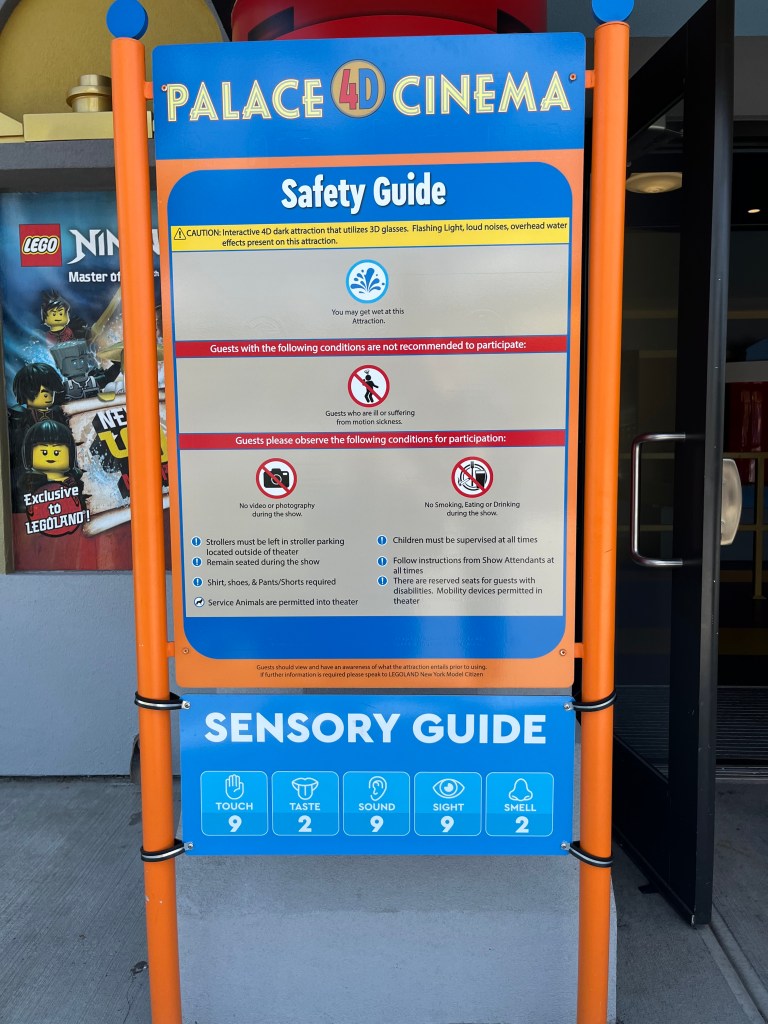
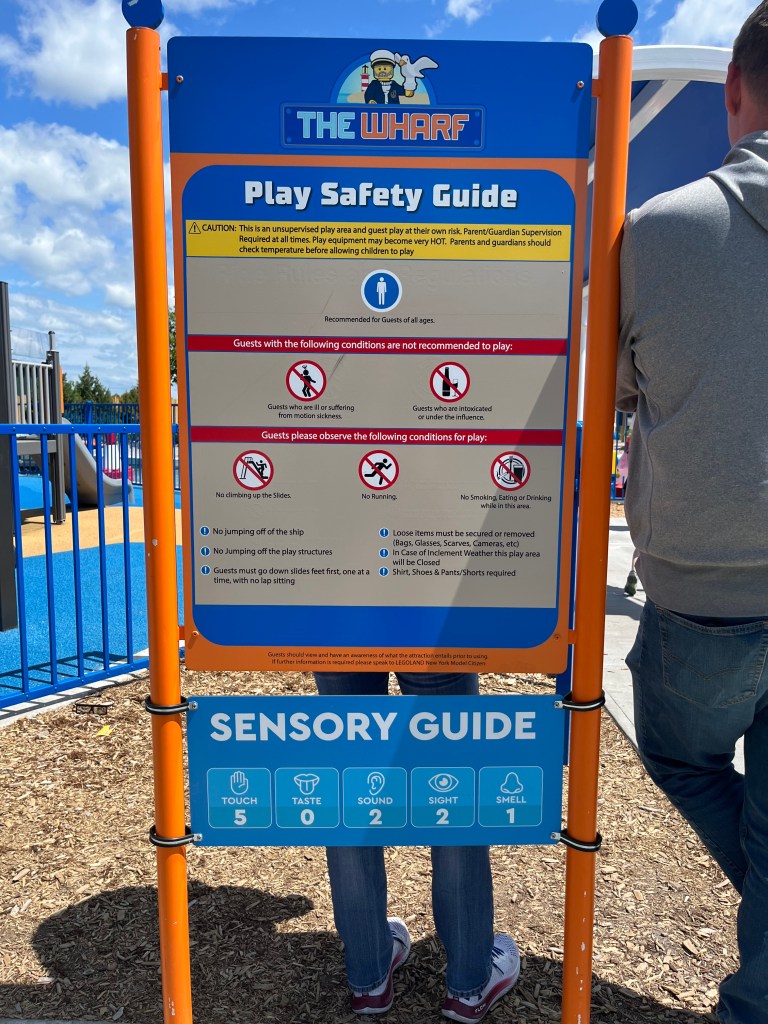
Stepping into the world of LEGO with lots of colors and creativity all around can be awesome but sometimes overwhelming. LEGOLAND has a Sensory Guide on their website, ensuring that every moment at LEGOLAND is magical and inclusive. From quiet spaces, to exciting attractions that cater to all, LEGOLAND lets you know what you’re going into at every stop.
Once you’re in the park, you’ll seen signs like these at each attraction:
Believe it or not, this summer is our first experience with Crocs.
My 6 year old really wanted them and while shopping around for them, my 9 year old decided he wanted them too. They each found a pair they liked and put them on in the car.
My 9 year old had a sense of calm come over him and couldn’t stop talking about how much he loved the way the shoes felt on him. He didn’t want to take them off and asked if he could sleep in them. The texture, the air flow, it was all a plus for him.
My 6 year old didn’t love the texture under her feet and wanted to keep socks on with them. She kept talking how it was bumpy and felt weird. Since then, she mostly wears them with socks and loves them.
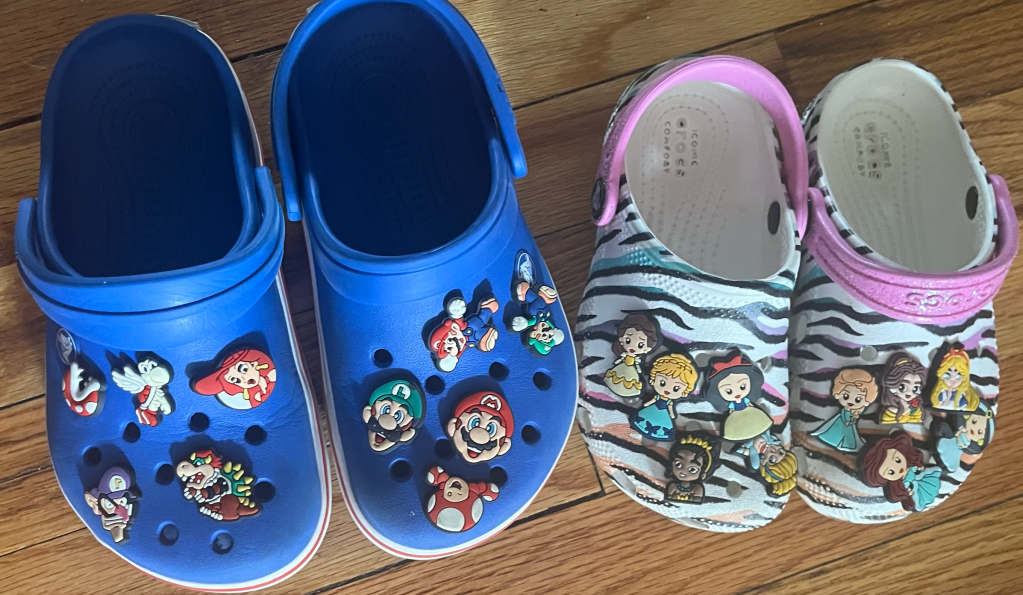
It was the sensory experiment I didn’t realize I was conducting. I didn’t expect Crocs to have such an effect on them. They also really wanted to decorate the shoes. My 6 year old got some Princess pins for hers and my 9 year old got some Mario pins for his. They wear them daily and love them.
It’s a great reminder of how little things can have a bigger impact when it comes to living a sensory life. They were able to personalize shoes that brought a lot of comfort and calm to one and happiness to the other.
The Princess Crocs pins we ordered are no longer available, but I found a similar bunch: https://amzn.to/45gC54D
If you have a Mario fan in your life, here is a link to the ones we purchased: https://amzn.to/44OXt0u
For the past few (or more) years, we have always known the Holidays are pretty overwhelming for ‘J.’ Typically the month leading up to Christmas (and his Birthday) prove to be a challenge. In years past, that has been expressed through tears, extreme frustration, attitude, being on edge, acting out of character, etc.
In November, we attended a lunch for my dad’s work. We were at our family’s favorite restaurant, which was a familiar place for ‘J.’ We sat at a table with my parents, my brother, sister-in-law and niece. Immediately, ‘J’ wanted out of the situation. There were moments he seemed settled and then once he was done eating, he just kept asking if we could leave.
Through some tears on the way home, we focused more on having a calm drive. When we got home, I sat with him 1:1 to talk through what he was feeling at the restaurant. The first thing he said was “Why is Christmas so overwhelming?”
It may sound weird, but I felt a bit of relief in that. And not that I want him to feel bad or be sad, but the fact that he was able to communicate that was HUGE to me. We talked through what felt like a lot to him, how it was different than other times we were in the restaurant and everything that happens in the month of December. I told him how great it was that he was able to communicate how he felt and that it’s important that he feels comfortable. I asked what we could do to make the holidays easier and what changes we could make. In the end, he was feeling better and ended the day on a high note.
Holidays are typically stressful for everyone. There are highs and lows, parties, gifts, seeing more family, etc. I think as adults, sometimes you feel like-eh, kids can get through it, they get gifts, what could be bad?
However for them, as they’re still figuring out the world, there’s a lot happening. Add in sensory difficulties and anxiety and the normal day to day struggle that ‘J’ goes through is now heightened. As adults, if we’re uncomfortable, we can remove ourselves from a situation, ask for help or change plans. That’s way tougher when you’re a kid.
This Holiday season, remember to listen to your child (or those around you). If they’re acting different, crying more, getting frustrated more easily, remember that there is always an underlying reason. They’re not trying to be bad or ruin the holidays. I’ve said it before and I’ll say it again, they are people with feelings and opinions that should be respected just like anyone else.
If you’re the parent of a child with anxiety and sensory processing difficulties, take things one day, one hour, one minute, at a time. Remember to remain calm and keep yourself regulated (easier said than done, especially in this season) in order to be a safe place for your child. The Holidays may not look like you imagined, but that’s ok. Make the magic however you can in a way your child would appreciate.
There are so many benefits to sensory items! They can help calm a child, regulate emotions, focus, enhance fine motor skills, improve language skills and so much more.
Amazon is currently running a Prime Early Access promotion today, October 11th and tomorrow, October 12th. Although the links below are affiliate links, they are products (or similar ones) we have in our home.
It’s so easy to get caught up in the craziness of day to day life. I feel like most have returned to making plans, seeing friends and family and being generally “busy.” As adults, we often find ourselves having to hit the reset button. Sometimes we realize we need to get more sleep, eat healthier, exercise more or set new goals. As parents, it’s important to know when we need a parenting reset or our kids need their own reset.
Sensory Processing difficulties can play tricks on you as a parent. You may think you’ve found your groove or have a good routine going. Maybe your kids have grown more and they’re able to express their feelings in a better way. You may even find they’re having more good days than difficult. But kids are little people that are evolving, changing and constantly trying to figure out the world. When we’re in a routine with school, activities and playdates, it’s easy to put that fact on the back burner. We’re just doing instead of making conscious efforts.
‘J’ is seven and a half and in second grade. He’s doing awesome in school. He loves his friends and teacher (and doing extra homework). He was fully virtual last year but did great adjusting back to in person learning. Being around new kids and seeing how they interact was a bit tough at first. He witnessed some rougher play, hitting each other, yelling in each other’s faces, all of which is not his personality. It definitely made him uncomfortable but he’s good about knowing right from wrong and over time started to understand varying personalities.
We’re in NY and this winter has been tough. Not too many days where we could be outside and play. This has an effect on him every year. As soon as the weather gets nicer, we’re outside daily and it definitely helps him regulate his body. With the colder temps, snow and rain, it’s not so easy. His mood is affected, his body is affected and eventually a light bulb goes off in my mind that it’s time to hit the reset button.
With ‘J’ getting older, how his SPD affects him has changed as well. He can spot if there’s a tag in his clothing that he wants cut out before he even wears it which is an improvement from a few years ago. If he’s frustrated or not getting his way, he can’t process how his body reacts to that emotion. Some adults aren’t good at dealing with their frustrations and he’s human, of course he’s allowed to be frustrated sometimes.
However, for him, he takes it out on himself. There’s negative self talk, he physically takes out his frustration on himself and as parents, it’s hard to watch. Especially when, prior to 6 months ago, he never did that.
The best thing we can do in these moments is to stay calm and keep ourselves regulated. No problem when your kid is hurting himself right? It’s not always going to be perfect but it has to be the goal or else the problem will just escalate.
For us, hitting the reset button meant taking a step back to make sure he doesn’t do anything dangerous while also not automatically reacting to everything he’s doing. It meant reminding ourselves that we need to stay calm in order for him to get back to that place too.
Bedtime was starting to get to be a struggle and I finally asked ‘J’ what was overwhelming him. He basically said he didn’t like being told what to do with the routine. So we said no problem, here’s everything we do before bed, how about you decide what you want to do first. This has been a game changer. The routine takes a little longer at night but we’re not in a battle anymore and that’s a huge win.
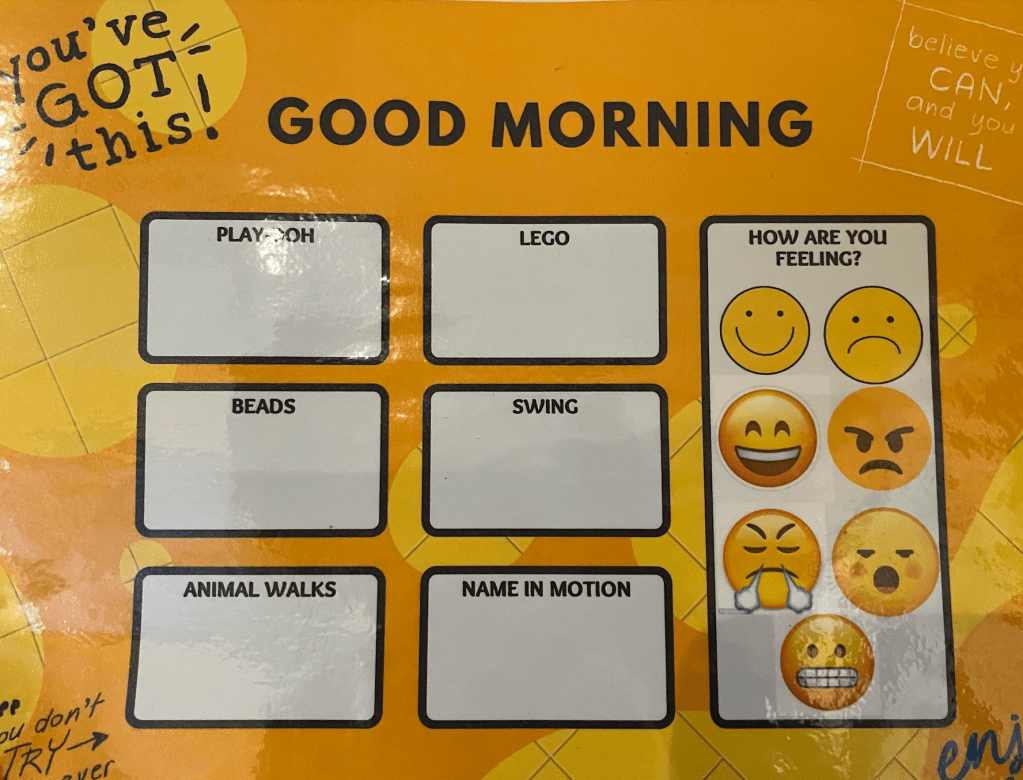
We also started incorporating sensory activities into our day again. This is one of those things that we can let slip when we’re so caught up in the day to day routine. Were we doing sensory activities some days? Yes. But not enough with conscious efforts behind it. We’re now having both kids choose what they want to do in the morning and in the afternoon on a chart. We have play-doh, beads, exercises, sensory swing time, reading a book in a rocking chair and others on the list. Some days we’ve brought their bicycles inside, put the training wheels in our shoes and let them pedal away to release some energy. They love this activity! They’ve used their imaginations to say where they’re going, what kind of adventures they’re encountering and who they may see along the way.
Going back to basics and remembering how important a sensory diet is (in whatever way you can fit it into your day), has helped mitigate some of those frustrating times. Of course they still happen and we will continue to work on different ways to get through those moments. Nothing will change overnight. It’s all about us as adults and our kids continuing to evolve, understanding emotions and figuring out ways to handle them.
Back in 2018, I wrote about visiting Disney World with Sensory Processing difficulties. If you’d like to check out that blog, click here.
We just recently returned from a trip to Walt Disney World. As mentioned in that June 2018 blog, I knew that the Disability Access Service Card existed. For this trip, we decided we would play out how ‘J’ would do in the parks, knowing that this was an option.
Looking back, I’m wishing we did it from Day 1.
The first two days of our trip, we tried to wait on lines that were not too long, take our time moving around the park and getting in breaks during the afternoon. However, even on lines that we didn’t feel were too long (15-20 minutes), ‘J’ felt otherwise. He was extremely overwhelmed waiting on line, in a crowd and felt it would take much longer than we were telling him.
If you’re a parent with a child that does not have sensory processing difficulties, you may be thinking: ‘ok but no kid wants to wait on a line in Orlando summer heat.’ And you’re right! And I don’t like it either. But for ‘J’ it’s different and his reactions to it are different. Just like any other day to day activities that may appear easy for us, they’re not always easy for him. This goes under that same umbrella.
So what is the Disability Access Service (DAS) Card? According to the Disney Parks Blog:
The DAS Card is designed to accommodate guests who aren’t able to wait in a conventional queue environment due to a disability (including non-apparent disabilities). DAS will be issued at Guest Relations main entrance locations and will offer guests a return time for attractions based on the current wait time. As soon as the Guest finishes one attraction, they can receive a return time for another. This service can be used in addition to Disney’s FASTPASS Service and Disney FastPass+ service.
On the third day of our trip, we headed to Hollywood Studios and went straight to Guest Relations. I explained that ‘J’ had sensory processing disorder and found the lines to be…and then the Cast Member finished my sentence with: overwhelming? She took us over to the side and set us up with a DAS from her handheld device. We were told that we would need to go to a specific attraction to get a return time and that the pass would be good for the entire trip. We wouldn’t need to go to guest relations each day to have it set up again.
This pass was a game changer! I could see a weight lifted off of ‘J’ as we went to different rides. He was calmer, less stressed and more excited. Isn’t that how it should be at Disney?
I’m so thankful to Disney for accommodating all of their guests and for their amazing service helping us to obtain our DAS.
If you’d like to learn more, visit the Disney Parks Blog or reach out to Disney Guest Relations!
Back in my day, there were walkers and bussers. Walkers were the kids who lived too close to the school and didn’t qualify for bus services. Bussers, well that one is obvious. I was a walker.
When registering ‘J’ for school, we had to sign forms for him to take the bus and were told we would receive a bus pass prior to school starting. I asked if I was able to drive him myself or if he was required to take the bus. The woman was taken aback by the question and said of course I could take him but that every child had the ability to take the bus.
I knew ‘J’ would never go for it.
We did try though. We talked to him about it and asked if he wanted to try. It was a big no. At the time, his sister was 2 and stated “I’m gonna take the bus when I go to school!”
We figured we would start the school year with me bringing him, and maybe once he saw friends taking the bus, he would want to as well. One day he finally agreed to take it home from school. This was huge!
I received a message from his teacher saying that he started to cry once he realized it was time to line up and walk out to the bus. She let me know his friends consoled him and all chanted his name. This made my heart melt. Once they got outside, the Principal and Vice Principal were also cheering him on. He went onto the bus in tears.
My biggest fear was that he’d try to run. When faced with fight or flight, he typically choose flight. We had prepped him leading up to it; we would meet him at the bus stop and he should not to get off the bus until he saw us. But we were still a bit nervous.
My husband, J’s sister and I all went to the corner to wait for him. We were talking to a neighbor when we heard honking, we look over and the bus had pulled up right in front of the house. We ran over and he walked off the bus in a pile of tears and sniffles. He did it! He rode the bus! Something he was so nervous about but he made it through.
He made it clear he never wanted to do it again.
The only other time he has taken the bus since that day was for his only field trip. They went to see a stage show of Frosty the Snowman. He sat next to his teacher and did great. I think being with his whole class, having the comfort of his teacher there and knowing I was picking him up once he returned to school helped to make that bus ride a whole lot easier.
Truth be told, having never taken a school bus myself (except for field trips), I was totally fine with the idea of picking him up and dropping him off. I just want him to always know the option is there for more independence. If he changes his mind one day and wants to ride the bus with his friends, we will support it. If not, that’s ok too.
In the final part of this series, I will discuss our experience with school closing due to Covid.







 Just My MomSense