Understanding a Sensory Diet

Although we tend to think of food when we hear the word “diet,” a sensory diet isn’t about food at all. It’s about providing the right kind of sensory input throughout the day to help kids (and adults) regulate, focus, and feel their best.

For our family, learning about sensory diets was so helpful. My kids both experience the world in ways that can sometimes feel “too much” or “not enough.” One might crave constant movement, while the other gets overwhelmed by sound or touch. Once we started understanding sensory needs, things began to make a lot more sense. Sensory diets are something I go back to a lot when I feel we’ve gotten too caught up in the day-to-day.

A sensory diet is a personalized plan of activities and strategies designed to give the brain the input it needs to stay regulated. It might include things like:

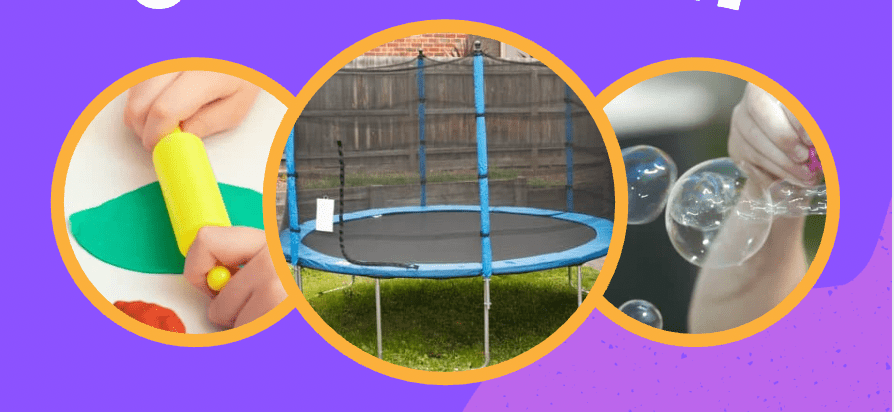
  • Deep pressure (weighted blankets, tight hugs, compression vests)
  • Movement breaks (jumping, spinning, swinging, or even pushing a heavy laundry basket)
  • Oral input (chewing gum, crunchy snacks, or using a chew necklace)
  • Calming input (soft lighting, noise-canceling headphones, or fidget tools)

Occupational therapists often create sensory diets tailored to a child’s specific needs, but parents can also integrate small strategies at home once they understand what works best for their child. Think of it as feeding your child’s sensory system the “nutrients” it needs to thrive.

Sensory input directly impacts how we feel, think, and behave. When a child’s sensory system is out of balance, they might seem “hyper,” “zoned out,” or “meltdown-prone.” These aren’t bad behaviors, they’re signals.

A well-balanced sensory diet helps:

  • Improve focus and attention
  • Reduce meltdowns and anxiety
  • Support better transitions between activities
  • Promote self-regulation and independence

You don’t need fancy equipment or a sensory room (though those are fun if you have the space). Start with small, intentional moments throughout the day:

  • Morning: Use a weighted blanket, bear crawls, or a quick dance session to wake up the senses.
  • Midday: Add movement breaks such as wall pushes, jumping jacks, or animal walks.
  • Evening: Try calming input before bedtime, like soft music, dim lights, or a lavender bubble bath.

Pay attention to your child’s reactions. What helps them focus? What calms them? What overstimulates them? That’s your roadmap.

If you’re just starting to explore sensory diets, take a deep breath. It’s a learning process and may be a game of trial and error until you figure out what works best. Some strategies might work one week and not the next (trust me, I’ve been there).

You know your child best. You see the cues others might miss. By tuning into their sensory needs, you’re helping them build lifelong skills in self-awareness and regulation.

A sensory diet isn’t a “one-size-fits-all” plan. Some days it’s five minutes of jumping on the trampoline and other days it’s a long walk outside after school. What matters most is consistency and compassion for your child and yourself.

When we start viewing behavior through a sensory lens, everything starts to click.
Our Favorite Vestibular Exercises

Before I get into what some of our favorite Vestibular Exercises are, let’s review what the Vestibular Sense is.

According to NAPA:

The vestibular sense is small structures located in our inner ears which provide information to our brain about the position of our head, motion, and works with other sensory systems to tell us where our body is in space. 

When the vestibular system works correctly, the constant presence of gravity allows all our other sensory systems to work cohesively. The vestibular system contributes to our ability to balance, maintain an upright posture, and stabilize the head and body when moving. It has no effect on muscle strength which is also needed for postural control. – napacenter.org

Now we can into how the kiddos have fun while getting vestibular input!

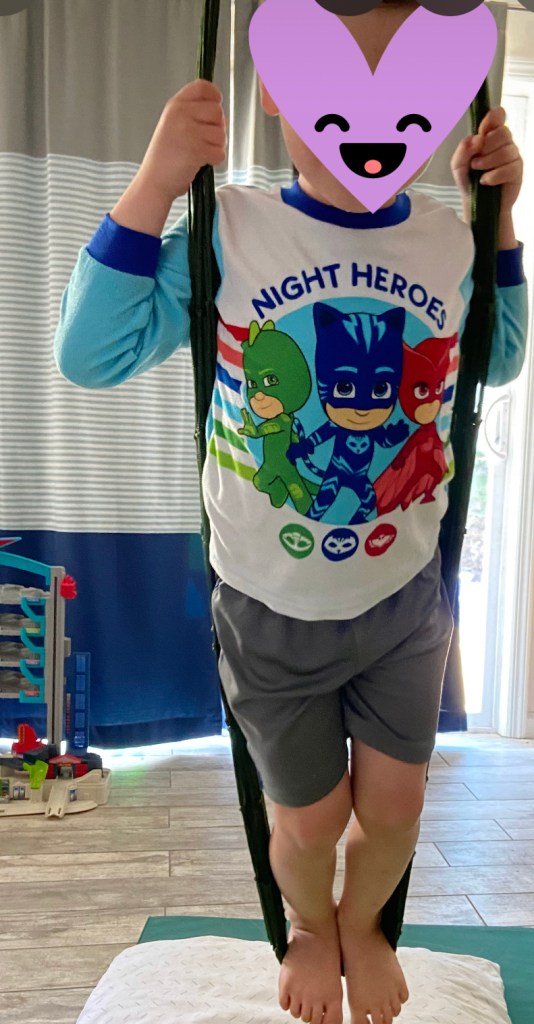
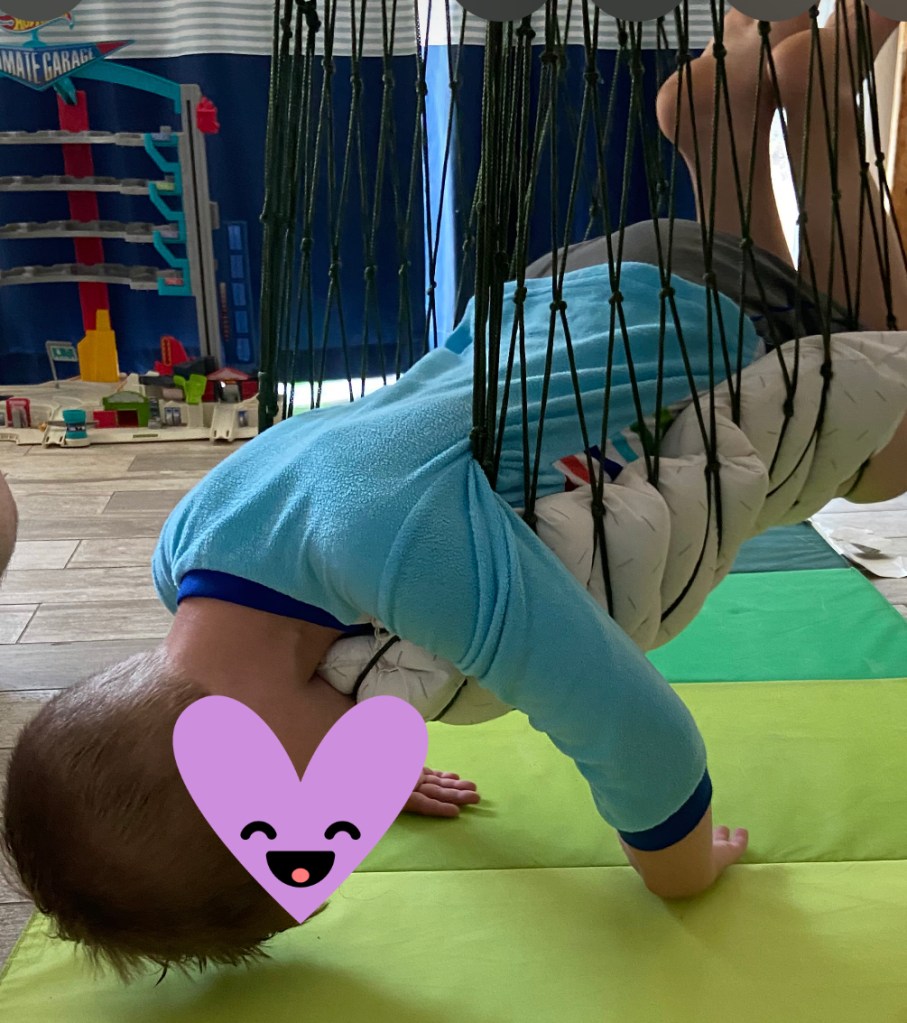
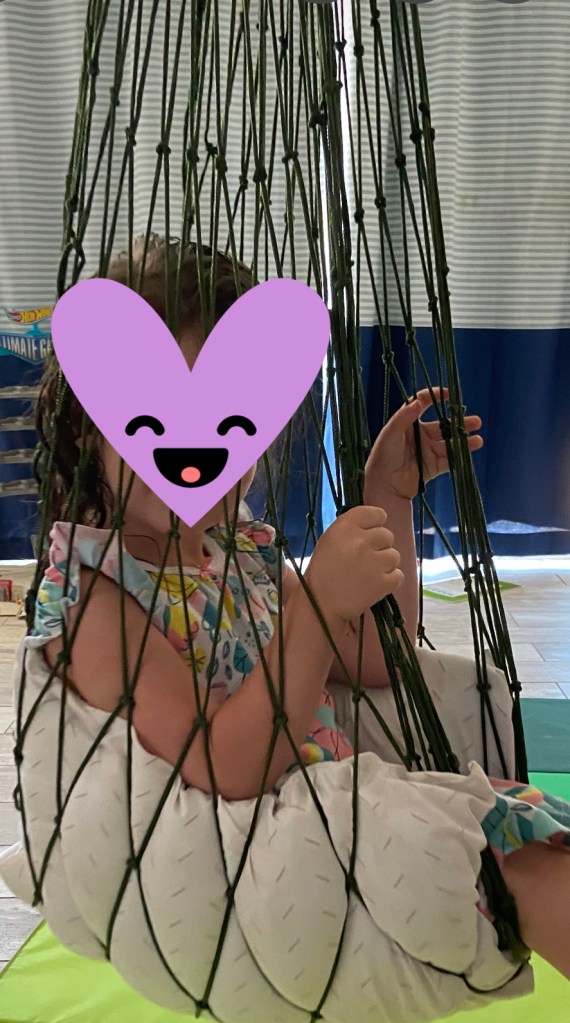
First up, the Sensory Swing:

We have the Mesh Sensory Swing from Sensory Scout. The sensory swing is great because of the variety of ways it can be used. It can be a place to chill and read or it can be used building muscles by standing and swinging. Learn more about the benefits of swinging from Sensory Scout:

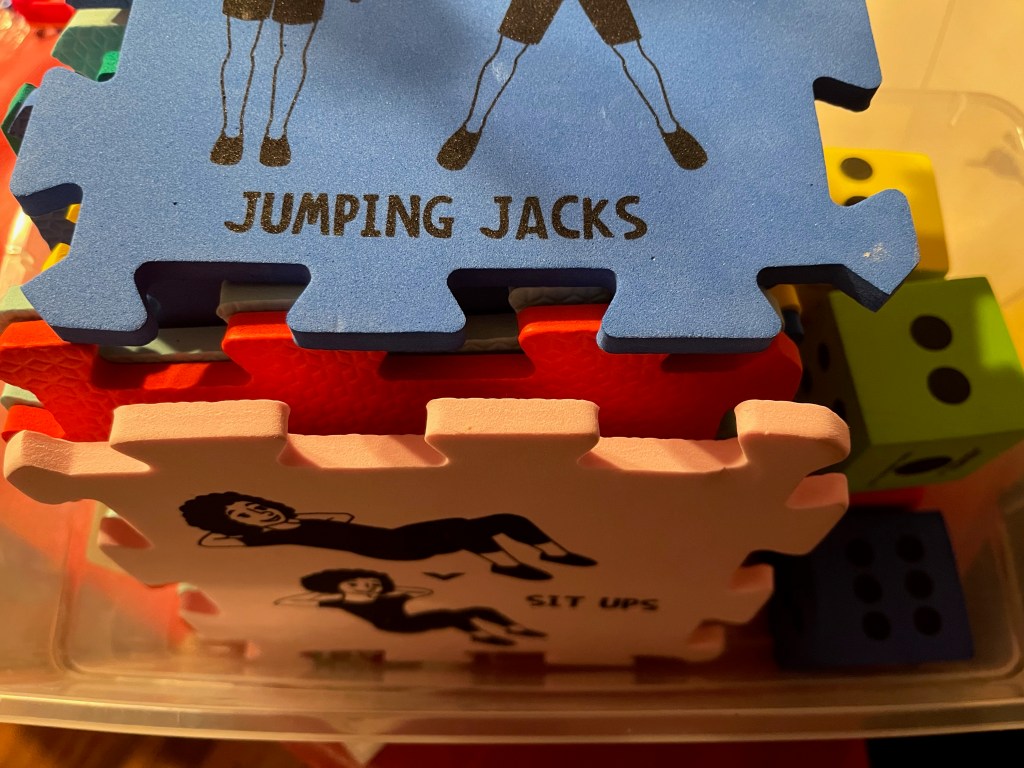
Next up we have an exercise puzzle mat!

I’m pretty sure I found these at the Target Dollar Spot, but we’ve had them for awhile so I’m not 100%. Each piece has a different exercise on it. We’ve combined them in a bin with dice. The kids will lay them out, roll the dice for the quantity or time they should do each exercise. It’s a great way to give them sensory input, get in some physical activity and have fun!

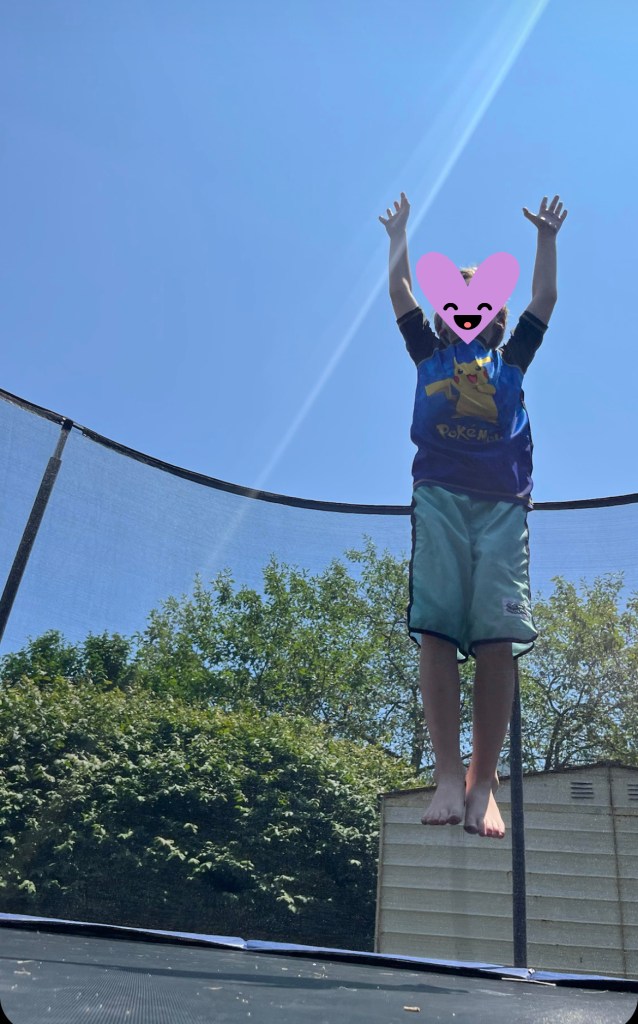
Finally, we have our trampoline!

When it doubt, jump it out! Our trampoline is in our backyard but having a smaller one for inside might be a good option as well. Jumping in the fresh air is always a great way to get some sensory input, work out frustrations and of course have lots of fun with a ton of laughter!

I do recognize that there are safety concerns when it comes to trampolines. Please be sure to set up proper precautions and supervise your child at all times.

These are just a few of our favorites but there’s so many options! We’ll have days where we’re rocking, climbing, dancing and more. Find what works best for you and your family!

For more on the Vestibular Sense:

NapaCenter.org

STAR Institute

Sensory Spectacle on YouTube

Bag ‘O Fun

As I mentioned in my last blog, “It’s a Beautiful Day in the Neighborhood,” we took a trip to Pittsburgh two weeks ago for Spring Break. We’re lucky and thankful that our kids are great on car trips, as long as plenty of snacks and activities are packed. They normally make it to the final hour or two before they need the iPhones.

Although having activities and snacks comes with dropping activities and snack which results in me turning around to get them most of the trip. But it’s a small price to pay for having them locked in seats for 7 hours.

The times the car rides become less fun is when ‘J’s’ sister (‘Baby J’) becomes unhappy because that is an automatic trigger for him. This was one of my earliest red flags of thinking this was all more than just empathy. The result is screaming and crying long after ‘Baby J’ is done whining or crying.

IMG_7499

Along with checking out the Mister Rogers exhibit at the Heinz History Center, we also stopped by the Children’s Museum of Pittsburgh. If you haven’t been there, I recommend it. It’s huge and there’s so much to see and do!

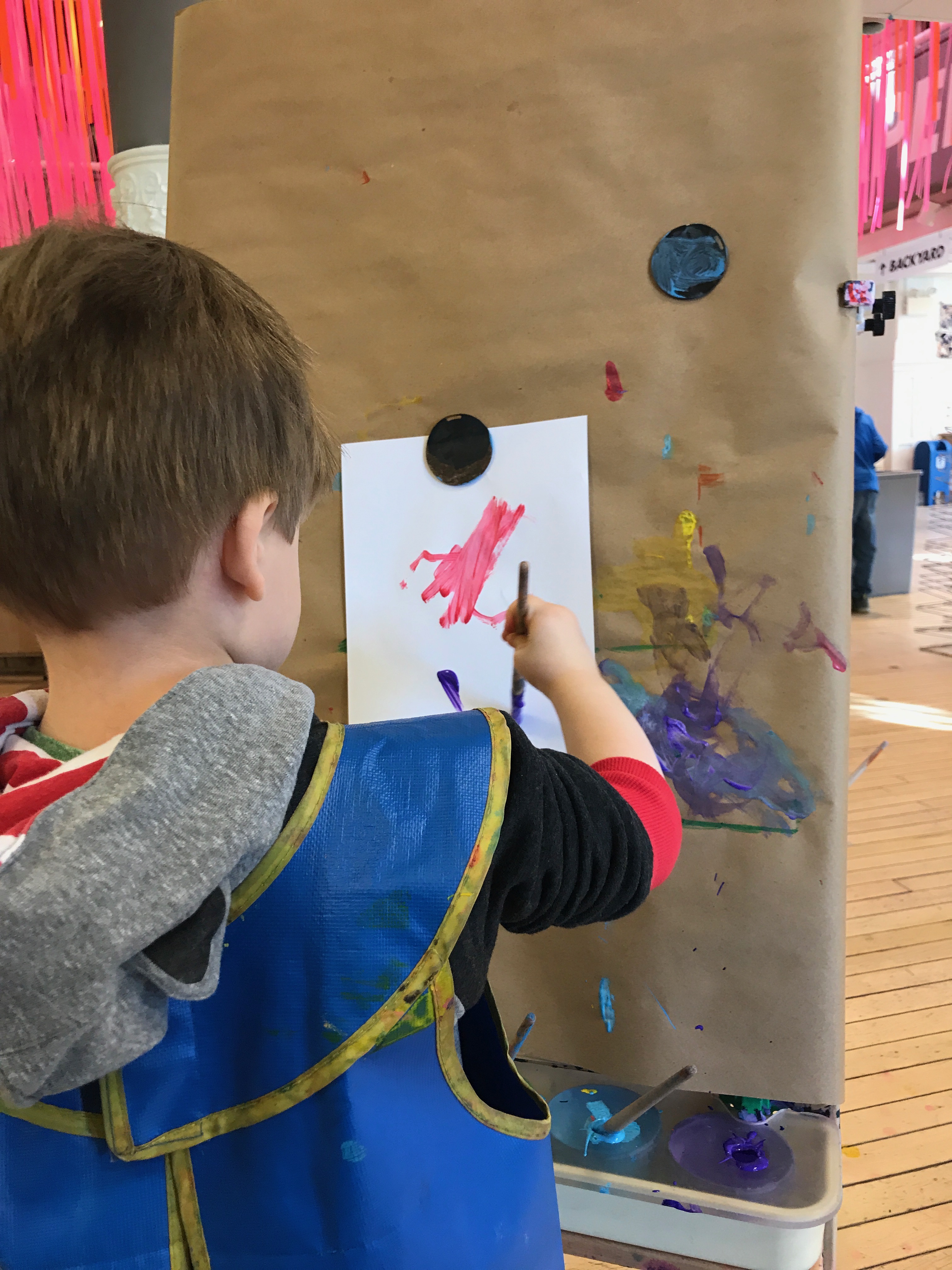
Since it’s so big and it was a Saturday, there was a big crowd. ‘J’ was definitely overwhelmed. He wasn’t unhappy just unsettled. He didn’t stay in one place too long, didn’t go over to exhibits if there were too many people around it and was extra clingy. Luckily they have a great art area with painting and clay. This was a much quieter space and we spent most of our time in this spot.

I was talking to ‘J’s’ Occupational Therapist after our trip about his triggers and she suggested having a backpack with some items they may help calm him in these situations. At home, he’s good about going to his room to reset himself if he’s feeling overwhelmed. When we’re out in public or he’s locked into a car seat, it’s not as easy. Luckily we have quite a few backpacks on hand and I’ve since put one together with his headphones, sensory bottle, his squishy fidget dinosaur, small toys and his water bottle. We brought the headphones on our last plane ride and for some reason I didn’t think to bring them on the car trip. They definitely would’ve been helpful for when ‘Baby J’ was upset.

She also mentioned carrying the backpack may help him since weighted items can provide comfort. We’ve already tried this on shorter car rides (30+ minutes) and so far it has come in handy.

I’m willing to try any and everything that will provide him any comfort or organization for his mind and body. Not all will work, but through trial and error, I know we’ll find the best combination of sensory items and activities.