World Mental Health Day: Caring for the Whole Family’s Mind

Every year on October 10, the world pauses to recognize World Mental Health Day. A day to remember that our mental well-being matters just as much as our physical health.

The truth is, mental health starts at home, in our daily routines, our conversations, and the ways we care for one another. Whether you’re a parent, child, or caregiver, mental health is something we can nurture together.

Kids learn how to express emotions by watching us. Talking about feelings, the good and the hard ones, normalizes emotional ups and downs. Try asking your kids questions like:

  • “What made you smile today?”
  • “Was there anything that felt tricky or stressful?”
  • “How does your body feel when you’re upset?”

It doesn’t have to be heavy, just consistent. These conversations help children build emotional vocabulary and teach them it’s okay to ask for help.

As parents, we won’t always get it right. But showing your kids how you calm down through deep breathing, taking a short walk, or saying, “I need a minute to think,” teaches emotional regulation better than any lecture could. When we practice self-care openly, we give our kids permission to do the same.

Routines help everyone feel grounded, especially kids who thrive on predictability. Simple rituals like reading before bed, eating dinner together, or sharing highs and lows of the day create connection and stability which are two key ingredients for strong mental health.

It’s easy to put everyone else’s needs first, but your mental health deserves care, too. Check in with yourself:

  • Are you sleeping enough?
  • Are you eating regularly?
  • When was the last time you did something just for you?

Even a few minutes a day of quiet, journaling, or movement can make a difference.

Caring for our family’s mental health doesn’t have to mean grand gestures. It’s the small, everyday choices that build emotional strength: a hug, a walk, a laugh, or a moment of grace when things go wrong.

This World Mental Health Day, let’s remind ourselves and our kids that it’s okay not to be okay and that help, hope, and healing are always within reach.

Understanding Different Types of Therapy for Kids and Families

This household is very pro therapy! However, it’s so hard to know where to start, what the different types of therapies mean and what may be best for you or your child. With it being Sensory Processing Awareness Month, I thought I would explore the many types of therapy available for children and families; from occupational and speech therapy to CBT and talk therapy.

Occupational Therapy (OT)

Occupational Therapy helps kids build the skills they need for everyday life, from tying shoes and brushing teeth to regulating their emotions.

Common goals:

  • Improving fine and gross motor skills
  • Building independence with self-care
  • Supporting emotional and sensory regulation

Speech Therapy

Speech therapy goes beyond pronunciation. It can also help children who struggle with communication, social interaction, and feeding.
Speech therapists work on everything from articulation and expressive language to understanding nonverbal cues.

Common goals:

  • Improving clarity and confidence in speech
  • Strengthening language comprehension
  • Supporting social communication and pragmatic skills

Physical Therapy (PT)

Physical therapists help children build strength, balance, and coordination. This therapy is especially beneficial for kids with developmental delays, low muscle tone, or motor planning challenges.

Common goals:

  • Increasing strength and endurance
  • Improving posture and balance
  • Building coordination for daily tasks and play

Play Therapy

Play therapy uses play, a child’s natural form of expression, to help them process big feelings and experiences. It can be especially effective for children who have anxiety, trauma, or difficulty expressing emotions verbally.

Common goals:

  • Building emotional awareness
  • Developing coping and problem-solving skills
  • Strengthening trust and communication with caregivers

Cognitive Behavioral Therapy (CBT)

CBT is a type of talk therapy that helps children (and adults) recognize negative thought patterns and replace them with more positive, realistic ones.
It’s a powerful tool for anxiety, depression, and emotional regulation. Therapists often use visual aids, role-play, and journaling to make CBT age-appropriate and engaging.

Common goals:

  • Managing anxious or negative thoughts
  • Building resilience and confidence
  • Developing coping strategies for real-life challenges

Talk Therapy

Talk therapy provides a safe, judgment-free space for both kids and parents to explore feelings, relationships, and stressors. For parents, it can also be an invaluable form of support when navigating a child’s diagnosis or behavioral challenges.

Common goals:

  • Reducing stress and overwhelm
  • Improving communication within families
  • Processing emotions in a healthy, supported way

Feeding Therapy

Feeding therapy helps children who struggle with eating, whether due to sensory sensitivities, oral motor challenges, or anxiety around food.
A therapist might use gradual exposure, play, and desensitization to help make mealtime more positive and successful.

Common goals:

  • Increasing comfort with new foods
  • Building safe swallowing and chewing skills
  • Reducing mealtime anxiety and power struggles

Parent and Family Therapy

Therapy isn’t just for kids, it’s for families, too. Parent coaching or family therapy can help improve communication, set boundaries, and strengthen relationships.

Common goals:

  • Building teamwork between caregivers
  • Creating consistent routines
  • Understanding and supporting each child’s needs

Therapy isn’t a one-size-fits-all solution. Every child and every family is unique. What matters most is finding the right combination of support that meets your child where they are.

Whether it’s OT for sensory needs, CBT for anxiety, or play therapy to help your child open up, each form of therapy is a step toward greater understanding, connection, and confidence.

Understanding a Sensory Diet

Although we tend to think of food when we hear the word “diet,” a sensory diet isn’t about food at all. It’s about providing the right kind of sensory input throughout the day to help kids (and adults) regulate, focus, and feel their best.

For our family, learning about sensory diets was so helpful. My kids both experience the world in ways that can sometimes feel “too much” or “not enough.” One might crave constant movement, while the other gets overwhelmed by sound or touch. Once we started understanding sensory needs, things began to make a lot more sense. Sensory diets are something I go back to a lot when I feel we’ve gotten too caught up in the day-to-day.

A sensory diet is a personalized plan of activities and strategies designed to give the brain the input it needs to stay regulated. It might include things like:

  • Deep pressure (weighted blankets, tight hugs, compression vests)
  • Movement breaks (jumping, spinning, swinging, or even pushing a heavy laundry basket)
  • Oral input (chewing gum, crunchy snacks, or using a chew necklace)
  • Calming input (soft lighting, noise-canceling headphones, or fidget tools)

Occupational therapists often create sensory diets tailored to a child’s specific needs, but parents can also integrate small strategies at home once they understand what works best for their child. Think of it as feeding your child’s sensory system the “nutrients” it needs to thrive.

Sensory input directly impacts how we feel, think, and behave. When a child’s sensory system is out of balance, they might seem “hyper,” “zoned out,” or “meltdown-prone.” These aren’t bad behaviors, they’re signals.

A well-balanced sensory diet helps:

  • Improve focus and attention
  • Reduce meltdowns and anxiety
  • Support better transitions between activities
  • Promote self-regulation and independence

You don’t need fancy equipment or a sensory room (though those are fun if you have the space). Start with small, intentional moments throughout the day:

  • Morning: Use a weighted blanket, bear crawls, or a quick dance session to wake up the senses.
  • Midday: Add movement breaks such as wall pushes, jumping jacks, or animal walks.
  • Evening: Try calming input before bedtime, like soft music, dim lights, or a lavender bubble bath.

Pay attention to your child’s reactions. What helps them focus? What calms them? What overstimulates them? That’s your roadmap.

If you’re just starting to explore sensory diets, take a deep breath. It’s a learning process and may be a game of trial and error until you figure out what works best. Some strategies might work one week and not the next (trust me, I’ve been there).

You know your child best. You see the cues others might miss. By tuning into their sensory needs, you’re helping them build lifelong skills in self-awareness and regulation.

A sensory diet isn’t a “one-size-fits-all” plan. Some days it’s five minutes of jumping on the trampoline and other days it’s a long walk outside after school. What matters most is consistency and compassion for your child and yourself.

When we start viewing behavior through a sensory lens, everything starts to click.

Supporting Sensory Needs with Everyday Tools

With October being Sensory Processing Awareness Month, it’s a great time to talk about how our nervous systems process the world around us. Some children (and adults) seek more sensory input, while others avoid it and often, kids can show a mix of both depending on the situation.

Understanding the difference can make daily life feel smoother, and having the right tools on hand can transform overwhelm into comfort.

Sensory Seekers and Avoiders: Two Sides of the Same Coin

  • Sensory Seekers crave input. They might spin, jump, chew, or touch everything around them because their nervous system wants more.
  • Sensory Avoiders are easily overwhelmed by input. Tags in clothes, sudden noises, or bright lights can feel like “too much,” leading them to pull away, cover ears, or resist.

It’s important to remember that these aren’t opposites that cancel each other out. A child can be a seeker in one area (loving spinning and swinging) and an avoider in another (hating sticky or itchy textures).

Having the right resources at home, in the classroom, or even in the car can help kids feel grounded and safe. Some examples:

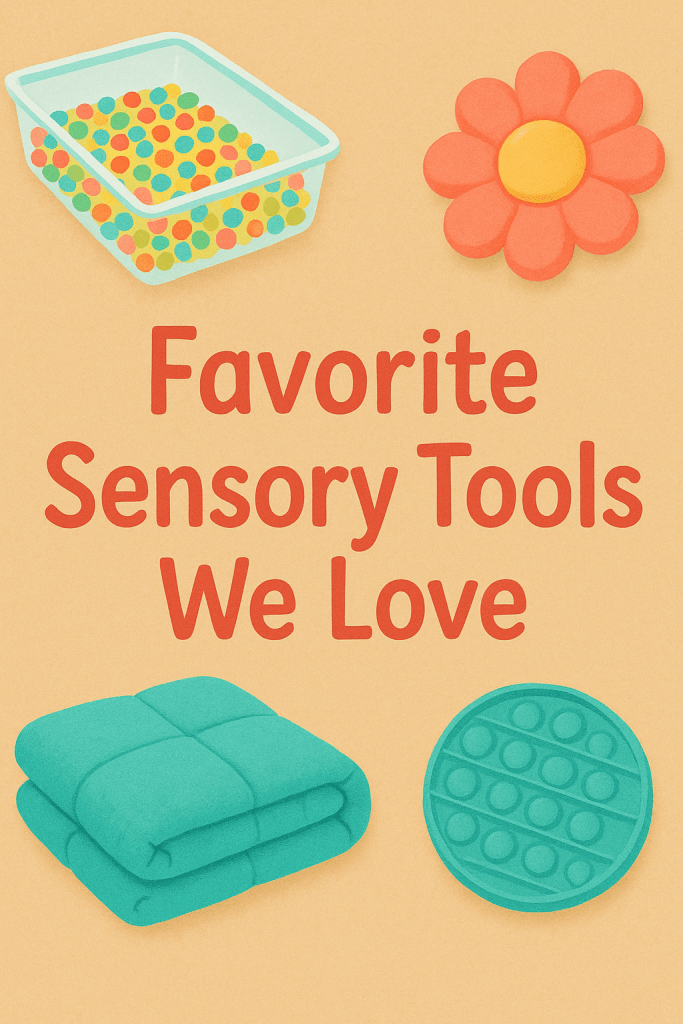
  • For sensory seekers: weighted balls, chewable jewelry, swings, trampolines, or fidget tools.
  • For sensory avoiders: soft tag-free clothing, noise-reducing headphones, blackout curtains, or cozy calming corners.
  • For both: books that explain sensory differences, flexible seating options, or tools that can be adapted depending on your child’s comfort level.

I’ve been keeping a list of items we have used (or similar). You can explore them all on my Favorite Things page. Whether you’re parenting a seeker, an avoider, or a little bit of both, this list is designed to help you find what works best for your family.

Sensory needs don’t disappear with age, they evolve. The more we learn, the better we can support our kids (and even ourselves) with patience, empathy, and the right resources. If you’re just beginning this journey, know you don’t have to figure it all out alone and simple tools can make a big difference.

Sensory Avoiders

Yesterday was all about Sensory Seekers but today will be all about Sensory Avoiders. While seekers crave more input, avoiders experience the opposite. Their nervous systems process input as overwhelming, and they often react by withdrawing, resisting, or shutting down.

Recognizing the different types of sensory avoiders can help parents, caregivers, and teachers provide the right environment and support.

Vestibular Avoiders

The vestibular system controls balance and movement. Vestibular avoiders often dislike swings, slides, or activities that make them feel off balance. They may resist climbing, running, or spinning. Supporting them means allowing slow, predictable movement at their own pace and never forcing participation.

Proprioceptive Avoiders

The proprioceptive system gives feedback from muscles and joints. While many children love deep pressure, proprioceptive avoiders may resist hugs, dislike tight clothing, or avoid heavy lifting. Respecting their boundaries and offering gentler forms of input can help them feel safe.

Tactile Avoiders

The tactile system processes touch. Tactile avoiders may dislike certain fabrics, resist messy play, or pull away from unexpected touch. Tags in shirts, scratchy clothing, or sticky textures can feel unbearable. Support strategies include soft clothing, gradual exposure, and allowing choice in textures.

Oral Avoiders

The oral sensory system processes input through the mouth. Oral avoiders may be picky eaters, avoiding foods with certain textures or strong flavors. They may gag easily or resist toothbrushing. Providing a variety of safe, preferred foods and slowly introducing new ones can reduce stress.

Auditory Avoiders

The auditory system interprets sound. Auditory avoiders may cover their ears at loud noises, dislike crowded environments, or struggle with sudden sounds like vacuums or alarms. Noise-canceling headphones, quiet spaces, and preparing them for upcoming sounds can make environments more manageable.

Visual Avoiders

The visual system processes light and movement. Visual avoiders may dislike bright lights, avoid crowded or cluttered spaces, or find fast-moving visuals overwhelming. Soft lighting, sunglasses, and calm visual environments are helpful supports.

Sensory avoiders aren’t being difficult or picky. Their nervous systems are sending danger signals in response to overwhelming input. By understanding their unique sensory needs, we can help them feel more comfortable and secure.

Awareness of sensory avoiders allows us to shift from frustration to compassion. Supporting them isn’t about pushing them into uncomfortable situations, it’s about respecting their boundaries and creating safe, supportive spaces where they can thrive.

Reminder: Sensory Processing Difficulties aren’t kid-specific. It’s not something that goes away with age. There are ways to learn how to manage and support the day-to-day challenges and there are many adults that need support as well.

Sensory Seekers

Let’s talk about sensory seekers. While some people are more sensitive and may avoid sensory input, sensory seekers are the opposite. Their nervous systems crave more input in order to feel calm and regulated. Understanding the different types of sensory seekers and the sensory systems involved can help us better support kids and adults who are wired this way.

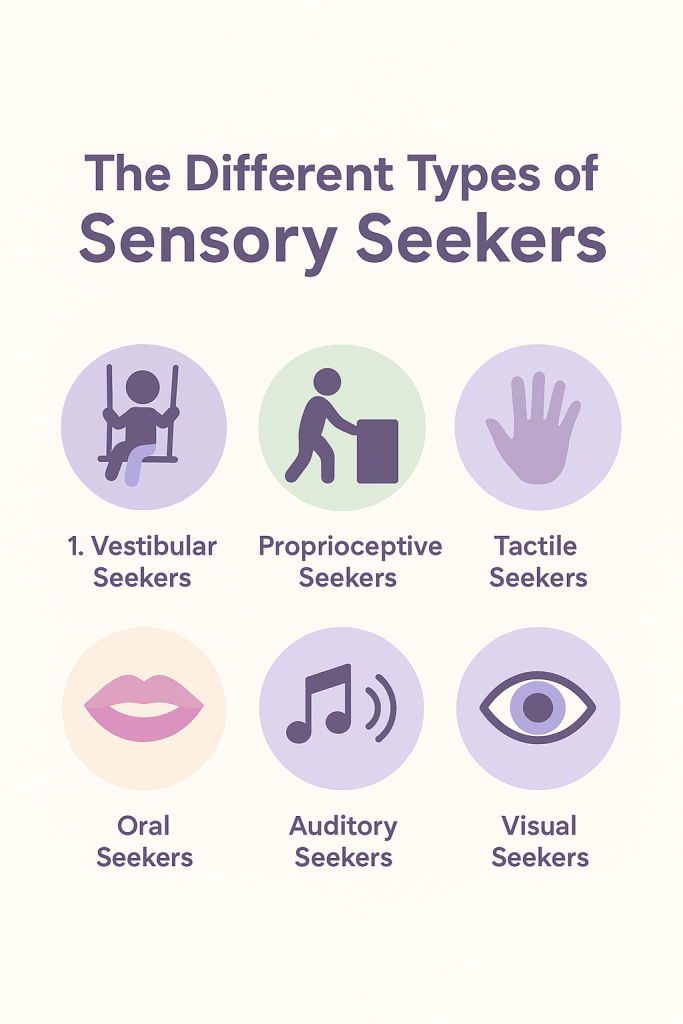
Vestibular Seekers

The vestibular system is all about balance and movement. Vestibular seekers crave activities like spinning, swinging, jumping, or running. They’re often described as “on the go” and may have trouble sitting still. Safe outlets include trampolines, swings, or dance breaks throughout the day.

Proprioceptive Seekers

The proprioceptive system helps us sense our body position through muscles and joints. Proprioceptive seekers love heavy work and deep pressure. You might see them crashing into furniture, giving tight hugs, or lifting and carrying heavy objects. Support them with weighted blankets, obstacle courses, or tasks like pushing a laundry basket or carrying groceries.

Tactile Seekers

The tactile system processes touch through the skin. Tactile seekers are drawn to textures and physical contact. They might touch everything around them, love messy play, or constantly seek hugs. Activities like sensory bins, playdough, water play, and textured fabrics can help meet their needs.

Oral Seekers

The oral sensory system processes input through the mouth. Oral seekers may chew on pencils, bite clothing, or prefer crunchy and chewy snacks. Chewable jewelry, straws, gum, and snack options like pretzels or apples are safe ways to provide oral input.

Auditory Seekers

The auditory system interprets sound. Auditory seekers often hum, tap, or make noises. They may love music, loud environments, or playing with instruments. Consider drumming, rhythm games, or music breaks to meet their sensory needs.

Visual Seekers

The visual system processes light and movement. Visual seekers are drawn to bright lights, colors, and moving objects. They may love light-up toys, spinning fans, or repeated video clips. Glow sticks, bubble tubes, and lava lamps are great tools for visual input.

Recognizing which sensory systems a child or adult seeks can help redirect behaviors into safe and supportive outlets. Instead of labeling them as restless or disruptive, we can see their actions as communication.

Supporting sensory seekers isn’t about stopping the need for input, it’s about understanding and meeting it in a way that helps them thrive.

Reminder: Sensory Processing Difficulties aren’t kid-specific. It’s not something that goes away with age. There are ways to learn how to manage and support the day-to-day challenges and there are many adults that need support as well.

How to Explain Sensory Processing to Friends, Family and Teachers

One of the biggest challenges of parenting a child with sensory difficulties isn’t just managing the day-to-day, it’s helping the people around us understand what’s really going on.

Since October is Sensory Processing Awareness Month, it feels like the perfect time to talk about how we can explain sensory processing to the friends, family members, and teachers who love and support our kids.

Most people want to understand, but they don’t know how. Sensory processing can feel invisible from the outside. A meltdown over scratchy tags or a refusal to eat certain textures can be mistaken as “bad behavior” or “picky eating.” That’s where our voice matters.

Here are a few ways to explain it simply:

Use relatable examples.
“Have you ever been stuck in a room with a flickering light or heard nails on a chalkboard? Imagine if your brain felt like that several times a day. That’s what it can be like for my child.”

Keep it short and clear.
“Sensory processing is how the brain interprets information from the five senses. For some kids, it’s turned up too high, for others, it’s turned down too low.”

Share what helps.
“It’s not about fixing my child; it’s about supporting them. Things like headphones, weighted blankets, or breaks can make a huge difference.”

Lead with compassion.
Sensory needs aren’t “bad” or “wrong,” they’re just different.

The more we talk openly, the more the people around us begin to understand. And that understanding builds patience, inclusion, and empathy.

This Sensory Processing Awareness Month, I encourage you to share a piece of your child’s sensory story with someone new: a teacher, a grandparent, a friend. Every conversation plants a seed of awareness, and together, we can grow a more compassionate community for our kids.

One more note: Sensory Processing Difficulties aren’t kid-specific. It’s not something that goes away with age. There are ways to learn how to manage and support the day-to-day challenges and there are many adults that need support as well.

Do you have a way you’ve been able to explain sensory processing? Share it in the comments below or connect with me on Instagram!

    Let’s Talk About It: May is Mental Health Awareness Month

    Today on the Just My MomSense podcast, we’re talking about something that impacts all of us: mental health.

    May is Mental Health Awareness Month, and it’s a powerful reminder that we deserve to check in with ourselves just as much as we check in on our kids. As parents and caregivers we often put our own well-being on the back burner. But mental health is health and it matters more than we sometimes admit.

    🎧 Listen to the episode here

    Therapy & Finding Support

    • Psychology Today Therapist Finder
      psychologytoday.com/us/therapists
      Find a licensed therapist in your area and filter by insurance, specialty, and more.
    • Therapy for Black Girls
      therapyforblackgirls.com
      A space to support the mental health needs of Black women and girls.
    • Therapy for Black Men
      therapyforblackmen.org
      Reducing stigma and increasing access to therapy for Black men.
    • Open Path Collective
      openpathcollective.org
      Affordable counseling options for individuals and families—often between $40–$70 per session.

    Support for Parents & Caregivers

    • NAMI – National Alliance on Mental Illness
      nami.org | HelpLine: 1-800-950-NAMI (6264)
      Offers free education, advocacy, and support for individuals and families.
    • Parent to Parent USA
      p2pusa.org
      Connects families of children with special needs, including mental and behavioral challenges, for peer-to-peer support.
    • The Mighty
      themighty.com
      A compassionate community where people share stories and experiences related to mental health, chronic illness, disability, and caregiving.

    For Kids & Teens

    • Child Mind Institute
      childmind.org
      Tools and tips for supporting children’s mental wellness, from anxiety to ADHD and everything in between.
    • Crisis Text Line
       Text HOME to 741741
       crisistextline.org
       Free, anonymous support from trained crisis counselors—available 24/7 via text.

    In Case of Emergency

    • 988 Suicide & Crisis Lifeline
      Call or text 988
      988lifeline.org
      Free, 24/7 support for people in distress or those supporting someone else.

    You’re Not Alone

    Whether you’re dealing with burnout, anxiety, or just feeling “off,” please know that your mental health is worth prioritizing. Even five minutes of stillness, asking for help, or talking with a trusted friend can make a difference.

    You are not failing. You are human. And you are doing an incredible job.

    Let’s break the silence, reduce the stigma, and remind each other: it’s okay to not be okay. 

    Walking, Listening and Breathing

    Two springs ago, my husband and I started going on walks while the kids were at school. We did it just as a way to get out, enjoy the nice weather and didn’t have a goal in mind.

    Once the summer and fall came, I missed walking. What I hadn’t realized is that walking had made me feel better, even though I wasn’t feeling bad. So we got back into walking, sporadically, on nicer days.

    Last year my 9 year old switched to a school that is in walking distance from our house. We walked him to school everyday and most days took the long way back home. Once this past summer hit, I made it a point to make sure I continued to walk. This time I did it solo.

    Once my husband was done working, we would divide and conquer. I would go out, put my earbuds in and just walk. He started doing the same in the mornings before work.

    We are still parents, so life can get in the way and these walks can’t happen everyday. However, we have made it a point to set aside this outside walking time for ourselves as often as possible.

    Personally, I am walking for mental health and to move my body. I have Hashimotos and exercising is important, with gentle exercise being the preferred method. While walking, I like listening to audiobooks, podcasts and sometimes just music. We had ordered iLuv myBuds Wireless EarBuds awhile back, due to the cost and not knowing how often we would be using them. Now that we’re using them more, they’ve been great and I have no plans on switching any time soon. Just remember to keep the volume at a place where you can still hear your surroundings. If I can walk at the end of the day, I find it better because I don’t have my daily to-do list running through my head like it is in the morning. But I take what I can get!

    Finding solo time as a parent is tough and everyone’s situation is different. Whether it’s a few minutes or a few hours, once a week or everyday, I would highly recommend it. Take time to watch a favorite show, favorite movie, go out for a walk, stay in and do a home workout, read a favorite book, journal, meditate or find something else that allows you time to breathe and center yourself.

    If you would have told me two years ago that I would be walking on my own a few times a week, I would have said “I don’t have time for that.” Mental health is just as important as overall health and whatever you can do to help yourself be the best version of you, to feel good and get through the day, please do!

    Just My MomSense is a participant in the Amazon Services LLC Associates Program

    Curveball Week

    I’ve gone longer in between blog posts this week. But! I do have a couple coming up that I’m really excited about, so stay tuned!

    It’s winter break for us which means no school and no services for J. It’s been weird to have a week off of everything. But then I had a curveball on Tuesday night. My dad went to the hospital.

    Without going into too much detail, he’s been having some issues which resulted with him going to the ER. He’s still in the hospital having tests done and hopefully we can figure out the underlying issue.

    Plenty of curveballs in life-some good, some bad. What else can we do but roll with the punches?