When the Holidays Are Too Much: Navigating Anxiety & Sensory Overload as a Family

Although the holiday season can be magical, joyful, and full of tradition, it can feel loud, overwhelming, unpredictable, and exhausting. If this sounds familiar, you’re not alone.

On my latest Just My MomSense podcast episode, I talk more about why the holidays can be so overstimulating, how anxiety and sensory challenges feed into each other, and what we can do to help our kids (and ourselves) move through the season with more calm.

You can listen here or on your favorite podcasting platform!

Everyday Kindness: Small Acts That Make a Big Difference

Today is World Kindness Day, a reminder that kindness doesn’t have to be big, loud, or complicated. Sometimes, the most powerful acts of kindness are the quiet, everyday ones. As parents, we have this amazing opportunity to help our children understand that kindness is a skill, a habit, and a choice.

Here are a few simple ways families can celebrate kindness, not just today, but everyday:

Kindness begins in the little moments. Encourage siblings to help one another, say thank you, and use gentle words. Let your kids see you apologize when needed.

Create a “Kindness Jar.” Every time someone in the family does something kind, (holding the door, helping clean up, comforting a friend) write it down and drop it in the jar. At the end of the week, read them aloud and recognize the acts together.

Send a handwritten note to a teacher, draw a picture for a neighbor, or drop off snacks for your local library or fire station. Showing gratitude to others teaches kids that kindness connects us all.

Model it. When we give ourselves grace after a tough day or use positive words when talking about ourselves, we show our kids that kindness isn’t just something we give, it’s something we deserve, too.

Ask your kids what kindness means to them. You might be surprised by their answers. These conversations help build empathy and awareness.

Kindness doesn’t require perfection, it just needs intention. Today, take one extra moment to be kind, not only to others but yourself too. Then, share your favorite family kindness idea in the comments or tag #JustMyMomSense on social media! Let’s fill our feeds (and our homes) with a little more good.

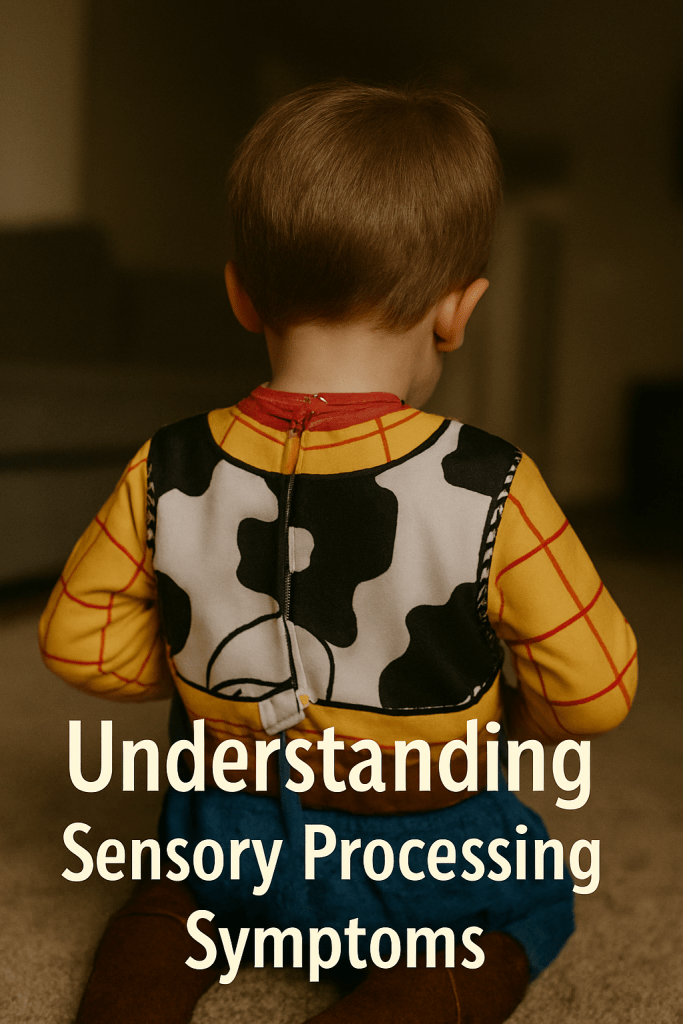
Understanding Sensory Processing Symptoms

If you’ve ever wondered why your child covers their ears at the sound of a vacuum, avoids certain clothes, or seems to crave movement all the time, you’re not alone. For me, I felt like I had pieces of a puzzle and on their own, they didn’t mean much but when I started putting them together, a bigger picture was being formed.

Sensory processing is how the brain receives and responds to input from our senses (touch, sound, taste, smell, sight, movement, and body awareness). For most people, the brain organizes these signals automatically. But for those with Sensory Processing Disorder (SPD) or sensory differences, the system can get a little tangled.

Some pieces of the puzzle we were collecting back when my 11 year old was 3:

  • Back in 2017, he wanted to be Woody for Halloween. The back of his costume closed with velcro. This was the first time we really noticed a piece of clothing bothering him. The sound, the feel of it, everything bothered him. To this day, he cuts all tags out of his clothing.
  • 2017 was also when his sister was born. If we were in the car and she started to cry, he would start to cry and beg us to help her and take him home. He had similar reactions to others crying, including friends.
  • He was visibly overwhelmed in crowds and even during a drive-thru Christmas light display.

I talked in an earlier blog on how I started collecting these pieces and googling, while also consulting with his speech therapist. The experience opened our eyes to what sensory processing really means and how it affects everyday life in ways most people don’t even notice.

At 11, he’s able to recognize when things are too much or too overwhelming for him. His sister has had her own sensory experiences. It’s been interesting to see the overlaps and the differences in what can affect them in their individual sensory processing.

Sensory processing symptoms can vary wildly, but they often fall into two main categories: sensory avoiding and sensory seeking.

Sensory Avoiding

Kids who are sensory avoiders might:

  • Cover their ears or run from loud noises (like hand dryers or fire alarms)
  • Refuse certain fabrics, tags, or seams in clothing
  • Dislike being touched or hugged unexpectedly
  • Avoid crowded or visually “busy” spaces
  • Prefer dim lights and quiet settings

They’re not being “difficult,” their brains are simply trying to protect them from sensory overload.

Sensory Seeking

On the flip side, sensory seekers might:

  • Constantly move, jump, spin, or crash into things
  • Touch everything within reach (including people!)
  • Make loud noises or seek vibration
  • Love messy play or crave strong tastes and textures
  • Find calm through deep pressure, like a weighted blanket or tight hug

Kids (and adults) can also be sensory seeking with certain things, but sensory avoiders with others.

Recognizing sensory processing symptoms isn’t about labeling a child, it’s about understanding them. When we start to see the “why” behind behaviors, everything changes. Instead of frustration, there’s compassion. Instead of punishment, there’s support.

Here are a few small ways to make a big difference:

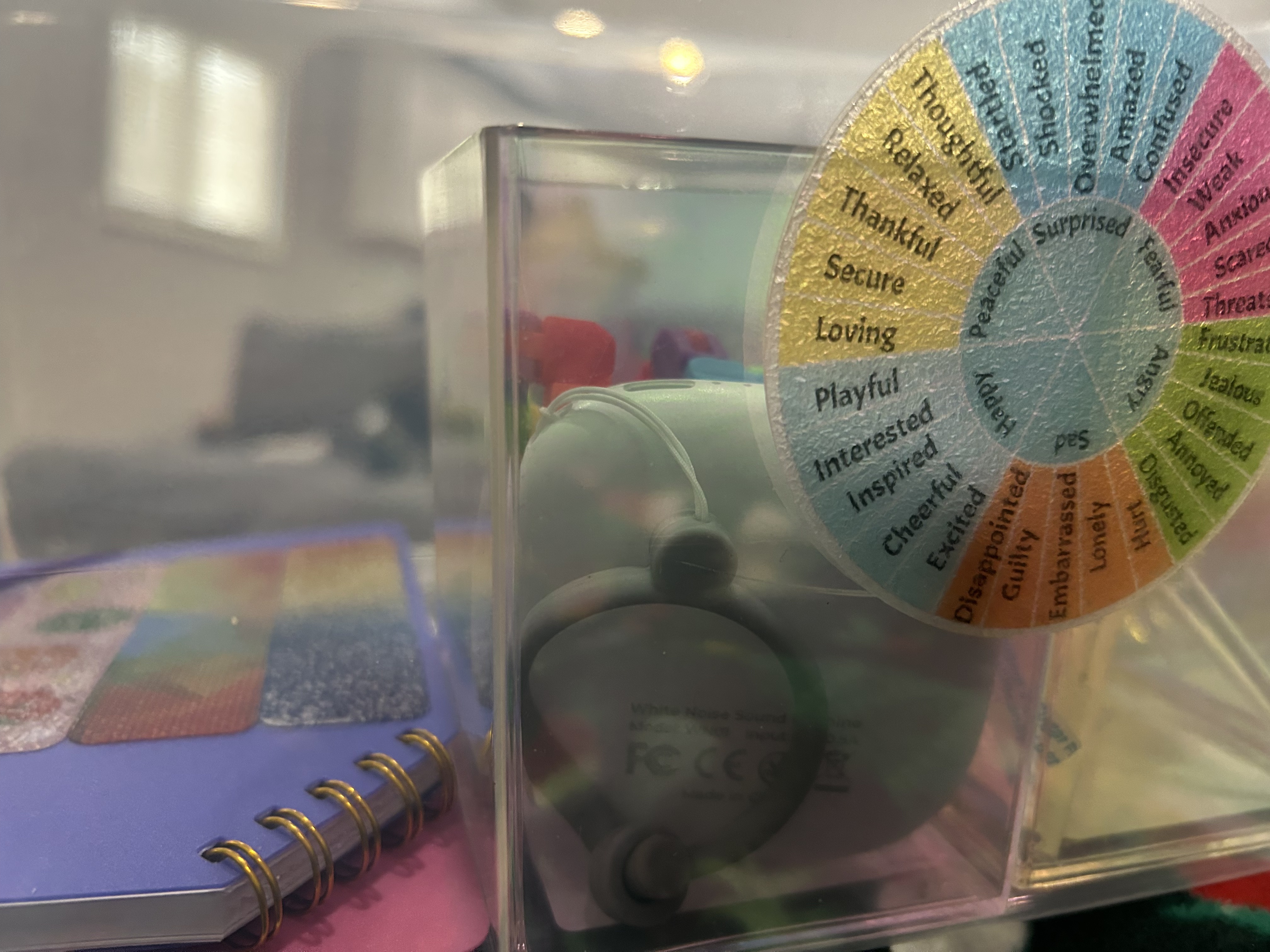
  • Create a sensory-safe space or bucket at home. For example: a cozy corner with fidgets, soft lighting, and weighted items.
  • Build sensory breaks into the day: a swing in the yard, a walk after school, or quiet time with a favorite texture.
  • Work with an occupational therapist (OT) who specializes in sensory integration.
  • Follow your child’s lead. They’ll show you what they need, sometimes with words, sometimes with behavior.

Sensory processing isn’t about “fixing” our kids. It’s about understanding their world and helping them feel comfortable in it. Every sensory system is unique and that’s what makes our kids who they are.

If this topic speaks to you, you might also enjoy my post on my favorite sensory tools and items that have helped in our home.

You know yourself and your child best. Trust your gut, trust your “MomSense” because having the knowledge and the right tools can make all the difference.

Back to School and Back to the Podcast!

After a summer hiatus, Just My MomSense is back and I couldn’t be more excited!.

If you’re new here, welcome! I’m Jen, a mom navigating the everyday ups and downs of parenting, sharing stories, resources, and encouragement along the way.

This week’s episode is a solo one, where I’m catching you up on how summer went in our house, how we’re handling the big back-to-school transition, and what’s ahead for the podcast.

🎧You can listen to the full episode, Summer Recap, Back to School and More Episodes Ahead, by clicking here or wherever you listen to podcasts.

I’d love to hear from you too! How was your summer, and how is the back-to-school season going for your family? Share with me in the comments below or come connect on Instagram [@justmymomsense].

You Don’t Have to Do the Whole School Year Today

Last Tuesday was the first day of school in my area. We had an awesome summer full of fun, family, travel and friends! That would be a tough one to transition from normally, but this year both of my kids were going into new schools. If you’ve read this blog before, then you can probably assume that this caused plenty of anticipatory anxiety in my house.

Last week, as we were navigating first-day jitters, endless forms, and figuring out new drop-off times, my husband and I reminded the kids (and ourselves):

You don’t have to do the whole school year today. You only have to do today.

It’s so easy to get caught up in the big picture:

  • The homework and projects that will eventually be assigned
  • The tests that will need to be studied for
  • The extracurricular activities and school events that fill the calendar

But when we focus on everything all at once, it feels overwhelming before we even begin. That’s true for our kids, and it’s true for us as parents. We’ve been working on breaking it down into manageable pieces. Today we wake up, we eat breakfast, we get to school, we do our best. That’s it. Tomorrow we’ll do it again. One day at a time.

As I write this, the Sunday Scaries are creeping in. If you deal with that too (as an adult or child), know that you’re not alone. Keep taking everything one day at a time. Look for the small victories, the things to celebrate and the mishaps to learn from.

We don’t have to do all the days, we just have to do today.

Fly Like You, Not Like Them

*movie spoilers ahead.*

I just finished watching The Wild Robot and so many lines stuck out to me, especially one from Fink the Fox: “Fly Like You, Not Like Them.”

When Roz arrives on an island filled with wary animals, she’s immediately seen as an outsider. She doesn’t speak their language, doesn’t understand their ways, and certainly doesn’t belong; at least, not in their eyes. It’s a situation that many kids (and adults) experience daily, whether due to neurodivergence, disability, or simply being different from the majority.

At first, Roz tries to stay hidden. She watches, listens, and slowly learns how to communicate in a way that makes sense to the animals. She doesn’t try to become them but she does adapt to her environment, while also staying true to herself.

How often do kids feel they need to change who they are just to “fit in”? Roz never stops being a robot. She doesn’t become an animal. However, she ends up becoming an important part of the island community. That’s a lesson so many of us need to remember for ourselves and our kids, right? Real inclusion doesn’t come from forcing people to act like everyone else. It isn’t about erasing differences. It’s about recognizing that every individual, from a child in a classroom, to a fictional robot on an island, has something valuable to offer.

By the end of the movie, Roz is an important part of the island’s family. Her strengths are able to be utilized, while her new friends are supporting her and each other. They’ve all gone outside of their comfort zone and accepted each other’s differences. Isn’t that what we all want for our kids? To be seen, accepted, and valued exactly as they are?

Our world needs more Rozes. More people who accept others unconditionally. More opportunities for kids to be themselves. More spaces where no one is expected to “fly” like everyone else.

The best kind of world is one where we all fly like ourselves, not like them.

How I Set Up Sensory Bins For My Kids

We were in need of a Sensory Bin overhaul!

Our old sensory bin was out of sorts and were no longer engaging my 10 and 7 year olds. I was talking with a therapist who mentioned focusing on things you can touch, taste, smell, see and hear. That’s all I needed to hear! Although this makes sense and our old bins somewhat did this, I was able to refocus on the bins in a different way instead of just throwing random toys into it.

Sensory bins have become one of our go-to tools, offering endless opportunities for exploration, creativity, and emotional regulation. In this post, I’ll share the items we added to our new sensory bins.


What is a Sensory Bin?

Before we dive into the items I included, let’s quickly review what a sensory bin is. Simply put, a sensory bin is a container filled with materials that encourage hands-on exploration. These bins are designed to stimulate a child’s senses—sight, touch, smell, and sometimes even hearing—through various textures, colors, and items. Sensory bins are great for calming anxious kids, building fine motor skills, and promoting imaginative play. These bins can vary based on age and there are plenty of age appropriate items out there based on your child’s individual needs.


Our Sensory Bin Items

*All of these items can be found on the “These Are A Few Of My Favorite Things” page.*

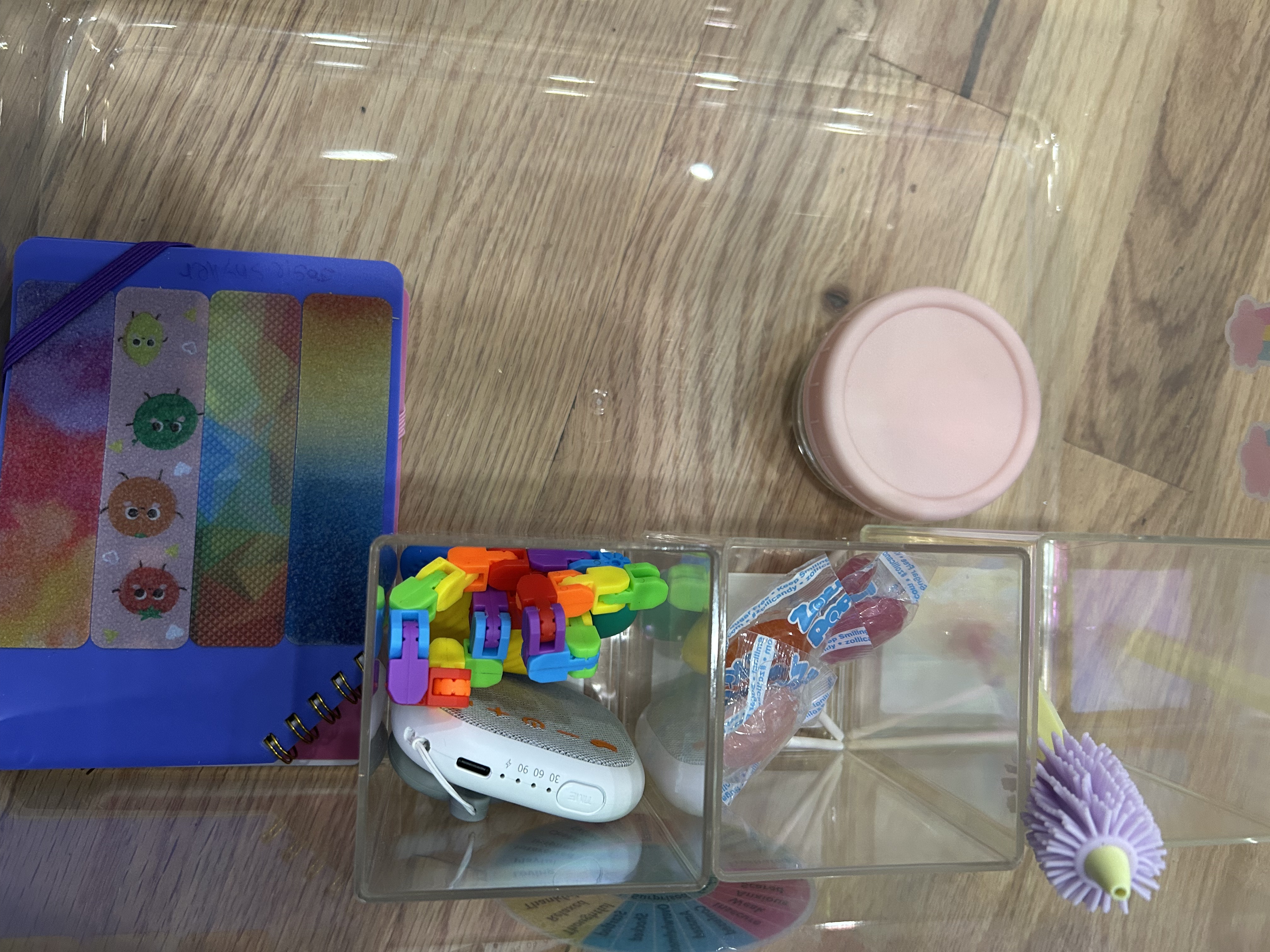
Here is how we simplified our Sensory Bins:

1. Calming Strips (image taken from Amazon):

These are so cool! Calming strips are a fantastic tool designed to help children (and adults) self-regulate during moments of stress, anxiety, or overstimulation. These strips are a sensory-friendly solution, providing a textured surface that offers a calming tactile experience when touched or rubbed.

2. Fidget Toy Sensory Stone

I love how these stones feel! The Sensory Stone is a calming tool designed to provide immediate tactile feedback to help manage stress, anxiety, and sensory overload. Ideal for children and adults, this smooth, textured stone offers a soothing sensory experience when held and rubbed. It’s the perfect size to carry in your pocket, making it a discreet tool for on-the-go stress relief, whether at school, work, or home.

The sensory stone promotes mindfulness and grounding by providing a simple, calming action that helps users refocus their energy and reduce tension.

3. Zollipops Lollipops

I wanted to add something for taste with plenty of flavor but no dyes, which wasn’t easy to find. I came across Zollipops on Amazon which has been a great lollipop alternative.

Oral sensory input can help a person stay grounded. The repetitive, calming action of sucking on the lollipop can redirect attention from overwhelming thoughts or feelings, allowing the person to focus on the physical sensation of the treat. For those who experience overstimulation, especially in sensory-sensitive environments (like noisy or crowded spaces), the act of focusing on the sensation of the lollipop can serve as a grounding tool. It offers a quiet, non-intrusive way to redirect attention to a more controlled, manageable sensory experience, helping to reduce feelings of being overwhelmed.

4. Portable Sound Machine

A portable sound machine can be a valuable addition to a sensory bin, enhancing the sensory experience and providing a calming, immersive environment. This sound machine has varying sounds, such as white noise, nature sounds (rain, ocean waves, birds chirping) and gentle music, which can help create a relaxing atmosphere. These sounds can help mask background noises that may be distracting or overstimulating and help reduce stress and anxiety.

5. Mindfulness Stickers

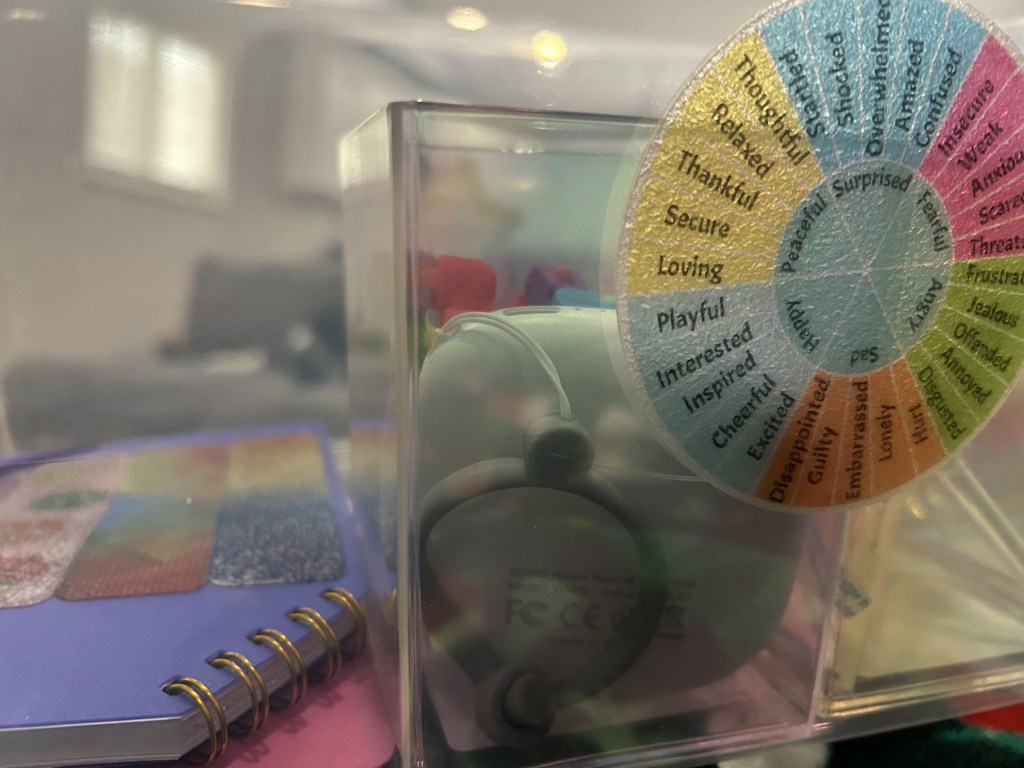
The kids have used their mindfulness stickers to decorate their bins. These stickers are often designed with calming images, patterns, or inspirational phrases that encourage self-reflection, relaxation, and emotional regulation. By incorporating mindfulness stickers into a sensory bin, you can create an interactive, soothing, and engaging environment for children (and adults) to practice mindfulness, focus, and grounding. Some of the stickers help to practice proper breathing, others help with identifying emotions and remembering what we all have control over and what we don’t.

6. Lavendar for Smell

I already had these small jars and decided to repurpose them for the sensory bins. I added three cotton balls with a bit of lavender oil so it wasn’t too overpowering but they could also easily open the jar and smell enough of the scent. Lavender is widely known for its soothing properties, making it a go-to natural remedy for promoting relaxation and calmness.

7. Old fashioned pad and pen!

Drawing pictures and writing stories or random thoughts can all be a great way to ground yourself when feeling anxious. I found the pads and pens at Dollar Tree and the kids decorated their notepads with calming strips.


Customize Your Bin With What Works For You

Every child is unique, and sensory bins can be easily customized to suit your child’s preferences and developmental needs. My kids have already added various toys to their bins and I’m sure they will change over time. Whether you’re creating a calming space or encouraging imaginative play, these bins can provide endless benefits for your kids. What’s in your sensory bin? Share your favorite items in the comments below!
Visit Santa Online

During the 2020 Holiday Season, I got to interview the one and only Santa Clause on the Dillo’s Diz Podcast. With still so much uncertainty surrounding us, it was a comfort to be speaking with someone so magical. Aside from the huge honor of interviewing him, we were also chatting about VisitSantaOnline.com, where families could book a zoom call with the big guy himself!

We had been to visit Santa in person in previous years when the kids were in the baby/toddler stage. Since some time had passed, they were feeling a little nervous about seeing him in real life. As we all know, 2020 was a time where not many things were happening in person. The combination of these two factors had me running to this new way to connect with St. Nick!

The visit was amazing! Santa connected with both kids, who were 3 and 6 at the time, and brought Christmas magic to life. He was able to chat with them about some of their wishes for Christmas, school and more. 3 years later, they have continued to talk about it and we decided to book another call with Santa.

With 5 days left until Christmas, we appreciated Santa finding time out of his busy schedule to once again chat with us. Now at 9 and 6, the kids were once again star struck seeing him again. Another magical memory has been made.

If your child is a bit skiddish about meeting Santa in person, if a mall setting would be too overwhelming, or maybe scheduling an in person meeting is tough, I highly recommend checking out VisitSantaOnline.com. You get time to chat with Santa and a recording of the zoom call once it’s done. It’s a fantastic experience!

Thankful for the Christmas season, for watching magic through my kids’ eyes and for Santa as he creates memorable moments!

Back to School Haircuts

The other day I took both of my kids to get haircuts. Who doesn’t need a fresh new cut for school, right?!

My 9 year old has never been thrilled with haircuts but he is able to sit through them now. He did seem to get himself stuck in a cycle of hair falling on his face > wiping his face with the cape > the cape was covered in hair > more hair would end up on his face and the cycle would continue. But, he made it through!

As we were leaving, a little boy was coming in looking terrified and crying. He didn’t want to sit in the chair and was holding onto his mom as tight as he could. In that moment, I looked at his mom and I saw myself.

When we got in the car, my son and daughter asked why he was so sad. I went over some possible reasons and asked my son if he could relate. He could. We talked about how he used to cry, scream and stiffen his body anytime we brought him in for a haircut.

My daughter didn’t seem to understand and we talked about how getting a haircut affected my son. I asked how loud the scissors were while getting her hair cut. She said a 0. I asked my son how loud the buzzer and scissors were and he said a 25. I’m not sure what their scales were, but clearly one was a lot different. He talked about how it feels like sharp tools on his head, it’s loud and it’s itchy.

This took us on a path of talking through different senses, how the brain processes things differently and how each of them react to different foods, textures, sights and sounds. This was a conversation I’ve had with my son before, but not as much with my daughter.

I’m proud of my son for being able to get through things that once were so difficult for him, even though they’re still not easy and for being able to recognize them better now than he ever has before.

As far as we’ve come, his very first haircut still seems like yesterday.

Day 1 | 30 Day Writing Challenge

Today is August 31, 2023 and I am about to start a 30 Day Writing Challenge.

Wouldn’t it make more sense to start on September 1?

Yes! BUT I am giving myself the advice that I would give someone else: Just Start!

Time has flown by in the last 9 years of being a mom and in writing this blog. When I look back on posts, some that I think were written recently were actually written 4+ years ago. I like writing, I like sharing things that have worked for our family with others and I want to be doing more with this blog. Step 1, get to writing MORE!

For day 1, I want to do a re-introduction! My name is Jen and I’m a stay at home mom of a 9 year old son and a 6 year old daughter. I’ve been married for over 11 years and we also have 11 year old pup! I co-host a weekly podcast with my brother <shameless plug> which you can find on your favorite podcasting platforms: Dillo’s Diz Podcast. For a year and a half, I also co-hosted The Magical Mommy Monday Podcast with my friend Angela.

I started this blog to document my family’s journey navigating my son’s speech delay, sensory processing difficulties and the day to day of family life. I always find it helpful when I’m able to get another parent’s perspective on different topics and wanted to be a resource for others going through a similar journey.

I’m mostly in the land of social media under @jenillo but you can also find me on Instagram @justmymomsense.

Should I start a TikTok for this blog too? Hmmm, stay tuned for the rest of this challenge to see if it happens!

Day 1 is now in the books! See you tomorrow!