If you’ve ever found yourself Googling:
- “How to help my child calm down”
- “Printable calm down corner tools”
- “Brain breaks for kids at home”
- “Emotional regulation activities for kids”
- “Meltdown support for neurodivergent child”
You’re not alone. Big feelings are part of childhood. But for sensory-sensitive kids, neurodivergent kids, or simply overwhelmed kids, those feelings can escalate fast.
Here are the sensory and emotional regulation printables parents that I have created for my Etsy Shop:
1. Brain Break Cards for Kids (Movement + Reset Tools)
When focus drops or frustration rises, kids may just need movement.
Brain breaks help regulate the nervous system, increase oxygen to the brain, and improve attention. These printable Brain Break Cards include simple, kid-friendly movement ideas that work:
- At home
- In the classroom
- During homework
- Before tests
- After screen time
If your child struggles with transitions, attention, or restlessness, brain breaks are a game changer.
Perfect for: ADHD, sensory processing challenges, classroom reset moments.
2. Calming Strategy Cards + Feelings Cards Bundle
You can’t expect a child to “use their words” if they don’t have the words.
This calming strategy and emotion identification bundle helps kids:
- Identify what they’re feeling
- Connect feelings to body signals
- Choose a calming tool
- Build emotional vocabulary
These work beautifully in a calm down corner, therapy room, or homeschool setup.
Perfect for: Emotional regulation skills, social emotional learning (SEL), and teaching coping strategies.
3. Meltdown Support Toolkit for Kids
Meltdowns are not misbehavior. They’re nervous system overload.
The Meltdown Support Toolkit is designed to support parents during high-stress moments, not after the fact. It gives you:
- Visual supports
- Grounding tools
- Simple regulation prompts
- Easy printable pages to use immediately
This is especially helpful for parents of neurodivergent children who need concrete, visual tools.
Perfect for: Autism, sensory overload, anxiety spikes, after-school meltdowns.
4. Kids Sensory Journal (Weekly Reflection)
Sometimes regulation doesn’t happen in the moment, it happens in reflection.
The Kids Sensory Journal helps children:
- Notice what triggers overwhelm
- Track patterns
- Reflect on what helped
- Build self-awareness over time
This is especially powerful for older elementary kids who are starting to understand their sensory profile.
5. Emotion Identification Cards for Kids
If your child jumps straight from “fine” to “exploding,” they may need help recognizing emotions earlier. Emotion identification is foundational to regulation.
These printable emotion cards are:
- Visual
- Simple
- Developmentally appropriate
- Great for therapy, home, or classroom use
They help kids build the language they need before things escalate.
6. Sensory-Friendly Vacation Prep Kit
Travel is exciting but it can also be dysregulating.
The Sensory-Friendly Vacation Prep Kit helps families prepare kids for:
- Schedule changes
- New environments
- Travel days
- Waiting in lines
- Disrupted routines
This reduces anxiety before you even leave the house.
If you’ve ever searched “how to prepare my child for vacation,” this is for you.
7. Mom & Me Journal (Connection Before Correction)
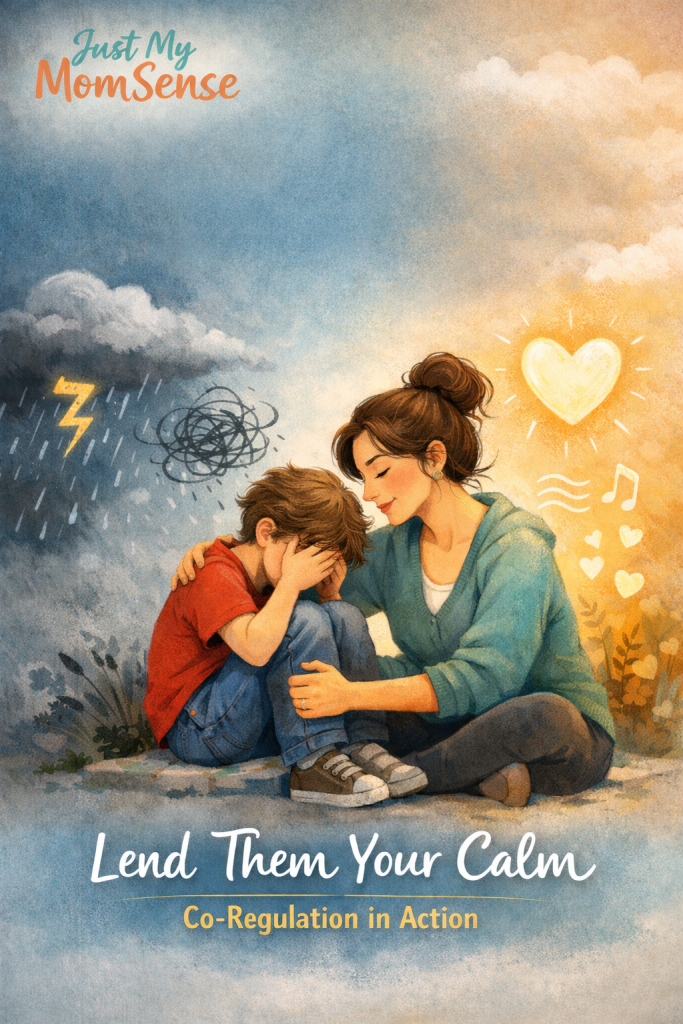
Regulation is relational. This printable Mom & Me Journal creates intentional connection time so kids feel safe, heard, and grounded.
Because a connected child regulates better.
Printable emotional regulation tools are powerful because they:
- Give kids visual supports
- Reduce verbal overload
- Create predictability
- Support executive functioning
- Build independence over time
You don’t need a Pinterest-perfect calm down corner. You just need simple, consistent supports.
If you’re interested in starting a simple Calm Down Corner, begin with:
- Feelings cards
- Calming strategy cards
- Brain break cards
- A cozy seat
- A small basket for tools
That’s it. Keep it accessible. Keep it simple. Keep it consistent.
I’m a parent. I understand sensory challenges. I believe in supporting kids, not shaming them.
These tools are designed to feel:
- Gentle
- Encouraging
- Practical
- Easy to implement
If you’re looking for calm down corner printables, emotional regulation worksheets, brain break cards, or meltdown support tools, you can browse everything here:
 Just My MomSense