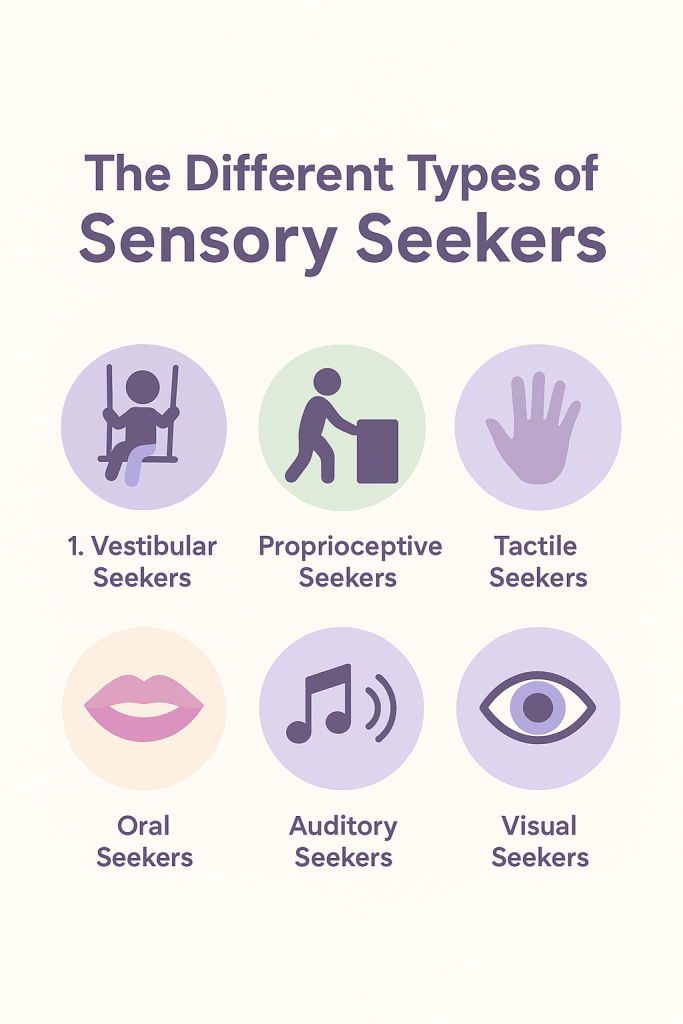
How to Explain Sensory Processing to Friends, Family and Teachers

One of the biggest challenges of parenting a child with sensory difficulties isn’t just managing the day-to-day, it’s helping the people around us understand what’s really going on.

Since October is Sensory Processing Awareness Month, it feels like the perfect time to talk about how we can explain sensory processing to the friends, family members, and teachers who love and support our kids.

Most people want to understand, but they don’t know how. Sensory processing can feel invisible from the outside. A meltdown over scratchy tags or a refusal to eat certain textures can be mistaken as “bad behavior” or “picky eating.” That’s where our voice matters.

Here are a few ways to explain it simply:

Use relatable examples.
“Have you ever been stuck in a room with a flickering light or heard nails on a chalkboard? Imagine if your brain felt like that several times a day. That’s what it can be like for my child.”

Keep it short and clear.
“Sensory processing is how the brain interprets information from the five senses. For some kids, it’s turned up too high, for others, it’s turned down too low.”

Share what helps.
“It’s not about fixing my child; it’s about supporting them. Things like headphones, weighted blankets, or breaks can make a huge difference.”

Lead with compassion.
Sensory needs aren’t “bad” or “wrong,” they’re just different.

The more we talk openly, the more the people around us begin to understand. And that understanding builds patience, inclusion, and empathy.

This Sensory Processing Awareness Month, I encourage you to share a piece of your child’s sensory story with someone new: a teacher, a grandparent, a friend. Every conversation plants a seed of awareness, and together, we can grow a more compassionate community for our kids.

One more note: Sensory Processing Difficulties aren’t kid-specific. It’s not something that goes away with age. There are ways to learn how to manage and support the day-to-day challenges and there are many adults that need support as well.
Do you have a way you’ve been able to explain sensory processing? Share it in the comments below or connect with me on Instagram!

    Sensory Processing Awareness Month | October 2025

    October is Sensory Processing Awareness Month, and I couldn’t let the first day pass without taking a moment to share why this month is so close to my heart.

    If you’ve been following along with Just My MomSense, you already know that sensory processing plays a huge role in our family’s daily life. For us, it’s not just about quirky preferences or “picky” behaviors, it’s about how our children experience the world. A sound, a texture, or a room full of people can feel too much or not enough. What looks small on the outside can feel enormous on the inside.

    That’s why Sensory Processing Awareness Month is so important. It’s a time to pause, educate, and bring understanding to families, teachers, friends, and communities who might not fully see what’s happening behind the scenes. For those of us living this everyday, it’s a reminder that our kids are processing the world differently, and that deserves respect, patience, and support.

    This month, I’ll be sharing practical tools, calming strategies, and real-life stories from our sensory journey. My hope is that you feel less alone and more equipped, whether you’re a parent, caregiver, or someone who simply wants to better understand sensory needs.

    Let’s use this month to celebrate the uniqueness of our kids, raise awareness in our circles, and gently remind the world: sensory processing differences are real, valid, and worth honoring.

    Here’s to a month of awareness, compassion, and connection!

    Back to School and Back to the Podcast!

    After a summer hiatus, Just My MomSense is back and I couldn’t be more excited!.

    If you’re new here, welcome! I’m Jen, a mom navigating the everyday ups and downs of parenting, sharing stories, resources, and encouragement along the way.

    This week’s episode is a solo one, where I’m catching you up on how summer went in our house, how we’re handling the big back-to-school transition, and what’s ahead for the podcast.

    🎧You can listen to the full episode, Summer Recap, Back to School and More Episodes Ahead, by clicking here or wherever you listen to podcasts.

    I’d love to hear from you too! How was your summer, and how is the back-to-school season going for your family? Share with me in the comments below or come connect on Instagram [@justmymomsense].

    You Don’t Have to Do the Whole School Year Today

    Last Tuesday was the first day of school in my area. We had an awesome summer full of fun, family, travel and friends! That would be a tough one to transition from normally, but this year both of my kids were going into new schools. If you’ve read this blog before, then you can probably assume that this caused plenty of anticipatory anxiety in my house.

    Last week, as we were navigating first-day jitters, endless forms, and figuring out new drop-off times, my husband and I reminded the kids (and ourselves):

    You don’t have to do the whole school year today. You only have to do today.

    It’s so easy to get caught up in the big picture:

    • The homework and projects that will eventually be assigned
    • The tests that will need to be studied for
    • The extracurricular activities and school events that fill the calendar

    But when we focus on everything all at once, it feels overwhelming before we even begin. That’s true for our kids, and it’s true for us as parents. We’ve been working on breaking it down into manageable pieces. Today we wake up, we eat breakfast, we get to school, we do our best. That’s it. Tomorrow we’ll do it again. One day at a time.

    As I write this, the Sunday Scaries are creeping in. If you deal with that too (as an adult or child), know that you’re not alone. Keep taking everything one day at a time. Look for the small victories, the things to celebrate and the mishaps to learn from.

    We don’t have to do all the days, we just have to do today.

    Navigating Autism, Motherhood, and Disney Magic with Joann Salas

    ICYMI, On the most recent episode of the Just My MomSense Podcast, I was joined by Joann Salas. On her YouTube channel, Joann shares her journey as a wife and mom to twin boys, one of whom is autistic and nonverbal. She shares the ups and downs of their everyday life, offering a real look into parenting, autism, and managing a busy home.

    In this episode, we chat about:

    • The emotional side of receiving an Autism diagnosis
    • Finding joy in everyday routines and family travel
    • Why Disney parks are a source of comfort and connection for her family

    Listen to the full episode here.
    📺 Watch Joann’s videos: Joann Salas on YouTube
    📲 Follow Joann on Instagram: @lovealwaysjoann

    Quick Tips for Sensory-Friendly Theme Park Travel

    If you’re a parent or caregiver of a neurodivergent child, the thought of visiting a theme park can feel both exciting and overwhelming. Between the crowds, the noise, and the unexpected moments, there’s a lot to navigate. But here’s the good news: with the right tools and preparation, places like Disney World, Universal Orlando, and Legoland Florida can be magical for our sensory-sensitive kiddos.

    In the latest episode of the Just My MomSense Podcast, I’m sharing some quick tips and tricks I’ve learned from traveling to these parks with my kids. Whether you’re planning your first big theme park adventure or want to improve the experience for your family, this episode is for you.

    Listen to the full episode here or on your favorite podcasting platform!

    To go along with the episode, I’ve created a printable Sensory Friendly Vacation Prep Kit available now in my Etsy shop:

    • Visual Schedule Cards to help kids understand the flow of the day
    • My Day” prompt sheets to prep for big outings
    • I Did It!” badge to celebrate bravery
    • I Need a Break” card for when communication gets tough

    Grab the kit here on Etsy

    There’s no one-size-fits-all when it comes to sensory needs and that’s okay! What matters most is meeting your child where they are and giving yourself grace as you go. Theme parks can be a great experience for you and your family.

    Have a favorite sensory travel tip? A must-visit quiet spot at a park? Share in the comments or send me a message I’d love to hear from you!

    Embracing Neurodiversity | A Conversation with Dr. Matt Zakreski

    On the most recent episode of the Just My MomSense Podcast, I had the absolute joy of speaking with Dr. Matt Zakreski. Dr. Matt is a clinical psychologist who specializes in neurodiversity, giftedness, and mental health for kids and teens.

    As parents, especially those raising neurodivergent kids, we’re constantly seeking guidance, tools, and a little reassurance that we’re not alone. Dr. Matt brings all of that and more. Whether your child is diagnosed with ADHD, autism, sensory processing differences, or is simply a big-feelings kid who processes the world differently, then this episode is for you.


    What Is Neurodiversity?

    Neurodiversity is the concept that neurological differences, like ADHD, autism, dyslexia, and others are natural variations of the human brain, not deficits. Dr. Matt breaks it down beautifully in this episode, reminding us that being neurodivergent doesn’t mean something is wrong. It means your brain works differently and that difference brings value.


    Strengths-Based Parenting for Neurodivergent Kids

    Dr. Matt is passionate about focusing on what your child can do, rather than just what’s hard for them. Instead of seeing a meltdown as “bad behavior,” it’s about understanding what’s underneath, whether it’s sensory overload, anxiety, or an unmet need.

    He shares strategies for:

    • Building emotional regulation skills
    • Creating safe, affirming environments at home and in school
    • Encouraging self-advocacy in neurodivergent children

    Navigating School and Advocacy

    A big part of our conversation centered on school and Dr. Matt offers practical advice for:

    • Talking to teachers and schools about your child’s needs
    • What to look for in an inclusive education environment
    • How to advocate

    Listen Here!

    Also available on your favorite podcasting platform.


    Connect with Dr. Matt Zakreski

    Visit his website: drmattzakreski.com
    Follow on Instagram: @drmattzakreski

    How Everyday Tech Can Empower Learning and Communication: A Conversation with Joan Green

    If you’ve ever wished for simple, practical tools to help your child thrive at school, support a loved one’s communication needs, or even stay organized yourself, you’re going to love the latest episode of the Just My MomSense podcast.

    I had the pleasure of chatting with Joan Green, a Speech-Language Pathologist, Assistive Technology Expert, Author, and founder of Innovative Speech Therapy. Joan has dedicated her career to helping people of all ages use everyday technology to overcome challenges in learning, communication, and independence.

    In our conversation, we explore how technology can support kids, teens, parents, teachers, caregivers, and older adults alike. Whether you’re parenting a neurodivergent child, helping a high schooler prepare for college, or supporting an aging parent, you’ll walk away from this episode with resources to make life just a little easier.


    Resources Mentioned in the Episode

    Join the Tech Life Inner Circle Membership
    Your go-to community for live training, expert support, and curated tools.
    👉 https://innovativespeech.com/tech-life-inner-circle/

    Register for the Tech for College Success Summer Workshops
    Perfect for college-bound students who need help with executive functioning and organization.
    👉 https://bit.ly/summerworkshopstechforcollegesuccess

    Learn more about Joan Green and Innovative Speech Therapy
    👉 https://innovativespeech.com/


    Follow Joan Green for More Expert Tips & Tools


    Don’t Miss This Episode!

    Listen Here or wherever you get your podcasts! Don’t forget to subscribe to Just My MomSense for more conversations, parenting support, and resource-packed episodes.

    Have questions about assistive tech or want to share your favorite tools? Drop a comment below or message me on Instagram @justmymomsense!

    Let’s Talk About It: May is Mental Health Awareness Month

    Today on the Just My MomSense podcast, we’re talking about something that impacts all of us: mental health.

    May is Mental Health Awareness Month, and it’s a powerful reminder that we deserve to check in with ourselves just as much as we check in on our kids. As parents and caregivers we often put our own well-being on the back burner. But mental health is health and it matters more than we sometimes admit.

    🎧 Listen to the episode here

    Therapy & Finding Support

    • Psychology Today Therapist Finder
      psychologytoday.com/us/therapists
      Find a licensed therapist in your area and filter by insurance, specialty, and more.
    • Therapy for Black Girls
      therapyforblackgirls.com
      A space to support the mental health needs of Black women and girls.
    • Therapy for Black Men
      therapyforblackmen.org
      Reducing stigma and increasing access to therapy for Black men.
    • Open Path Collective
      openpathcollective.org
      Affordable counseling options for individuals and families—often between $40–$70 per session.

    Support for Parents & Caregivers

    • NAMI – National Alliance on Mental Illness
      nami.org | HelpLine: 1-800-950-NAMI (6264)
      Offers free education, advocacy, and support for individuals and families.
    • Parent to Parent USA
      p2pusa.org
      Connects families of children with special needs, including mental and behavioral challenges, for peer-to-peer support.
    • The Mighty
      themighty.com
      A compassionate community where people share stories and experiences related to mental health, chronic illness, disability, and caregiving.

    For Kids & Teens

    • Child Mind Institute
      childmind.org
      Tools and tips for supporting children’s mental wellness, from anxiety to ADHD and everything in between.
    • Crisis Text Line
       Text HOME to 741741
       crisistextline.org
       Free, anonymous support from trained crisis counselors—available 24/7 via text.

    In Case of Emergency

    • 988 Suicide & Crisis Lifeline
      Call or text 988
      988lifeline.org
      Free, 24/7 support for people in distress or those supporting someone else.

    You’re Not Alone

    Whether you’re dealing with burnout, anxiety, or just feeling “off,” please know that your mental health is worth prioritizing. Even five minutes of stillness, asking for help, or talking with a trusted friend can make a difference.

    You are not failing. You are human. And you are doing an incredible job.

    Let’s break the silence, reduce the stigma, and remind each other: it’s okay to not be okay.