World Mental Health Day: Caring for the Whole Family’s Mind

Every year on October 10, the world pauses to recognize World Mental Health Day. A day to remember that our mental well-being matters just as much as our physical health.

The truth is, mental health starts at home, in our daily routines, our conversations, and the ways we care for one another. Whether you’re a parent, child, or caregiver, mental health is something we can nurture together.

Kids learn how to express emotions by watching us. Talking about feelings, the good and the hard ones, normalizes emotional ups and downs. Try asking your kids questions like:

  • “What made you smile today?”
  • “Was there anything that felt tricky or stressful?”
  • “How does your body feel when you’re upset?”

It doesn’t have to be heavy, just consistent. These conversations help children build emotional vocabulary and teach them it’s okay to ask for help.

As parents, we won’t always get it right. But showing your kids how you calm down through deep breathing, taking a short walk, or saying, “I need a minute to think,” teaches emotional regulation better than any lecture could. When we practice self-care openly, we give our kids permission to do the same.

Routines help everyone feel grounded, especially kids who thrive on predictability. Simple rituals like reading before bed, eating dinner together, or sharing highs and lows of the day create connection and stability which are two key ingredients for strong mental health.

It’s easy to put everyone else’s needs first, but your mental health deserves care, too. Check in with yourself:

  • Are you sleeping enough?
  • Are you eating regularly?
  • When was the last time you did something just for you?

Even a few minutes a day of quiet, journaling, or movement can make a difference.

Caring for our family’s mental health doesn’t have to mean grand gestures. It’s the small, everyday choices that build emotional strength: a hug, a walk, a laugh, or a moment of grace when things go wrong.

This World Mental Health Day, let’s remind ourselves and our kids that it’s okay not to be okay and that help, hope, and healing are always within reach.
Let’s Talk About It: May is Mental Health Awareness Month

Today on the Just My MomSense podcast, we’re talking about something that impacts all of us: mental health.

May is Mental Health Awareness Month, and it’s a powerful reminder that we deserve to check in with ourselves just as much as we check in on our kids. As parents and caregivers we often put our own well-being on the back burner. But mental health is health and it matters more than we sometimes admit.

🎧 Listen to the episode here

Therapy & Finding Support

  • Psychology Today Therapist Finder
    psychologytoday.com/us/therapists
    Find a licensed therapist in your area and filter by insurance, specialty, and more.
  • Therapy for Black Girls
    therapyforblackgirls.com
    A space to support the mental health needs of Black women and girls.
  • Therapy for Black Men
    therapyforblackmen.org
    Reducing stigma and increasing access to therapy for Black men.
  • Open Path Collective
    openpathcollective.org
    Affordable counseling options for individuals and families—often between $40–$70 per session.

Support for Parents & Caregivers

  • NAMI – National Alliance on Mental Illness
    nami.org | HelpLine: 1-800-950-NAMI (6264)
    Offers free education, advocacy, and support for individuals and families.
  • Parent to Parent USA
    p2pusa.org
    Connects families of children with special needs, including mental and behavioral challenges, for peer-to-peer support.
  • The Mighty
    themighty.com
    A compassionate community where people share stories and experiences related to mental health, chronic illness, disability, and caregiving.

For Kids & Teens

  • Child Mind Institute
    childmind.org
    Tools and tips for supporting children’s mental wellness, from anxiety to ADHD and everything in between.
  • Crisis Text Line
     Text HOME to 741741
     crisistextline.org
     Free, anonymous support from trained crisis counselors—available 24/7 via text.

In Case of Emergency

  • 988 Suicide & Crisis Lifeline
    Call or text 988
    988lifeline.org
    Free, 24/7 support for people in distress or those supporting someone else.

You’re Not Alone

Whether you’re dealing with burnout, anxiety, or just feeling “off,” please know that your mental health is worth prioritizing. Even five minutes of stillness, asking for help, or talking with a trusted friend can make a difference.

You are not failing. You are human. And you are doing an incredible job.

Let’s break the silence, reduce the stigma, and remind each other: it’s okay to not be okay. 

Anxiety in Kids

Anxiety is a very real thing.

If you grew up in the 80s and 90s (or earlier) like I did, then chances are anxiety wasn’t really discussed. When I look back at my childhood, I see difficulties I had…which was actually anxiety.

I personally find it hard to believe that in 2024 people still try to deny anxiety as a real thing or, on the other side, act like it can be easily cured. There is no quick fix. It isn’t something someone can just get over. It’s something you need tools for. Something you have to work on constantly. This is true in both adults and kids.

Bill Hader made a video for Child Mind Institute a few years back to talk about his anxiety. He makes a great analogy how he now works with it instead of feeling attacked by it:

I’ve wrote a lot about sensory overload and how overwhelmed anyone can be in different settings which may cause them to react in different ways. Sensory and Anxiety go hand in hand.

Children with sensory processing disorder often benefit from routine and predictability, as it helps to reduce anxiety and provide a sense of stability. – The Out-of-Sync Child

I see a difference in my kids’ anxiety when I can stick to a routine and also ensure they’re getting some sort of physical activity everyday. But that’s hard to do right? Life happens. People get sick, events pop up, not everyday can be a perfect copy/paste. Along with many other parents, I try my best.

There are so many great resources, toys and more that can help with both sensory needs and support anxiety. Check out A Few Of My Favorite Things for book suggestions and more!

There is so much available now for those who are dealing with anxiety themselves or live with someone experiencing anxiety. Searching on YouTube, TikTok, Instagram, and of course Google can lead you to an entire world of learning more. Below are just two of many links (since I don’t want to overwhelm you) that speak to Sensory and Anxiety specifically:

Sensory Anxiety: Not Your Normal Anxiety from the Star Insittute

Why We May See Similar Signs of Anxiety or Hyperactivity for People with SPD (A Video)

Anxiety will look different for everyone. Keep learning, keep breathing and find the tools to support you and those your love.

World Mental Health Day

The overall objective of World Mental Health Day is to raise awareness of mental health issues around the world and to mobilize efforts in support of mental health. The Day provides an opportunity for all stakeholders working on mental health issues to talk about their work, and what more needs to be done to make mental health care a reality for people worldwide. – World Health Organization

There is no shame in taking care of your mental health. There is no shame in admitting you need help to take care of your mental health. There is no shame in talking to others about your mental health.

I recognize that in 2023 there is still a stigma when in comes to discussing mental health. I realize there is still a stigma when people talk about going to therapy. However, I am thankful that the stigma seems to be diminishing as each year passes. As it should, right?

It’s hard to talk about sensory difficulties without talking about anxiety. They go hand in hand and can feed off each other easily. Providing your children with the right tools to help them overcome any of their challenges as early as possible can make such a difference. Whether that is speech therapy, occupational therapy, talk therapy, play therapy, while also working with them at home, it can all change how you and your child communicate and get through the day to day.

As a mom, talking to another parent that may be reading this, please know that taking care of your mental health is so important. It’s great to have a support system around you and some are lucky to have that. Whether you do or you don’t, it’s ok to also ask for additional help. Talking to a therapist, meditation, and working on yourself can do wonders for your kids. If you are not regulated, they won’t be either. Being a parent is tough, add having a child with anxiety, sensory difficulties, health issues or any other challenges and being a parent just got tougher. Please take care of yourselves as well.

During World Mental Health Day, I wish for kindness and compassion for all of us. I wish for everyone to feel peace and happiness. For those that aren’t feeling that way, please know it’s ok to ask for help.

Helpful Links:

MentalHealth.org

MentalHealth.org.uk

Star Institute

Psychology Today

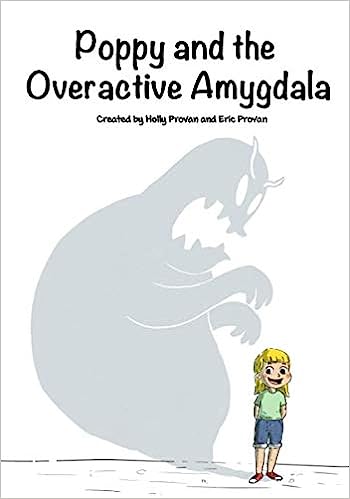
Poppy and the Overactive Amygdala

I recently purchased Poppy and the Overactive Amygdala to have as a source of reference for my kids.

However, for today, I want to chat about reading it on your own, as a parent.

Description from the back of the book:

Many kids suffer from an overactive “Fight or Flight” response, which can affect them in all areas of their lives. Follow Poppy as she explains some of her struggles with anxiety, anger, and friendships as a kid with an overactive amygdala. This book was created to help build understanding and empathy for children with a wide range of mental health challenges. This type of behavior can be seen in many children, including but not limited to those kids with DMDD, ADHD, ODD, Anxiety, Bipolar disorder, PANS/PANDAS, RAD, Autism disorders, PTSD, IED, and Conduct disorder, among others. While many of the children struggle with comprehension of their disorder, they all have one important factor in common. They did not choose this. As adults, we have a responsibility to build understanding, encourage empathy, and continue to grow our own set of skills and knowledge in order to best serve our most vulnerable population: Children.

Both of my kids have anxiety and one has confirmed sensory processing difficulties. Here is what I already know: going through everyday activities that we all take for granted, can be really tough for someone with sensory processing difficulties and anxiety. Here is what I need to be reminded of: going through everyday activities that we all take for granted, can be really tough for someone with sensory processing difficulties and anxiety. I try my best to continue to educate myself, to listen to podcasts, read books or social media and watch videos, all in an effort to make sure I’m doing everything I possibly can to make things just a little easier. But, I am also human. I have good days and bad. I’m always juggling all the things in life. And sometimes, I start to take the day to day for granted and slip back into needing a reminder.

This book is a good reminder. A reminder of the emotional storm that can happen quickly and easily inside a child. It talks about the ups and downs, the negative thoughts they experience and what adults can do to help them through it.

If you’re like me and aren’t always perfect, I recommend you read through Poppy and the Overactive Amygdala, on your own, thinking of your child going through the things that are described. It may be just the reminder you need to get yourself back into the routine.

I have links to this book and a few others on my A Few of My Favorite Things” page which you can access by clicking here.

Just My MomSense is a participant in the Amazon Services LLC Associates Program

Attacking Anxiety

After 4 months in the house, the uncertainty of the new school year and ‘J’s’ overall anxiety, we decided to look into having him talk to a therapist.

Last year, the plan was to have him start working on his daily challenges with an Occupational Therapist and then in the summer add in an aspect of therapy to focus on his social and separation anxiety. We originally thought this would happen in a group setting with other kids and had found a great place that focused on play therapy. With Covid, plans were ever-changing.

I reached out to the school psychologist to see if she had any recommendations for an outside psychologist. After researching and making sure our insurance would be taken, we were able to make an appointment. ‘J’ was nervous at first, especially after the previous 4 months, but warmed up quickly.

‘J’ has been going to therapy weekly for about 6 months now. There’s a mix of talking, playing games and focusing on tools he can use in moments of frustration or anxiety. Most adults aren’t able to keep their emotions in tact and think before they act, so of course a 6 year old is going to struggle a bit too. Especially when big feelings come up out of no where. Some days or moments are tougher than others but he works hard, as do we, to mitigate the anxieties that arise.

I’ve said this before, but if you were to meet ‘J,’ chances are you would never see or know the challenges he has. He may go 3 weeks without a care in the world. He may have an entire week where he is on edge, fully of anxiety and just getting dressed in the morning or having lunch could seem incredibly overwhelming. Other times, it could just be a fleeting moment where he can breathe through it and move on.

He is easily overwhelmed and when he has a list of assignments to complete, something surprises him, or there’s too much noise and commotion, he can shut down quickly. Something that didn’t affect him yesterday, could affect him tomorrow.

We are so proud at how well he has done with school being virtual. The consistency of knowing what his day to day would be was a big selling factor for us decided to do 100% virtual. His teacher is great, he’s learning so much and is now acting like a CEO with all of his google meets. Those moments, days or weeks do happen, in the same way they would happen when he went to school and would come home to let it all out.

We all have to remember to keep breathing through the challenges, think before reacting and not take our day to day for granted. What may seem like something silly to us, could be major for someone with Sensory Processing difficulties.